
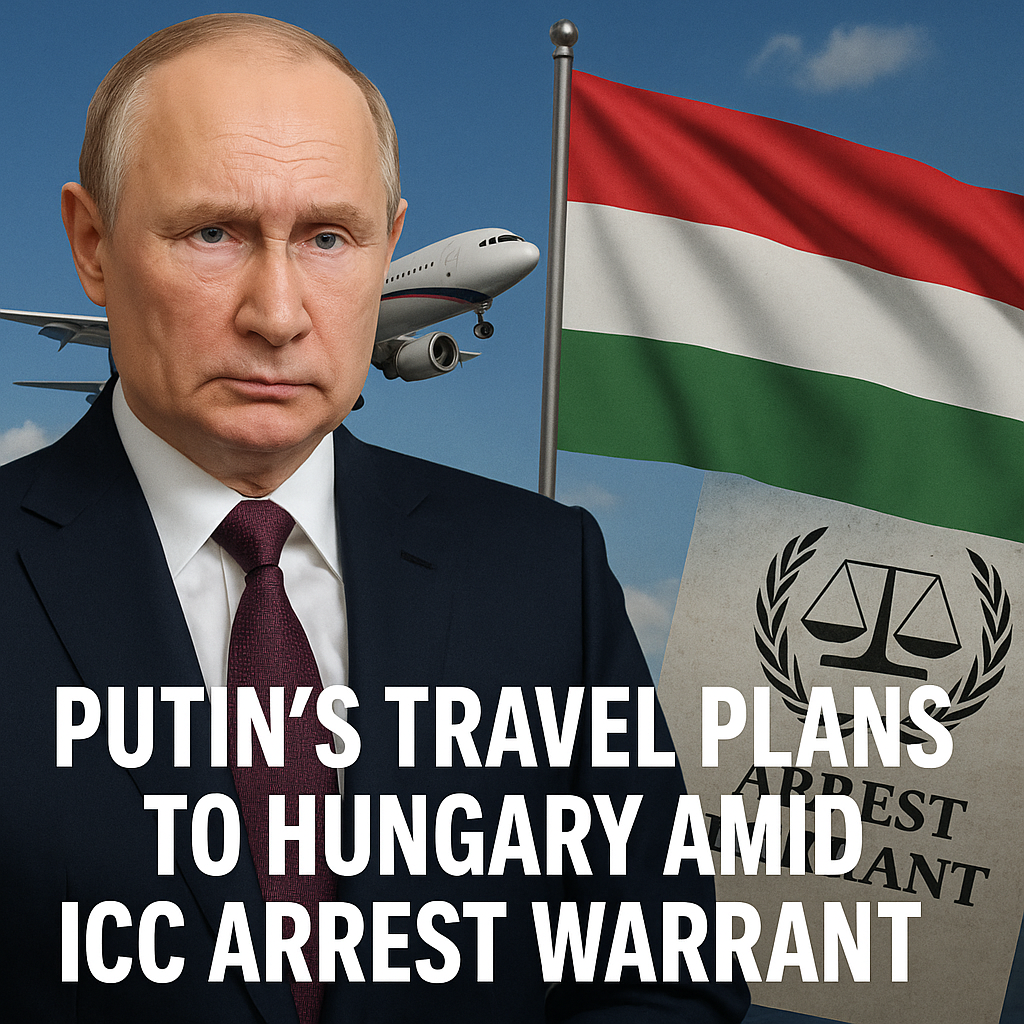
Putin’s Travel Plans to Hungary Amid ICC Arrest Warrant

Putin’s Travel Plans to Hungary Amid ICC Arrest Warrant
Recent discussions of Vladimir Putin’s potential travel to Hungary have heightened scrutiny due to ongoing international legal challenges, specifically the warrant for his arrest issued by the International Criminal Court (ICC). This situation underscores the complexities surrounding diplomatic relations and international law, raising questions about the ramifications of such a visit.

A Diplomatic Dilemma
As Vladimir Putin considers a trip to Budapest, where he may meet with notable figures like Donald Trump, the implications of his travel plans become increasingly fraught. The ICC’s warrant—issued on charges of war crimes, particularly related to actions in Ukraine—creates a precarious predicament for any nation involved in facilitating his visit. Hungary, a member of the ICC, finds itself at a crossroads between maintaining diplomatic ties and adhering to international legal standards.


The Legal Landscape
The ICC’s arrest warrant against Putin, among others, has put Russia’s leadership in an unprecedented position. If Putin proceeds to Hungary, the country could become the stage for a potential international legal conundrum. Legal experts point out that while Hungary is obliged to arrest Putin if he steps foot on its territory, the political ramifications of such an action could sour Hungary’s relations with Russia, a critical partner in energy and economic matters.


Reports indicate that Hungarian officials are weighing the potential fallout of any decision regarding Putin’s travel. According to a recent article in Al Jazeera, Hungarian government officials have expressed a desire to uphold their long-standing relationship with Russia while also navigating the complexities associated with international law. The Balancing act is delicate; if Hungary chooses to arrest Putin, it may receive backlash from Russia, who could further restrict energy supplies or diplomatic cooperation.
Perspectives from the Ground
Reactions to Putin’s planned visit are not monolithic, highlighting a range of sentiments both domestically and internationally. Some experts argue that allowing the Russian president to visit despite the arrest warrant could be perceived as a tacit endorsement of his actions in Ukraine. Meanwhile, others contend that the diplomatic engagement could foster dialogue—a critical necessity in a time of considerable geopolitical tension.
RT emphasizes the potential benefits of engaging with Russia, arguing that diplomatic channels should remain open, particularly concerning crucial issues like energy security and regional stability. This viewpoint stresses that international relations often require nuanced approaches that may be at odds with strict legal interpretations.
In contrast, critics of the Hungarian government’s potential decision to accommodate Putin have expressed concerns about Hungary’s adherence to international law. They believe that allowing Putin to visit could undermine the authority of the ICC and send a message that powerful leaders can evade accountability.
The Bigger Picture
Every decision regarding Putin’s travel to Hungary goes beyond legal ramifications; it intertwines with broader geopolitical dynamics. As countries navigate their stances on Russia, it is essential to consider the potential impact on alliances and public opinion.
Hungary’s relationship with the European Union (EU) remains a significant factor. Many EU member states have imposed sanctions on Russia, and accommodating Putin could lead to tension between Hungary and its EU partners. This duality exposes Hungary to scrutiny from both the West and Russia.
In the face of these tensions, Hungarian officials may yet try to find a middle ground. Avoiding a complete rupture of ties with Russia while adhering to international obligations may compel Hungary to explore alternative diplomatic avenues, such as holding discussions in a neutral third country or virtual meetings.
Navigating Uncertainty
As Putin weighs his options and Hungary grapples with its responsibilities, the path ahead remains uncertain. The ICC’s arrest warrant serves as a critical backdrop to this evolving narrative, reminding all parties involved that legal and diplomatic worlds often intersect in complex ways.
While some advocate for open dialogue as a way to resolve tensions, others argue for strict adherence to international law, fearing that anything less may embolden leaders to disregard accountability. Ultimately, Hungary’s decision on Putin’s travel could reverberate far beyond its borders, impacting international relations and the future of diplomatic engagement as a whole.
In conclusion, Putin’s prospective travel plans to Hungary amidst the ICC arrest warrant underscore a landscape filled with legal dilemmas, diplomatic intricacies, and geopolitical consequences. As nations navigate their choices, the outcome will not only define their immediate relations with Russia but may also set a precedent for handling similar situations in the future.















