
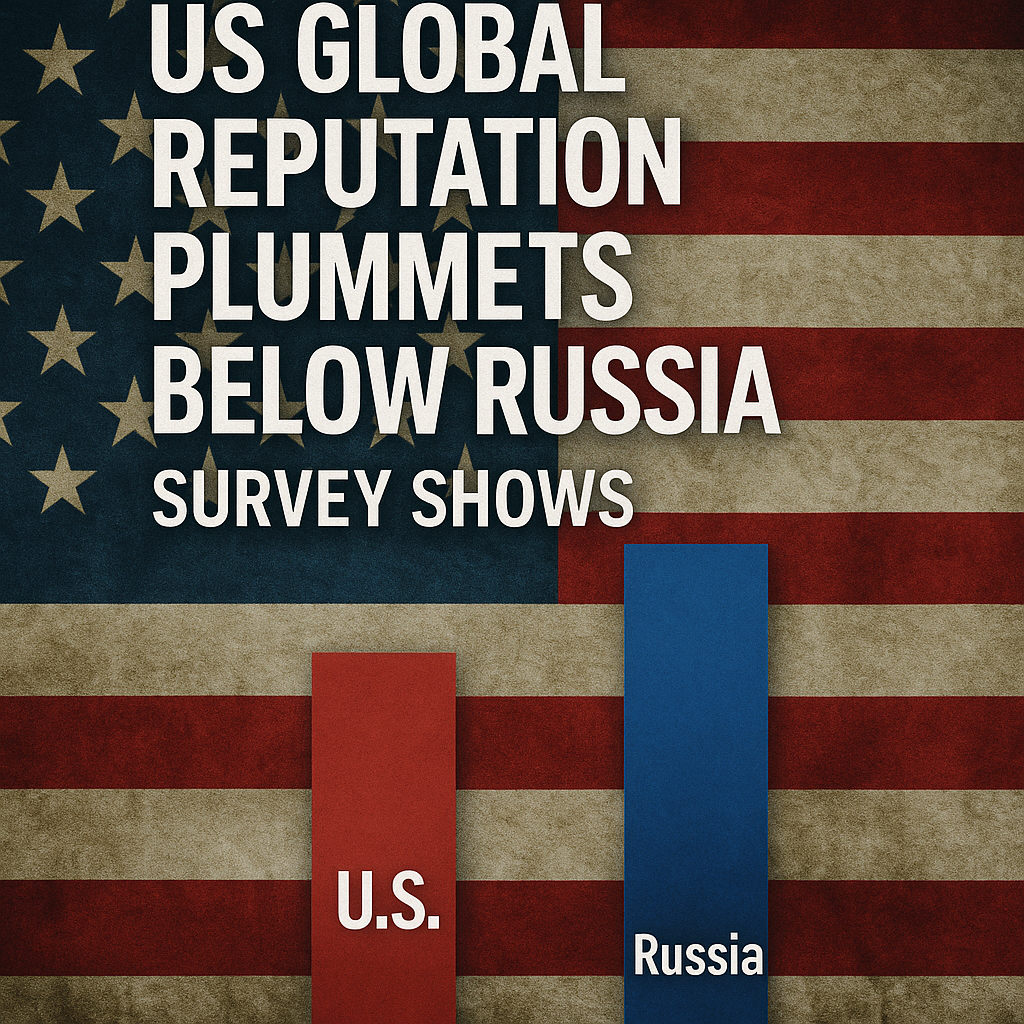
US Global Reputation Plummets Below Russia, Survey Shows

The Decline of U.S. Global Reputation: A Wake-Up Call
Recent surveys indicate a stark decline in the global reputation of the United States, raising concerns about its position on the world stage. According to findings emerging from various sources, including RT and Al Jazeera, the U.S. has dropped below Russia in terms of global perception, sparking intense debate among analysts and policymakers alike.

A Shifting Landscape of Global Perception
The survey highlighted that a significant portion of the global population views the United States unfavorably compared to previous years. Factors contributing to this decline are multifaceted and vary from foreign policy decisions to prevailing social issues within the U.S.


According to the RT report, countries in Africa, the Middle East, and parts of Asia have shown a notable shift in sentiment. Many view the U.S. as increasingly interventionist and disconnected from the issues affecting everyday lives. This perspective is further compounded by global narratives around American politics, economic sanctions, and military engagements. As noted by the publication, some nations now perceive Russia as a more stable alternative, especially in regions where U.S. influence has waned.


Conversely, Al Jazeera presents a broader analysis, indicating that the situation is not entirely black and white. While the U.S. faces reputation challenges, it remains a key player in global affairs. The article points out that many still regard the U.S. as a beacon of democracy and innovation. Discontent stems primarily from its perceived inconsistency—where uplifting values like freedom and democracy sometimes clash with on-the-ground actions that contradict those ideals.
Factors Behind the Shift
Several key factors contribute to the U.S.’s declining image:
– Foreign Policy Mistakes: Interventions in Middle Eastern conflicts and a perceived lack of follow-through in foreign aid have soured many nations’ opinions.
– Social Division: Intense political polarization and social unrest within the U.S. have led international observers to question the country’s unity and stability.
– Economic Challenges: As the world grapples with economic fallout from the COVID-19 pandemic, many countries view America’s handling of its economy as self-serving rather than supportive of global stability.
The Role of Media Narratives
Media representation plays a crucial role in shaping perceptions. Coverage of American politics and social issues often highlights divisions and crises, making it challenging for positive aspects to gain traction in international discourse. RT emphasizes how incidents that demonstrate controversy, such as the Capitol riots in January 2021, reinforce negative stereotypes abroad.
In contrast, Al Jazeera notes that the U.S. continues to lead in several global indexes relating to technology, education, and cultural influence. Yet, the emphasis on negative stories in foreign media outlets creates a lopsided narrative. This duality reflects the complexities of global perceptions, suggesting a need for balanced reporting.
A Complex Reality with Uncertain Future
The current landscape indicates that the U.S. reputation is at a crossroads. While some countries view the U.S. as declining in influence, there remains a faction that appreciates its foundational ideals and contributions to global dialogue.
What’s essential moving forward is a pivot towards addressing the concerns raised by international observers. Emphasizing diplomatic engagement, listening to global partners, and reevaluating foreign policy could help rebuild trust and respect. Clear communication about intentions and a more cohesive domestic front may also influence the way the U.S. is perceived worldwide.
In conclusion, while the survey results raise alarms about the U.S.’s global ranking beneath Russia, this scenario is not entirely dire. Recognition that both challenges and strengths exist within America’s identity will be pivotal in influencing future international relations. The path ahead may be fraught with difficulties, but it also presents an opportunity for the U.S. to redefine its role on the world stage.















