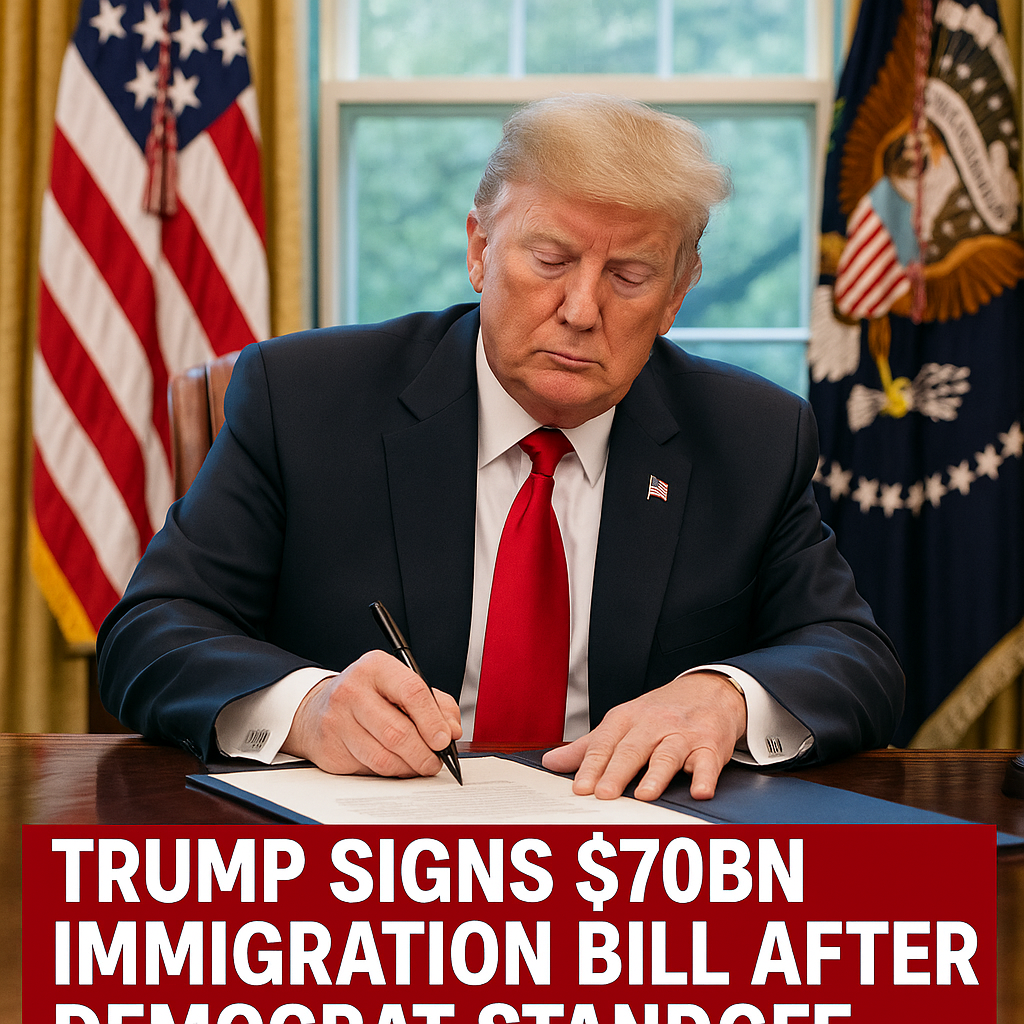
Trump Signs $70bn Immigration Bill After Democrat Standoff

After months of political maneuvering, President Trump has signed a significant $70 billion immigration enforcement bill, a decision that has sparked a variety of reactions across the political spectrum. This legislation marks an ambitious effort to overhaul the current immigration system, focusing on enhanced border security and increased resources for immigration enforcement agencies.

A Legislative Compromise
The passage of the immigration bill follows intense negotiations and a standoff with Democratic lawmakers, who expressed concerns over the increased militarization of border enforcement. According to Al Jazeera, the bill aims to allocate substantial funding for the construction of additional border walls, the hiring of more Border Patrol agents, and the establishment of new detention facilities.


Despite the controversy surrounding its provisions, proponents argue that this investment is crucial to reducing illegal immigration and improving national security. Supporters within the Republican Party maintain that the enforcement measures included in the bill are necessary to regain control of the nation’s borders, framing it as a moral duty to uphold the law.


Conversely, critics, particularly among Democratic lawmakers, have denounced the bill as overly punitive and an affront to humanitarian principles. Many contend that empowering immigration enforcement could lead to significant human rights violations, particularly among vulnerable populations seeking asylum in the United States. An article from Sky News points out that there have been reports of increased deportations and aggressive enforcement tactics that disproportionately affect marginalized communities.
Weighing the Evidence
The divided opinions on this immigration bill highlight the complexities of the issue at hand. On one side, there are the economic and security arguments put forth by supporters. They suggest that a secure border is foundational to maintaining public safety and economic stability. With an investment of $70 billion, the implications for creating jobs in the construction and enforcement sectors could be positive, potentially training a new workforce in areas involving cybersecurity and surveillance technologies aimed at border security.
On the other hand, there’s a growing concern about the bill’s humanitarian impact. Critics argue that while securing the border may address immediate security concerns, it fails to recognize the broader implications for individuals fleeing violence and persecution. RT News emphasizes that critics have labeled the bill as a reinforcement of a “hardline” approach to immigration, which may alienate many of the very individuals the U.S. is meant to protect.
Furthermore, the historical context of immigration laws in the U.S. reveals a pattern of shifting policies that reflect the nation’s current sociopolitical climate. The responses to Trump’s bill mirror a complex narrative of national identity, characterized by debates over who has the right to seek refuge in the U.S. and how society allocates resources to manage immigration flow.
Conclusion: An Uncertain Future
As the legislative dust settles, the full impact of the $70 billion immigration enforcement bill remains to be seen. Observers are divided on whether this significant increase in funding will yield the desired reduction in illegal immigration or whether it will instead exacerbate tensions within border communities and among migrant populations.
In the end, this policy could set a precedent for future legislative approaches to immigration reform, reflecting deeper societal values and priorities. The challenges ahead will require not only policy solutions but also a balanced discourse that weighs security concerns with the need for compassion and equity. As various stakeholders continue to weigh in on the implications of this bill, the nation finds itself at a pivotal juncture, navigating the complexities of immigration amid a charged political landscape.