
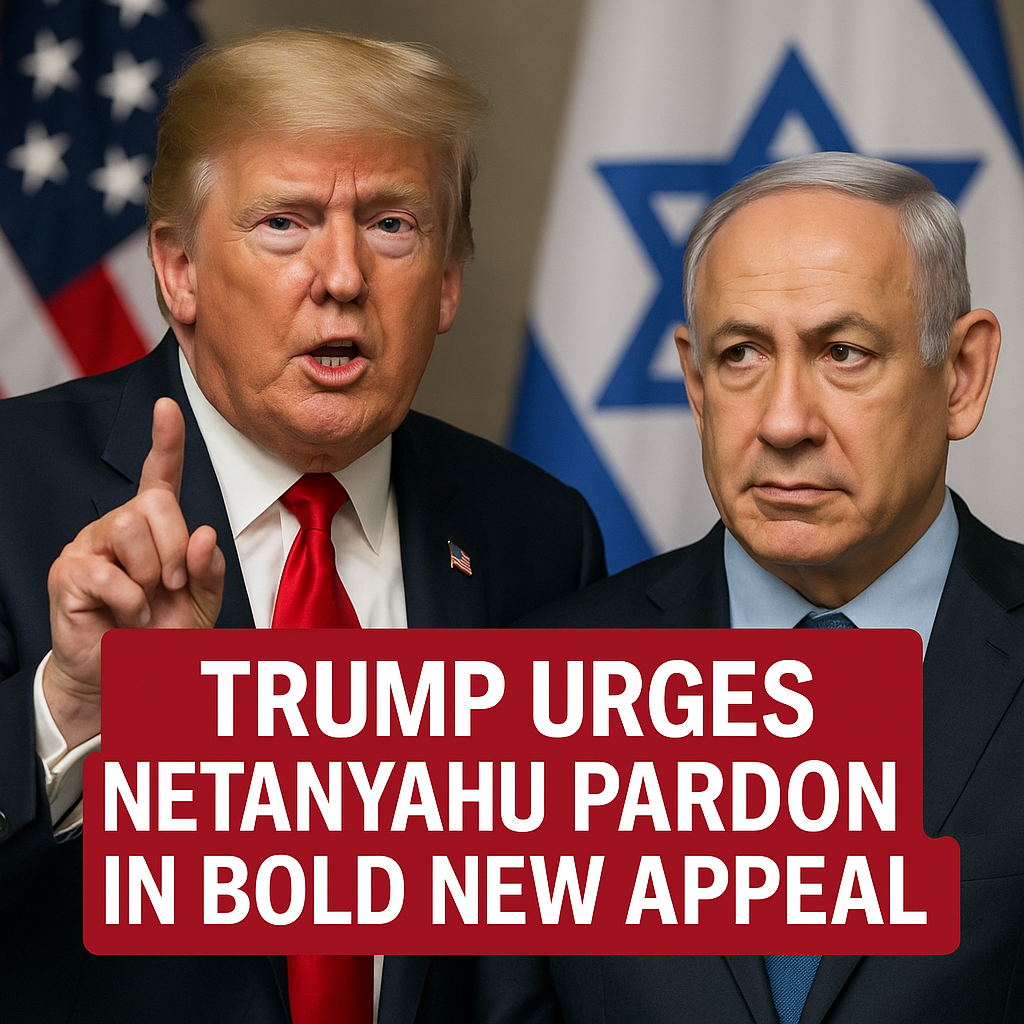
Trump Urges Netanyahu Pardon in Bold New Appeal

Trump Urges Netanyahu Pardon in Bold New Appeal
In a striking move, former President Donald Trump has renewed his call for a pardon for Israeli Prime Minister Benjamin Netanyahu, provoking varied reactions across the political spectrum. This recent appeal, highlighted in a report, underscores the complicated intersection of American and Israeli politics, amid ongoing discussions about legal and ethical ramifications surrounding Netanyahu’s leadership.

The Context of Trump’s Appeal
Trump’s appeal for a pardon comes as Netanyahu faces significant political and legal challenges within Israel. Accused of corruption, the Prime Minister’s struggles have led to a polarized public opinion in his home country. Trump’s support seems to stem not only from their shared political ideologies but also from a long-standing alliance. As noted by several sources, the timing of Trump’s statements appears strategic, as Netanyahu is currently navigating a turbulent political landscape marked by mass protests and internal dissent.


Background on Netanyahu’s Legal Issues


Netanyahu is embroiled in multiple corruption trials that could impact his political future. Critics argue that these legal issues reflect broader systemic problems within Israeli politics. Supporters, including Trump, see them as politically motivated attempts to undermine a leader who has staunchly supported U.S.-Israeli relations.
The legal battles have polarized Israelis, with many viewing Netanyahu’s situation as a test of justice and accountability in government, while others see it as an orchestrated attack by his political adversaries. This perspective aligns with Trump’s long-standing narrative of a “deep state” that works against leaders who challenge conventional political norms.
Diverging Voices on Trump’s Call
Responses to Trump’s appeal have been mixed. Some commentators express concern that such a pardon could undermine the accountability of public officials, emphasizing that no leader should be above the law. Articles from Al Jazeera highlight opinions from Israeli analysts who stress the importance of a legal process that is fair and impartial. They warn that granting a pardon could set a dangerous precedent for future leaders, potentially eroding confidence in democratic institutions.
Conversely, other voices in the media reflect support for Trump’s boldness, arguing that a pardon could heal divisions and help maintain a critical alliance between the United States and Israel. Proponents believe that, if executed correctly, a pardon could reaffirm Netanyahu’s standing in both domestic and international arenas, allowing him to navigate through the murky waters of legal woes without the cloud of criminal accusations.
Implications for U.S.-Israel Relations
The potential implications of Trump’s appeal for a pardon extend beyond legal ethics; they touch on the very fabric of U.S.-Israel relations. The two nations have benefited from an enduring alliance, characterized by mutual support across various sectors, including military and economic cooperation. Trump’s past administration notably conducted significant diplomatic initiatives that bolstered these ties, such as the Abraham Accords.
However, the current political climate complicates this relationship. If Netanyahu were to receive a pardon, it could energize critics in both Israel and the United States who argue for greater transparency and accountability. This situation highlights the tensions within the alliance: as much as Netanyahu’s leadership has been pivotal for U.S. interests in the region, his legal troubles could prompt a reevaluation of how Israeli leadership aligns with American values concerning governance and justice.
Navigating A Complex Political Landscape
As discussions about Trump’s appeals unfold, it’s essential to acknowledge the complex emotions and opinions involved. Trump and Netanyahu both represent a faction of global politics that challenges traditional norms, sparking intense debates about governance, law, and leadership accountability. The divergence of opinions surrounding the pardon reflects broader societal divides, not only in Israel but also within the United States.
The Road Ahead: Uncertainties and Speculations
The path forward remains fraught with uncertainties. While Trump’s appeal could unify factions in favor of a swift resolution for Netanyahu, it could just as easily deepen rifts among those who prioritize accountability over political expediency. Experts are divided on the implications of such a pardon: while some argue it may offer a reprieve for Netanyahu, others warn it could destabilize the political climate further.
As the political landscape evolves, it will be crucial to monitor how both the U.S. and Israeli public respond to Trump’s renewed call for a pardon. In the end, the interplay of politics, law, and ethics will shape not only Netanyahu’s fate but also the future of an alliance that has undergone significant strain in recent years.
In conclusion, Trump’s appeal for a pardon highlights the complex interplay between political expediency, legal accountability, and international relations. As sentiments evolve, it remains essential to critically analyze how these dynamics will impact both nations in the near future.















