
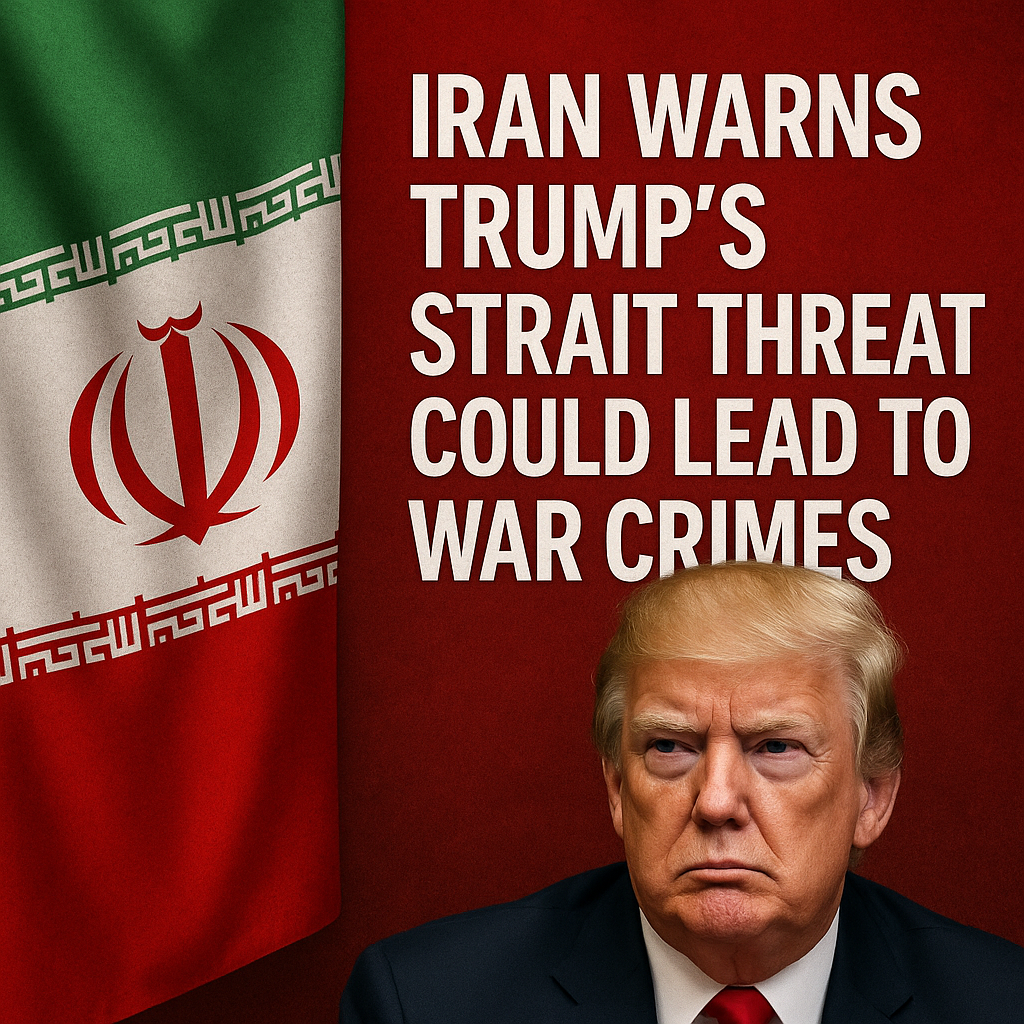
Iran Warns Trump’s Strait Threat Could Lead to War Crimes

Iran Warns Trump’s Strait Threat Could Lead to War Crimes
Tensions in the Middle East often create ripples that extend beyond regional borders, and recent statements from Iranian officials regarding former President Trump’s threats against Iran’s shipping routes highlight just how complex and precarious these dynamics can become. Iran’s warning underscores fears that military actions or provocations in the Strait of Hormuz could have severe ramifications, potentially qualifying as war crimes under international law.

Context of the Threats
The Strait of Hormuz plays a crucial role in global trade, with a significant percentage of the world’s oil supply passing through this narrow waterway. The strategic importance of this strait has made it a focal point of military and geopolitical contention, particularly involving Iran, the U.S., and regional allies. The tensions escalated recently, following statements from Trump, which many Iranian officials interpreted as direct provocations.


According to a report by RT, Iranian Deputy Foreign Minister Ali Bagheri Kani labeled Trump’s comments as warnings that could incite military actions against Iranian interests. He further stated that any such military action would be met with a robust response, exacerbating worries about escalation into armed conflict. This positions Iran’s reaction as not merely defensive but also reflective of broader concerns regarding sovereignty and international law.


Diverging Perspectives
While Iran’s statements emphasize the potential for escalation and war crimes, U.S. positions largely consider Trump’s rhetoric as a necessary deterrent against perceived Iranian aggression. As reported by Al Jazeera, U.S. officials often frame these threats as protective measures to ensure freedom of navigation in international waters. This stance exhibits a stark contrast to Iran’s perspective, which views the threats as provocations that could lead to unlawful military engagement.
Iran’s Standpoint on War Crimes
Iran’s assertion that military actions equate to war crimes is rooted in international legal frameworks, notably the Geneva Conventions, which outline the protections afforded to civilian infrastructure and define acts of aggression. Iranian officials argue that any attack on their vessels or shipping lanes could violate these norms, bringing into question the legitimacy of the U.S. actions in the region. Iran has historically been defensive regarding its territorial integrity, and these threats by Trump have only heightened its resolve to protect its maritime interests.
The Complexity of U.S. Policy
On the U.S. side, the administration maintains that assertive military posturing is crucial for maintaining stability, particularly against a backdrop of threats posed by Iranian military maneuvers. Proponents of this view argue that America’s strategic presence prevents Iranian aggression not just toward U.S. allies but also against global interests that rely on secure shipping lanes.
Despite these reassertions of power, it’s essential to note the growing international concerns regarding such aggressive stances. Countries that rely on the Strait of Hormuz for oil supply may start to question the sustainability and safety of shipping routes under U.S. protection, potentially leading to shifts in alliances and trade policies.
The Road Ahead: Diplomacy or Escalation?
The current situation poses critical questions about future interactions between Iran and the U.S. Diplomacy remains a potential route, yet the mutual distrust complicates direct negotiations. As both sides adopt hardline stances, further provocations could lead to unforeseen consequences. The possibility of a military miscalculation or unintended engagement looms large, intensifying the call for diplomatic interventions.
Experts emphasize that diplomatic solutions are essential not only to de-escalate tensions but to foster an environment conducive to stable international relations. The U.S. approach to Iran’s military posturing should consider that increased threats could lead to arms races or heightened military readiness on both sides, a scenario the global community strongly wishes to avoid.
In conclusion, the dialogue surrounding Trump’s threats and Iran’s responses reveals a multi-layered conflict embellished with historical grievances, political maneuvering, and law interpretations. As both nations navigate this intricate web, the importance of careful, considered responses cannot be overstated. The landscape remains uncertain, but the imperative remains clear: fostering dialogue is critical to preventing escalation into conflict that none of the involved parties can afford.















