
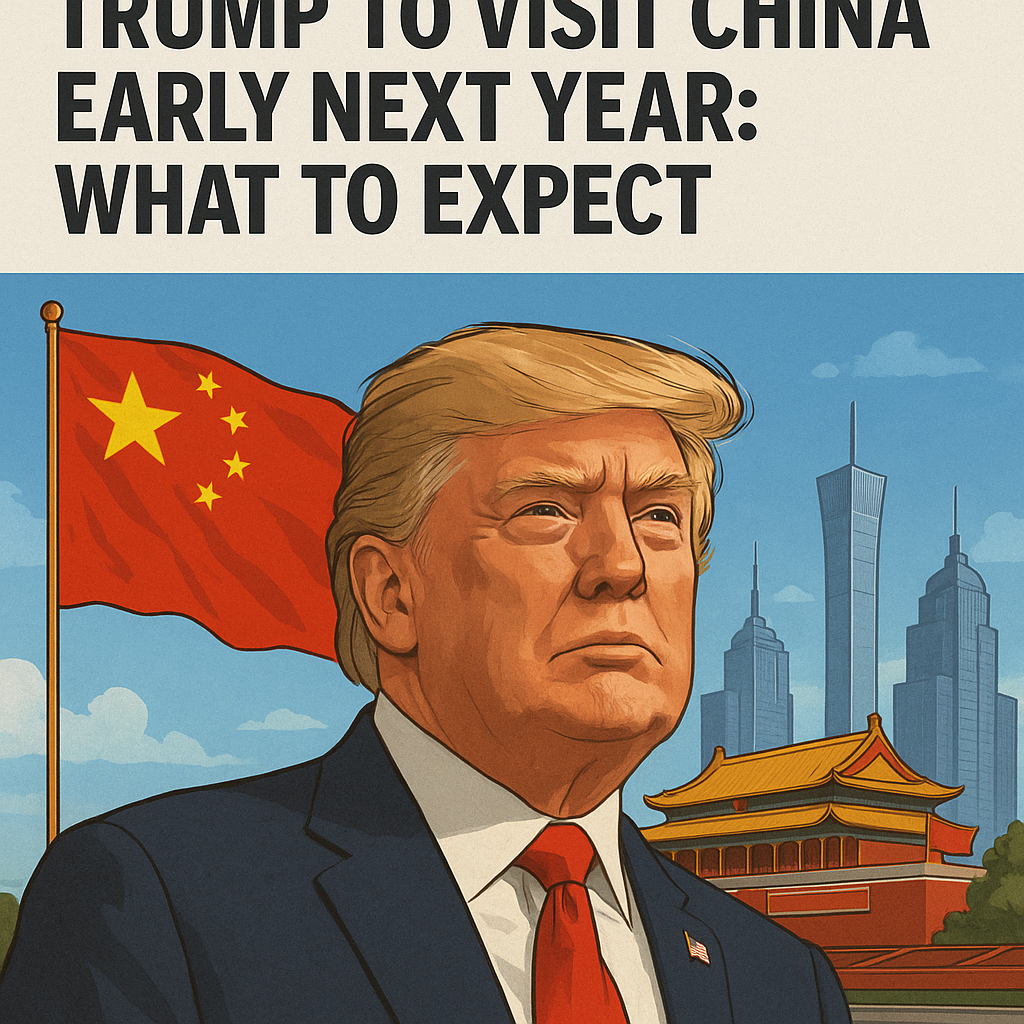
Trump to Visit China Early Next Year: What to Expect

Trump to Visit China Early Next Year: What to Expect
The announcement of Donald Trump’s upcoming visit to China has ignited a flurry of speculation and discussion regarding its implications. As the geopolitical landscape continues to evolve, stakeholders from various sectors are keenly observing what this visit could mean for U.S.-China relations.

The Context of the Visit
Trump’s decision to visit China early next year comes at a time when both nations are navigating a myriad of complex issues, including trade, technology, and climate change. The U.S.-China relationship has been fraught with tension, especially during Trump’s previous presidency, where trade wars and tariffs became common tools of negotiation.


According to an article by Al Jazeera, Trump aims to “reset the relationship with Beijing,” suggesting that there might be potential for advanced dialogues regarding economic cooperation. However, it’s critical to consider that Trump’s approach could polarize opinions both domestically and internationally due to his controversial past actions.


Diverging Perspectives
While some analysts express optimism about the visit as a potential thaw in relations, others remain skeptical. RT News explores the notion that Trump’s administration may face hurdles, particularly within the U.S. Congress, where bipartisan criticism of China is increasingly prevalent. This critique often focuses on human rights issues, trade imbalances, and technology theft.
In contrast, Sky News highlights the economic motives behind Trump’s visit, suggesting that negotiations on trade agreements could serve as a positive backdrop. With recent data indicating slowing economic growth in both nations, a renewed effort to bolster bilateral trade could provide a much-needed economic boost.
What to Expect from the Visit
Given the complexities surrounding U.S.-China relations, various outcomes can be anticipated from Trump’s visit.
1. Trade Negotiations
Trade has historically been a contentious issue between the two nations. Trump’s previous implementation of tariffs on Chinese goods sparked significant backlash, yet also brought about discussions on fair trade practices. Analysts predict that revising trade agreements may be a substantial point of discussion, particularly considering the ongoing need for economic recovery post-pandemic.
2. Geopolitical Dynamics
Another angle to consider is the evolving geopolitical landscape in Asia. The increasing partnerships between China and other nations may create a backdrop for competitive diplomacy. As Trump prepares for this visit, he may focus on reassuring allies about the U.S.’s commitment to remaining a key player in Asian affairs. Al Jazeera notes that strengthening alliances with countries like Japan and South Korea may also be part of the broader strategy.
3. Public Sentiment
While political and economic factors play significant roles, public sentiment in both countries will likely influence the outcomes of this visit. Anti-China sentiment has surged in the U.S., driven largely by concerns over human rights and trade practices. This factor raises questions about how Trump’s visit will be perceived domestically. Conversely, in China, state media may frame the visit favorably to bolster national pride and control the narrative around U.S. criticisms.
In summary, the visit could either foster a renewed dialogue focused on collaboration or deepen existing divides if not handled with nuance and sensitivity.
Uncertainties on the Horizon
While various potential outcomes have been discussed, uncertainties still loom over what Trump’s visit will ultimately yield. The possibility of engaging in substantive dialogue hinges on multiple factors, including domestic political pressures and international reactions.
In essence, the air is rife with anticipation as stakeholders await further developments. Whether this visit will lead to a pivotal moment in U.S.-China relations or merely add more layers to an already intricate diplomatic dance remains to be seen.
As the world watches closely, it is essential for both parties to approach this opportunity with pragmatism, aiming for genuine understanding rather than simply playing to their respective bases. Ultimately, the visit represents a critical juncture that could define the future trajectory of one of the most important bilateral relationships in the world today.















