
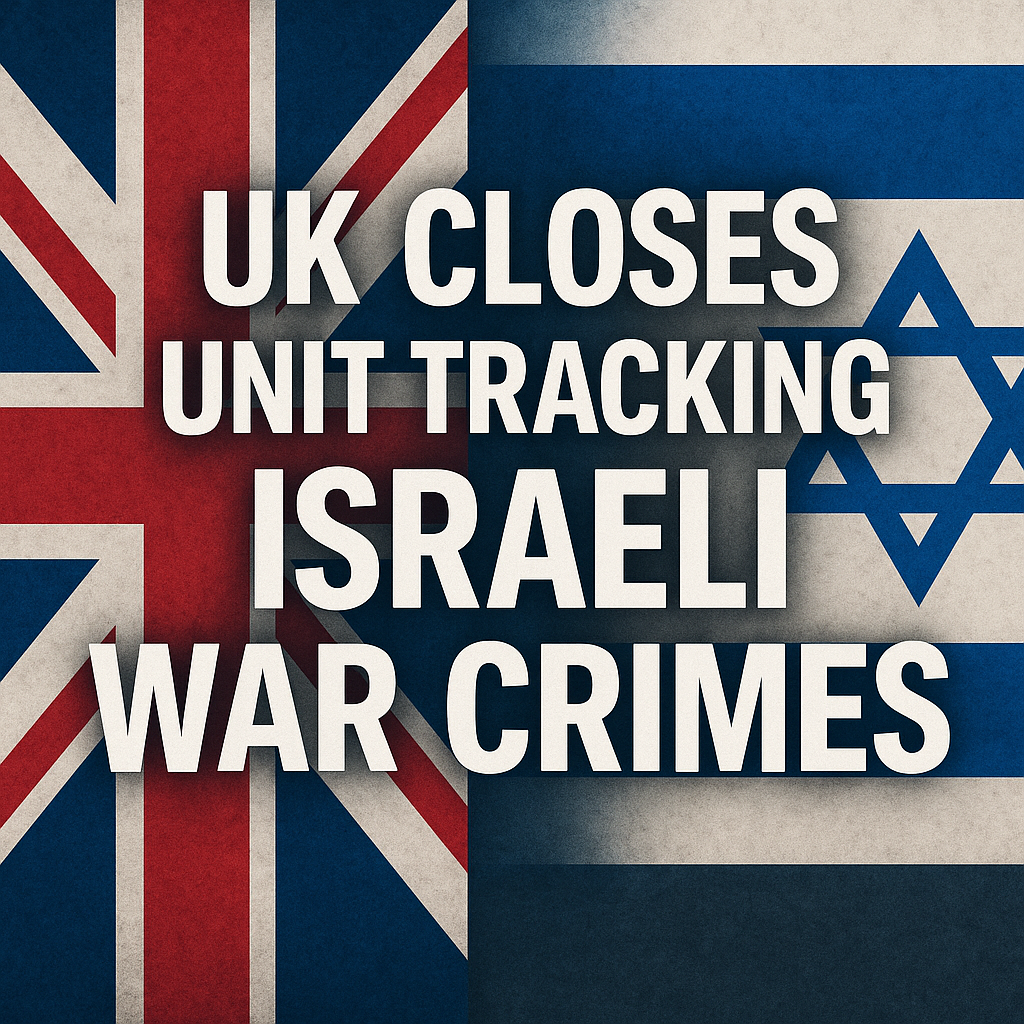
UK Closes Unit Tracking Israeli War Crimes

UK Closes Unit Tracking Israeli War Crimes
In a significant maneuver, the United Kingdom has shuttered a specialized unit originally established for monitoring alleged Israeli war crimes in Gaza. The implications of this decision resonate deeply through the ongoing conflict, raising questions about accountability and international response to wartime conduct.

The Context of International War Crime Monitoring
The closure of this unit by the UK government comes amid rising tensions in the Middle East, particularly regarding the ongoing Gaza conflict and Israel’s military operations. This situation is characterized by a complicated interplay of diplomatic relations and ethical considerations surrounding military engagements.


Varying Perspectives on Accountability
Responses to the UK’s decision vary significantly across political and societal spectrums, highlighting deep divisions not only within the UK but also in international discourse. Some advocates of Palestinian rights see the closure as a troubling indicator of diminishing commitment to holding powerful states accountable for their actions. Al Jazeera reports concerns raised by human rights organizations suggesting that the move could embolden ongoing violations against civilians in conflict zones, particularly in Gaza, where the humanitarian situation continues to deteriorate.


Conversely, some commentators view the dismantling of the unit as a strategic withdrawal necessary for re-evaluating diplomatic relations with Israel. Proponents of this viewpoint argue that too aggressive a focus on monitoring war crimes could jeopardize fragile negotiations in the region and detract from constructive dialogue.
A Call for Balanced Reporting
In the nuanced discourse surrounding international law and war crimes, both sides express valid concerns that must be weighed carefully. On one hand, maintaining a unit dedicated to tracking possible violations can serve as a necessary check against impunity, send a message of deterrence, and hold parties accountable. Such a unit could have played a pivotal role in documenting evidence of potential war crimes, thus contributing to understanding and clarity in this complex situation.
On the other hand, detractors of aggressive monitoring may argue that the geopolitical landscape necessitates a more diplomatic approach, one that does not publicly vilify allies and disrupt intricate negotiations for peace. This line of thinking emphasizes that, in contexts like the Israeli-Palestinian conflict, cooperative efforts are essential for sustainable resolution—a reality that stringent oversight might inadvertently undermine.
Balancing Humanitarian Concerns and Geopolitical Strategy
While the UK’s closure of the unit has drawn attention to accountability deficits, it also opens up broader discussions about the complexities of humanitarian intervention and international law. The unit’s disbanding does not eliminate the need for accountability mechanisms; instead, it emphasizes the necessity for alternative strategies to address war crimes while fostering a conducive environment for peace talks.
The Road Ahead: Uncertainties and Discussions
Moving forward, the conversation surrounding war crimes in Gaza is likely to proliferate, capturing both journalistic attention and public interest. As various stakeholders—from human rights organizations to governments—express their perspectives, a few critical uncertainties remain.
– What framework will replace the closed unit? Without a clear alternative for monitoring alleged misconduct, many observers worry about a potential vacuum in accountability.
– How will this impact peace negotiations? There is speculation about whether this strategic withdrawal from oversight might lead to a thaw in relations, or if it further complicates an already delicate situation.
– Are there lessons to learn? The evolution of international law and accountability in conflict situations might benefit from a careful review of this decision’s implications, fostering a debate on effective ways to uphold justice without compromising diplomatic efforts.
As the situation develops, the repercussions of the UK’s decision will become clearer. Advocates for peace and accountability alike must navigate a path that seeks not only to address past grievances but also to cultivate a future conducive to lasting harmony. The dialogue surrounding these issues must remain open and multifaceted, reflecting the intricate realities of the conflicts at play.















