
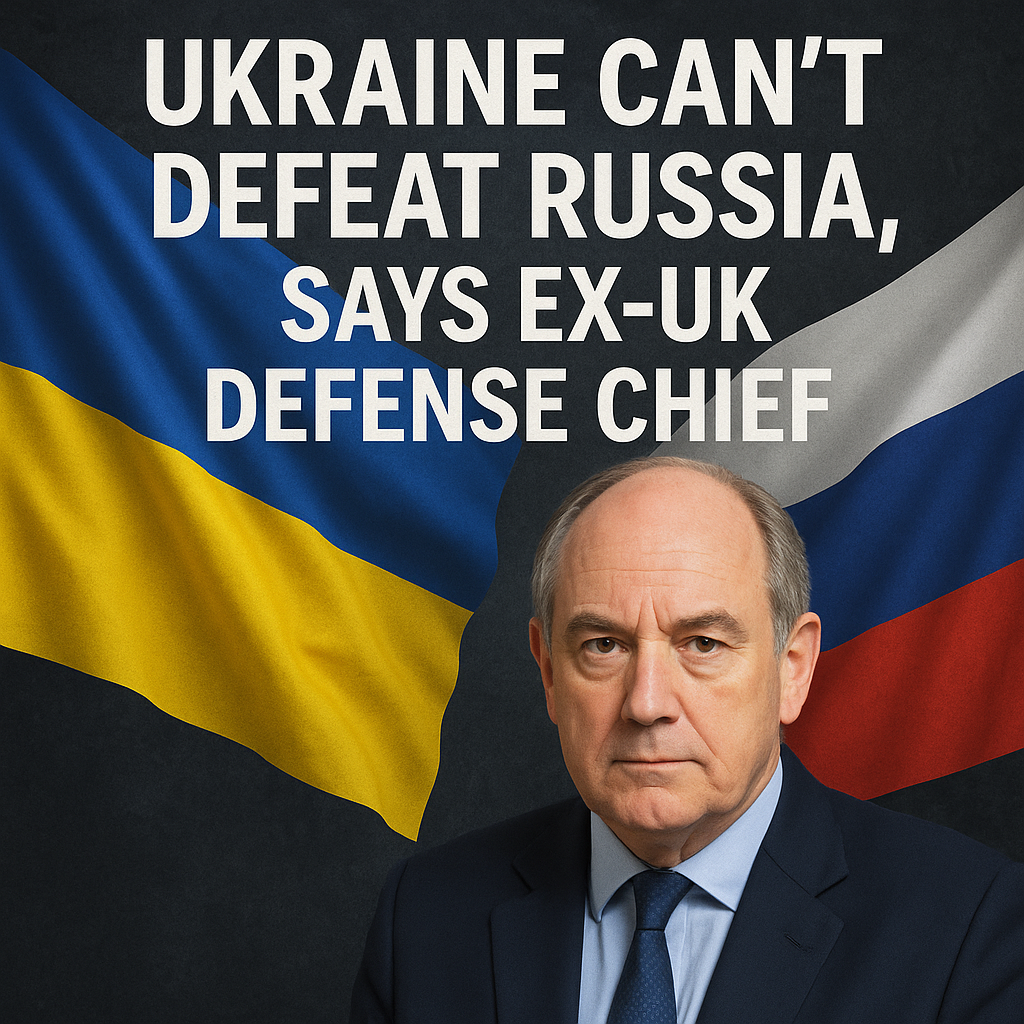
Ukraine Can’t Defeat Russia, Says Ex-UK Defense Chief

Ukraine Can’t Defeat Russia, Says Ex-UK Defense Chief
The ongoing conflict between Ukraine and Russia has dominated headlines around the world, and recent comments by a former UK defense chief have stirred a renewed debate about Ukraine’s capacity to achieve military success against Russia. The opinion expressed by General Sir Richard Barrons, the ex-commander of UK Joint Forces Command, suggests that Ukraine may find it increasingly challenging to defeat a militarily superior opponent. This assertion prompts a closer look at the broader context of the war, the repercussions of external support, and the various opinions surrounding the conflict.

The Current State of the Conflict
General Barrons made headlines when he stated, “In the end, they can’t defeat the Russians.” He suggests that while Ukraine has exhibited resilience and tactical ingenuity, its resources and manpower are insufficient to overcome the robust and considerable military capabilities of Russia. The general’s perspective, rooted in experience, raises valid questions about the sustainability of Ukraine’s defense efforts amid ongoing hostilities.


The war, which began in 2014 with Russia’s annexation of Crimea, escalated dramatically in February 2022 when Russia launched a full-scale invasion. Since then, Ukraine has received substantial support from NATO countries, including the supply of advanced weaponry and financial assistance. Proponents of Ukraine’s strategy argue that this external backing could turn the tide in favor of Kyiv.


The Role of External Support
Support for Ukraine from Western allies, including the United States and European nations, has been critical in strengthening Ukrainian defenses. This includes an influx of military aid, such as tanks, artillery, and anti-aircraft systems, alongside financial packages to bolster the economy. Supporters of this approach argue that the collective backing can empower Ukraine to continue resisting Russian advances.
Conversely, critics like Barrons question the long-term sustainability of such measures. He argues that, despite the momentum provided by external support, Ukraine may ultimately struggle to neutralize the Russian military’s numerical and strategic advantages. This reflects a dual sentiment within the international community—while many countries are committed to providing enduring support for Ukraine, there hangs an air of skepticism about the extent to which that support can lead to a decisive victory.
Perspectives on a Stalemate
The views on the conflict do not rest solely on the issue of external support, however. Many analysts and commentators point to the risks associated with over-reliance on military assistance. Some fear that heightened military activities could lead to a protracted conflict, where neither side can claim a decisive victory. Various sources underscore that a drawn-out conflict might result in severe humanitarian consequences and destabilize the region further.
According to a report from Al Jazeera, some military experts believe that Ukraine’s best strategy may lie in a combination of diplomatic efforts and military readiness. They argue that direct negotiations could lead to a sustainable ceasefire, rather than a total military defeat of either side, bringing the conflict closer to a resolution.
Additionally, public opinion in both Ukraine and Russia suggests varying levels of tolerance for a prolonged war. As casualties mount and economic upheaval continues, the populations may begin to call for a reassessment of military objectives and strategies. Discontent among the citizens could ultimately influence the policies of their respective governments, adding an unpredictable dynamic to the conflict.
Looking Ahead: Toward a Possible Resolution
General Barrons’ assertion that “they can’t defeat Russia” resonates with a growing notion that military solutions are not solely dependent on battlefield successes. Political dimensions are becoming increasingly significant in shaping the course of the war. The global sentiment towards peace negotiations may gain traction if the conflict drags on and the humanitarian crisis escalates.
Both sides seem entrenched in their positions, which complicates the prospect of effective diplomacy. However, the evolving international response and shifts in public opinion could usher in new opportunities for dialogue. Ultimately, the complex web of military balance, external involvement, and evolving public sentiment defines a scenario where clarity is still elusive.
As the war continues, it is crucial to remember that military might alone cannot resolve such deeply rooted conflicts. A nuanced perspective recognizes that the solution may lie not just in defeating an adversary but in fostering dialogue, building trust, and addressing the underlying issues that have fueled this confrontation for years.
Conclusion: A Nuanced Perspective
While opinions vary widely on the future of Ukraine’s military efforts against Russia, insights from figures like General Barrons remind us that the realities of warfare are complex and multifaceted. The emphasis on analysis that weighs military capability against the backdrop of global support, public sentiment, and diplomatic routes reveals a path that requires careful navigation. Whether Ukraine can ultimately achieve a complete military victory remains uncertain, but the evolving landscape suggests that various dimensions—military, political, and humanitarian—will critically shape the outcomes in the months and years to come.















