
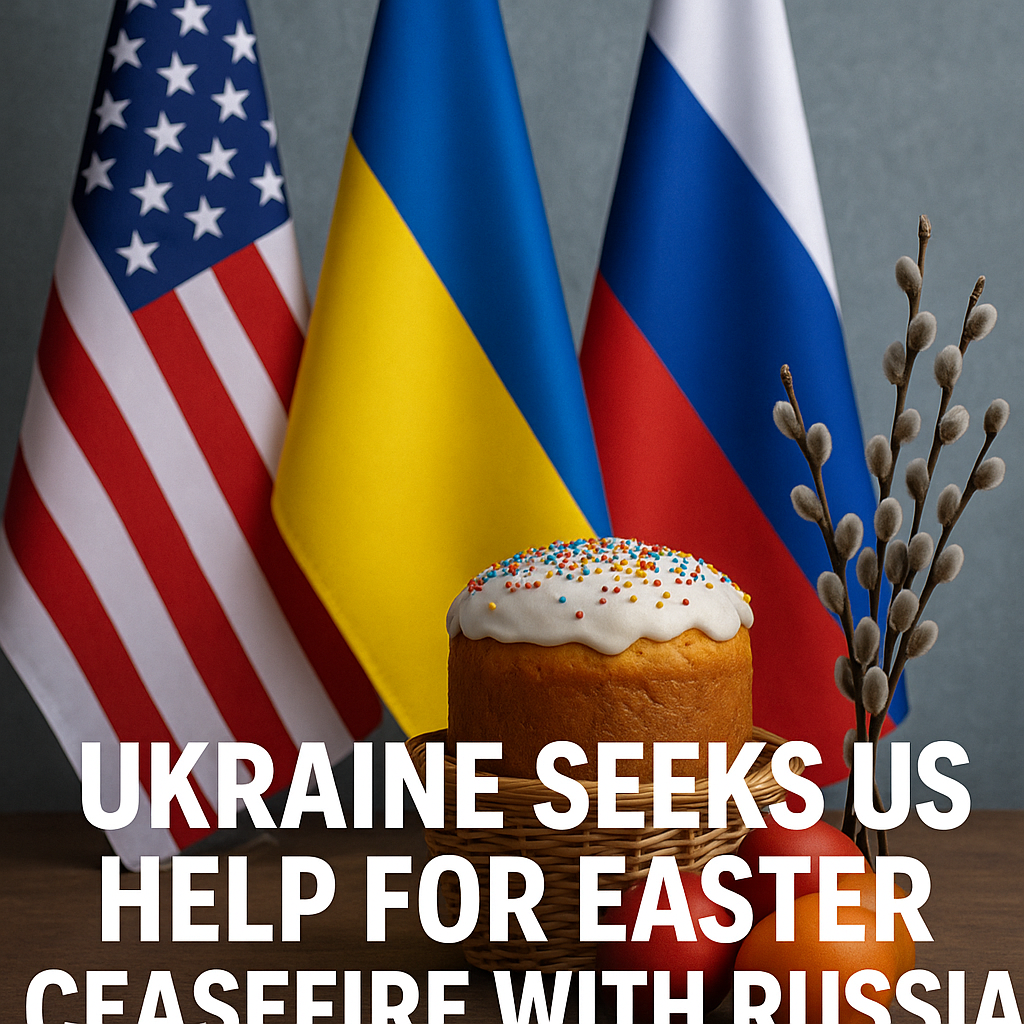
Ukraine Seeks US Help for Easter Ceasefire with Russia

Ukraine Seeks US Help for Easter Ceasefire with Russia
As the conflict in Ukraine continues to escalate, the prospect of an Easter ceasefire with Russia is gaining momentum. Ukrainian President Volodymyr Zelenskyy is reportedly looking to the United States for assistance in mediating an agreement that could provide a temporary respite from hostilities. This situation embodies the complexities of international diplomacy, as various stakeholders have differing views on the feasibility and implications of such an initiative.

The Push for a Ceasefire
Zelenskyy’s call for U.S. mediation underscores the urgent need for peace amidst ongoing violence. Recent reports indicate that Ukraine is keen on a truce during the Easter period—a time that holds significant cultural and religious importance for many in both Ukraine and Russia. As mentioned in Al Jazeera, the Ukrainian president intends to send a formal request to U.S. officials, urging them to convey the proposal to the Kremlin.


The emphasis on an Easter ceasefire arises from the desire to not only halt military actions but also provide an opportunity for humanitarian efforts. Zelenskyy’s administration recognizes that civilians continue to bear the brunt of the conflict. As the war stretches into its second year, many believe that temporary truces could facilitate essential aid distributions, especially in war-torn regions.


Divergent Perspectives on Ceasefire Feasibility
However, opinions on the viability of such a ceasefire are far from unanimous. Some analysts argue that Russia may view a temporary peace as a strategic pause to regroup its forces. A piece from RT highlights that past ceasefire attempts have often been fraught with challenges, as both sides have accused each other of violations. Critics of the ceasefire initiative question whether Moscow genuinely intends to engage in sincere negotiations or merely seeks to buy time.
On the other hand, advocates for the ceasefire argue that it is worth attempting, regardless of past experiences. The crucial aspect, they assert, is that dialogue remains open and that humanitarian access is prioritized. Sky News echoes this sentiment, noting that any pause in fighting could save lives and provide much-needed relief for the affected populations.
Despite these differing viewpoints, one commonality emerges: the overwhelming desire for peace among the civilian population, who suffer the most in such conflicts. The humanitarian crisis in Ukraine continues to deepen, and many argue that a ceasefire—however temporary—would offer an opportunity to alleviate this suffering.
The US Role in Mediation: An Increasingly Complex Position
The question of U.S. involvement adds another layer of complexity to the situation. Traditionally, the U.S. has positioned itself as a major ally of Ukraine, supplying military support and advocating for international sanctions against Russia. However, as the conflict drags on, Washington faces the challenge of balancing its support for Ukraine with the realities of engaging Russia in meaningful dialogue.
The Biden administration’s response to Zelenskyy’s request will likely hinge on various factors. For one, they must assess the likelihood of a positive reception from Moscow. As RT reports, Russian officials have previously expressed skepticism about Western mediation, pointing to a perceived bias in favor of Ukraine. If the U.S. were to engage in facilitating talks, it might also face pressure from allies within NATO, some of whom may encourage a more hardline stance against Russia.
Conversely, the U.S. could leverage its position to promote a ceasefire as a precursor to broader negotiations aimed at a long-term resolution. This approach would require a careful diplomatic balancing act, as any perceived concession might spark criticism from those advocating for more robust measures against Russia.
Conclusion: An Uncertain Path Ahead
The path toward a ceasefire in Ukraine is laced with uncertainties, influenced by geopolitical dynamics and historical distrust. While President Zelenskyy’s initiative to involve the U.S. is a commendable step toward dialogue, the complexities surrounding the proposal cannot be overlooked.
As both sides prepare for what could be another round of negotiations, the world watches closely. The humanitarian ramifications of continued fighting elevate the stakes for all parties involved. In the end, the hope for any ceasefire, especially one aligned with significant cultural observances, underscores a universal longing for peace—one that transcends borders, politics, and longstanding enmities.
In the midst of conflicting priorities and opinions, one important reality persists: the human toll of this conflict necessitates urgent dialogue, even if a definitive resolution remains out of reach.















