US Breaks Promises: Iran’s Take on Trust Issues

US Breaks Promises: Iran’s Take on Trust Issues
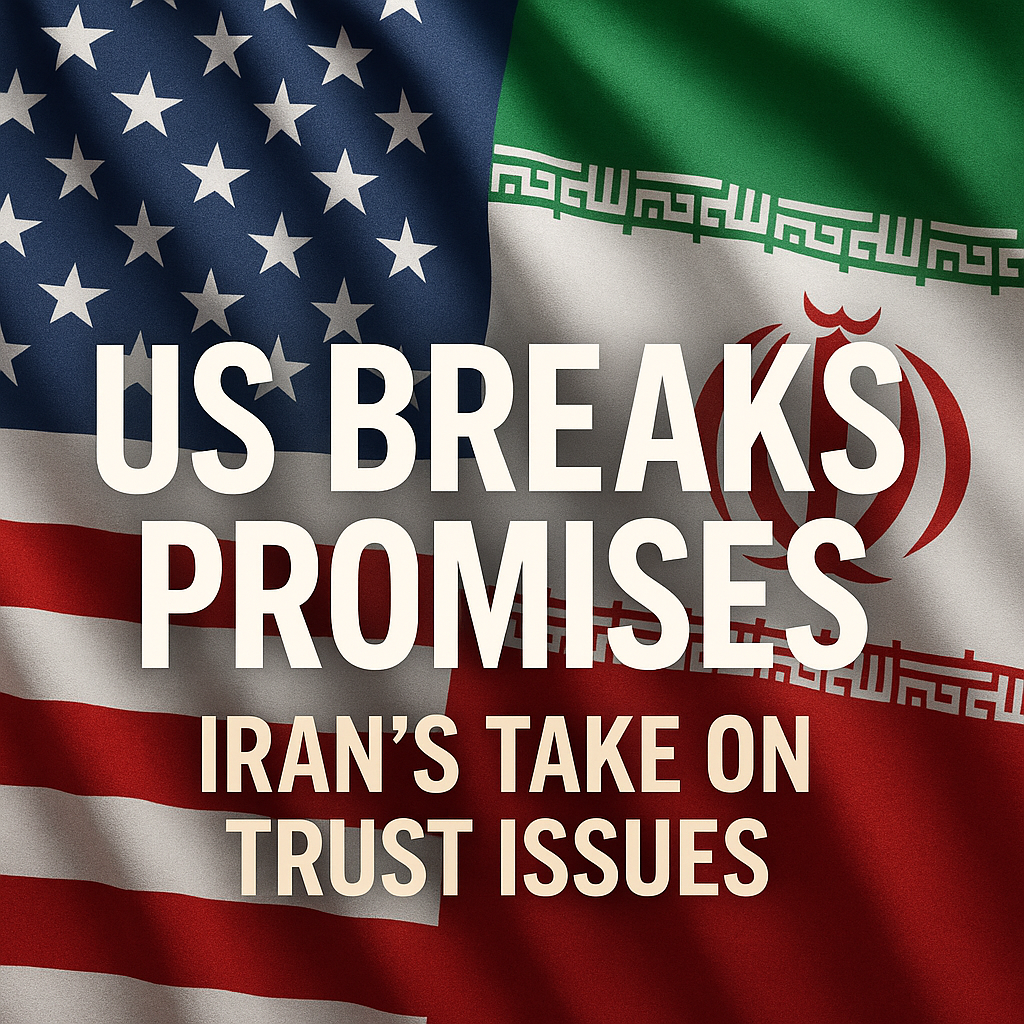
The legacy of broken promises heavily influences international relations, particularly between the United States and Iran. For decades, various agreements have been brokered and later disregarded, fostering significant mistrust. In light of recent developments, Iran has voiced concerns over the U.S.’s reliability as a negotiating partner, highlighting historical precedents and the ongoing complex interplay of diplomacy and power.

The Historical Context of Trust Issues
In 2015, the Joint Comprehensive Plan of Action (JCPOA), commonly known as the Iran nuclear deal, marked a significant diplomatic achievement aimed at curbing Iran’s nuclear ambitions. However, the unilateral withdrawal of the United States in 2018 by then-President Donald Trump shattered this fragile agreement. This pivotal moment not only elevated tensions but also cemented a perception in Tehran that any future agreements with Washington could similarly be abandoned.


The fallout from this decision has been multi-dimensional. Economic sanctions reimposed by the U.S. further exacerbated Iran’s economic woes. Subsequently, Tehran has resumed certain nuclear activities, arguing that such actions are justified as long as the U.S. continues to breach its commitments. Iranian officials assert that these actions are viewed as necessary factual responses to what they perceive as hypocrisy from the U.S. government.


Iran’s Perspective on U.S. Accountability
Iranian leaders have issued a series of warnings about the consequences of engaging with a nation known for its history of reneging on commitments. Supreme Leader Ayatollah Ali Khamenei has characterized the U.S. as inherently unreliable, stating that Iran will “not bet on the U.S.” even as discussions about a potential renewed nuclear deal continue.
The divide between diplomatic intentions and realpolitik is stark; despite Iran’s willingness to negotiate, skepticism remains high. Mohammad Javad Zarif, Iran’s former foreign minister, called attention to the “nature of impropriety” surrounding U.S. foreign policy, contending that such actions constitute a breach of international trust. This perception fosters a narrative of justified skepticism within Iran, evolving the discussions from mere diplomacy to more complex security considerations.
Diverging Views on Potential Re-engagement
While Iran communicates its distrust towards the U.S., not all perspectives within the country agree on how best to proceed. Some Iranian analysts suggest that engagement might still bear fruit, especially if the U.S. demonstrates a consistent willingness to uphold its commitments. They argue that pragmatic dialogue could lead to a restored relationship that benefits both nations.
Conversely, hardliners in Iran maintain that talks will yield little fruit unless the U.S. offers significant concessions, particularly the lifting of sanctions without preconditions. This perspective sees any negotiation as a potential ruse to delay Iranian advancements while preserving U.S. regional dominance, thereby reinforcing the attitude of mistrust.
The international community remains divided as well, with various nations urging the U.S. to engage diplomatically while others remain skeptical of Iran’s intentions. For example, European powers like France and Germany continue to advocate for a return to diplomatic negotiations, emphasizing that a mutual agreement could de-escalate tensions. However, the U.S. stance on Iran’s missile program and its involvement in regional conflicts complicates the discourse.
Conclusion: Navigating the Landscape of Distrust
The intricate web of diplomacy between the U.S. and Iran elicits a constant struggle between engagement and betrayal. Iran’s perspective is deeply informed by historical context, embodying a sense of justified skepticism grounded in the U.S.’s track record of breaking promises. As diplomatic talks continue, it remains unclear whether a renewed commitment from the U.S. could alter Iran’s deeply entrenched views.
All parties involved face complex decisions in navigating this landscape—where the risks of broken promises loom large. For now, uncertainty prevails as both nations evaluate their positions, weighing the potential for future cooperation against the weight of previous betrayals. Both sides appear to oscillate between hope for reconciliation and the stark reality of their historical grievances, leaving the future of their relationship to remain perilously balanced.