
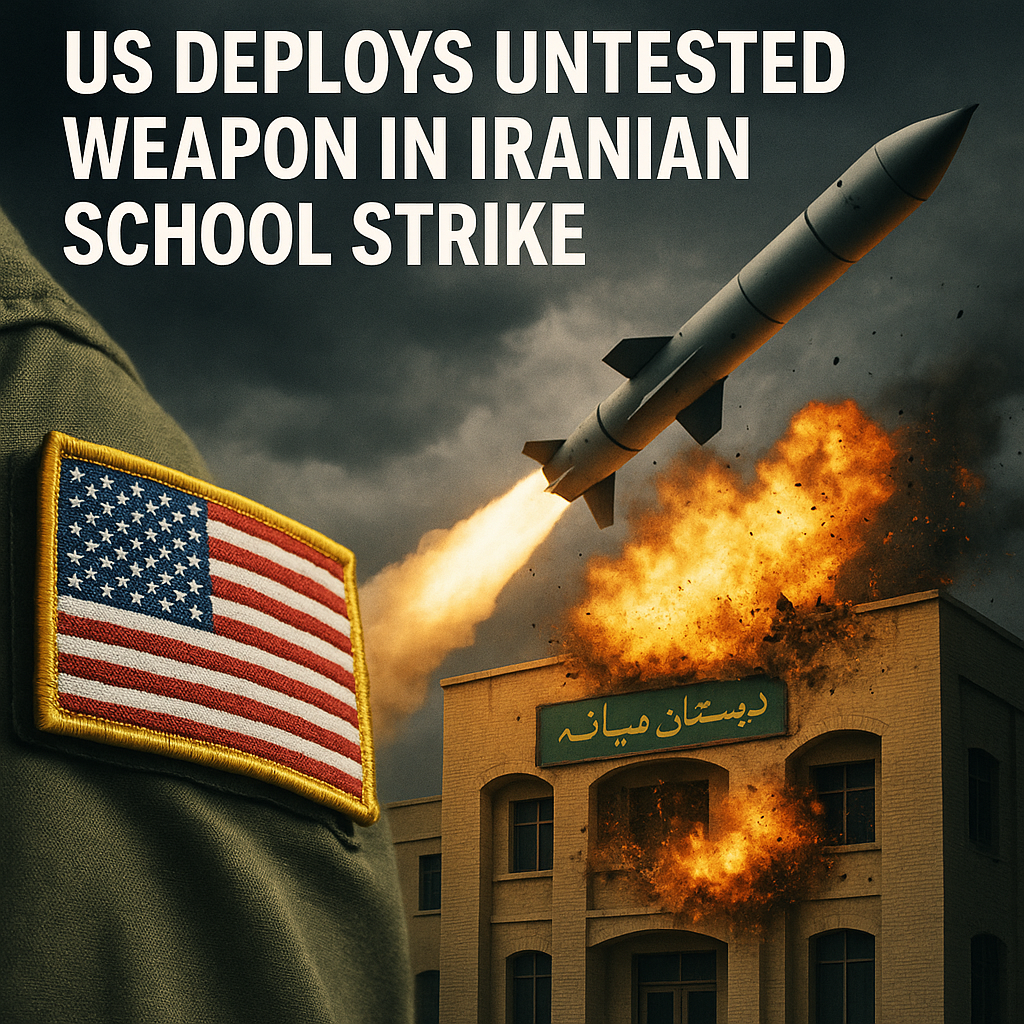
US Deploys Untested Weapon in Iranian School Strike

The Deployment of Untested Weapons in the Iranian School Strike: A Complex Aftermath
The recent U.S. deployment of untested weaponry in a strike targeting schools in Iran has raised significant concerns regarding military ethics, international law, and the potential consequences for regional stability. This incident, fueled by ongoing tensions between the U.S. and Iran, illustrates the complexities of modern warfare where advanced technology intersects with humanitarian issues.

Military Strategy and Ethical Concerns
The strategy behind the use of untested weapons in conflict is a point of contention among military experts and ethicists alike. Proponents argue that innovative weaponry can offer advantages in precision strikes, potentially minimizing civilian casualties. However, critics highlight the risks associated with deploying unproven technology, especially in densely populated areas like schools.


In a report from RT, details emerged regarding the specific weapon utilized in the strike. This weapon, alleged to possess advanced targeting capabilities, faced scrutiny due to its untested status. Experts in both military and ethical fields warned that utilizing such technology in populated civilian areas could result in catastrophic outcomes, exacerbating the humanitarian crisis.


Conversely, advocates of military intervention argue that the U.S. must take decisive actions to counter threats emanating from Iran. A source from Al Jazeera suggested that the strike was necessary for national security, framing it as a response to alleged Iranian aggressiveness in the region. This viewpoint underscores a broader justification often cited by governments: the end justifies the means.
Consequences for Civilians and International Law
The repercussions of this strike extend beyond immediate military objectives. Humanitarian organizations are deeply concerned about the implications for civilians caught in the crossfire. Reports from Sky News indicate that the schools targeted were not just places of education but hubs for community activity, making the consequences of such strikes multifaceted.
From an international law perspective, the deployment of untested weapons in civilian areas raises questions of legality and accountability. The principles of proportionality and necessity are core to international humanitarian law, which mandates that military actions should cause minimal harm to civilians. With untested weapons, the risk of miscalculations increases, potentially placing the U.S. in violation of these legal principles.
Furthermore, the broader implications of such actions could lead to a ripple effect in international relations. Countries that view the U.S. strike as reckless may be prompted to reevaluate their partnerships with Washington, potentially leading to escalated tensions not just in Iran but throughout the Middle East.
Divided Opinions: National Security vs. Humanitarian Risk
The reactions from policymakers and analysts exemplify the divide between prioritizing national security and weighing the humanitarian impacts of military action. On one side, there are officials who argue that untested weapons represent the future of warfare. They believe that advancements in military technology can be employed effectively to ensure that threats are neutralized swiftly.
Opponents of this view emphasize the need for increased transparency and accountability, suggesting that the U.S. should prioritize diplomatic solutions over military interventions. The dual-use nature of many technologies employed in warfare complicates this debate, as the same advancements that promise precision and efficiency can also lead to unintended harm.
As the discourse unfolds, it is important to recognize that a consensus has yet to emerge regarding the ethical implications of utilizing untested weaponry. Conversations sparked by this incident are crucial for shaping future military strategies and policies. As analysts from various viewpoints call for both a re-evaluation of tactics and an embrace of technological innovation, the challenge remains: how can a balance be struck?
Conclusion: Navigating a Complex Terrain
The recent U.S. strike utilizing untested weapons in Iran represents a critical junction in modern warfare ethics and international relations. As nations grapple with the implications of employing advanced technologies in combat, the need for rigorous debate surrounding their use cannot be overstated.
In light of the mixed reactions to this event, it’s clear that military strategy must reflect not only immediate security concerns but also long-term humanitarian responsibilities. As the dust settles, the voices advocating for accountability and caution will be essential in shaping a future that considers not merely the power of innovation but also the fundamental rights of civilians worldwide.
This complex situation serves as a poignant reminder that the balance of power must be handled with care, lest military advancements overshadow the values of humanity and international law.















