
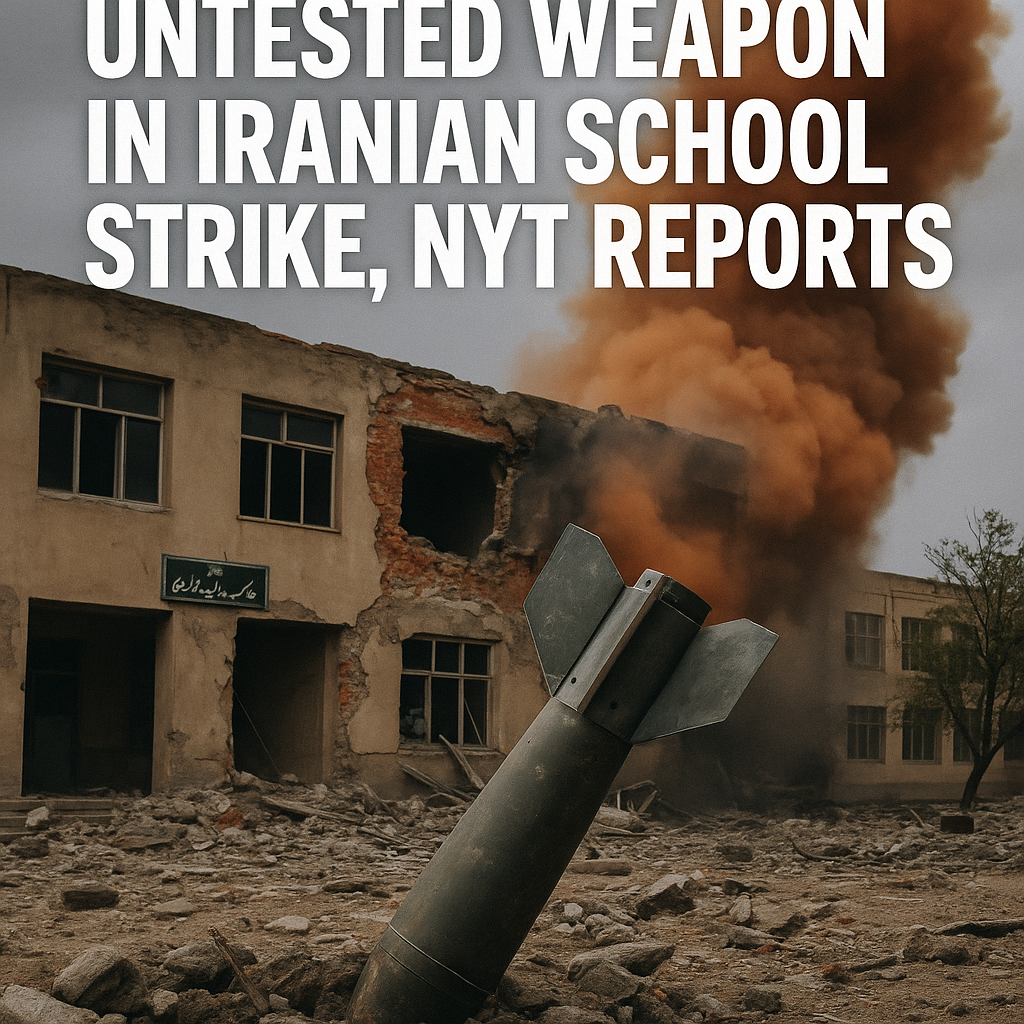
US Used Untested Weapon in Iranian School Strike, NYT Reports

Untested Weapons and the Iranian School Strike: A Complex Narrative
The recent reports of the United States allegedly using an untested weapon in a strike near an Iranian school have stirred significant controversy, raising questions about military ethics, international law, and national security. This incident highlights the complexities of modern warfare and the urgent need for transparent discussions around military practices.

Overview of the Incident
According to reports from The New York Times, the U.S. employed a weapon that had not undergone comprehensive testing during a strike that inadvertently hit a school in Iran. This claim has been met with varied reactions from experts and policymakers alike. What seems to be at the core of the debate is the potential ramifications of deploying untested munitions in populated areas and its impact on civilian safety.


The Arguments For and Against
On one side of the debate, proponents of the strike argue that the U.S. military operates under strict protocols that prioritize minimizing civilian casualties, even when using new technology. They posit that the challenges of modern warfare require rapid adaptation, and sometimes this involves using decision-making tools that haven’t been rolled out on a wide scale yet. A senior defense official, reflective of this viewpoint, maintains that the military conducts rigorous assessments prior to using any weapon on the field, even if those assessments may not always be as comprehensive as desired.


In contrast, critics of the U.S. action raise serious concerns about the ethical implications of using untested weapons. They argue that deploying such armaments near civilian facilities, particularly schools, is a violation of international humanitarian law, which mandates the protection of civilians during armed conflict. Advocacy groups have condemned the incident, highlighting that the use of untested weapons increases the risk of unintended harm and diminishes the broader standing of the U.S. in upholding human rights.
Legal Ramifications and Ethical Considerations
International Humanitarian Law
The incident has sparked discussions regarding compliance with international humanitarian law (IHL). IHL forbids the use of weapons that are indiscriminate or are likely to result in excessive civilian damage. Critics call into question whether the U.S. can claim to uphold these laws when using untested weapons in populated areas. Reports suggest that this incident could lead to increased scrutiny and possible investigations into the military’s actions.
Military Transparency and Accountability
Moreover, the event shines a spotlight on the essential issue of military transparency and accountability. The use of untested weapons suggests a need for clearer guidelines and more stringent oversight concerning weapon deployment in combat situations. Legislators and human rights advocates are calling for more robust congressional oversight regarding military decisions, particularly when untested military technology is involved.
One question remains unanswered: How much accountability do military leaders bear for the repercussions of using weaponry that is not entirely understood? By addressing this, policymakers can ensure that the American military operates within ethical guidelines while maintaining operational effectiveness.
Balancing Security Needs with Civilian Safety
Navigating the balance between national security and civilian safety is increasingly complex. As global tensions rise and new technology emerges, military strategies must evolve. Yet, the urgency for effective measures must coincide with an unwavering commitment to protect innocent lives. Public sentiment reflects this dual demand, with increasing skepticism about military actions that seem to gamble with human lives.
Potential for Future Conflicts
The fallout from this incident may also play out in international relations. Countries observing the U.S.’s actions may reassess their own military strategies or their alliances. Analysts posit that laying down a foundation of trust could be harder to achieve if incidents like this lead to more widespread fear and animosity toward U.S. intentions.
Conclusion: The Need for Reflection
In conclusion, while the necessity of national defense is a fundamental concern, employing untested weapons—especially in civilian areas—raises significant ethical and legal questions. As this narrative unfolds, it is vital for nations to reflect on their military practices comprehensively and prioritize civilian safety. Ongoing discussions surrounding this incident should focus on fostering a balance between effective military action and adherence to ethical standards, ensuring that future technologies serve to protect, rather than endanger, human lives.
With the complexities of modern warfare growing by the day, the need for transparent dialogue and thoughtful policy changes becomes even more urgent. The evolving nature of international conflict must not come at the expense of innocent lives caught in the crossfire.















