US-Iran Strikes Mark New Era Post-Ceasefire

US-Iran Strikes Mark New Era Post-Ceasefire
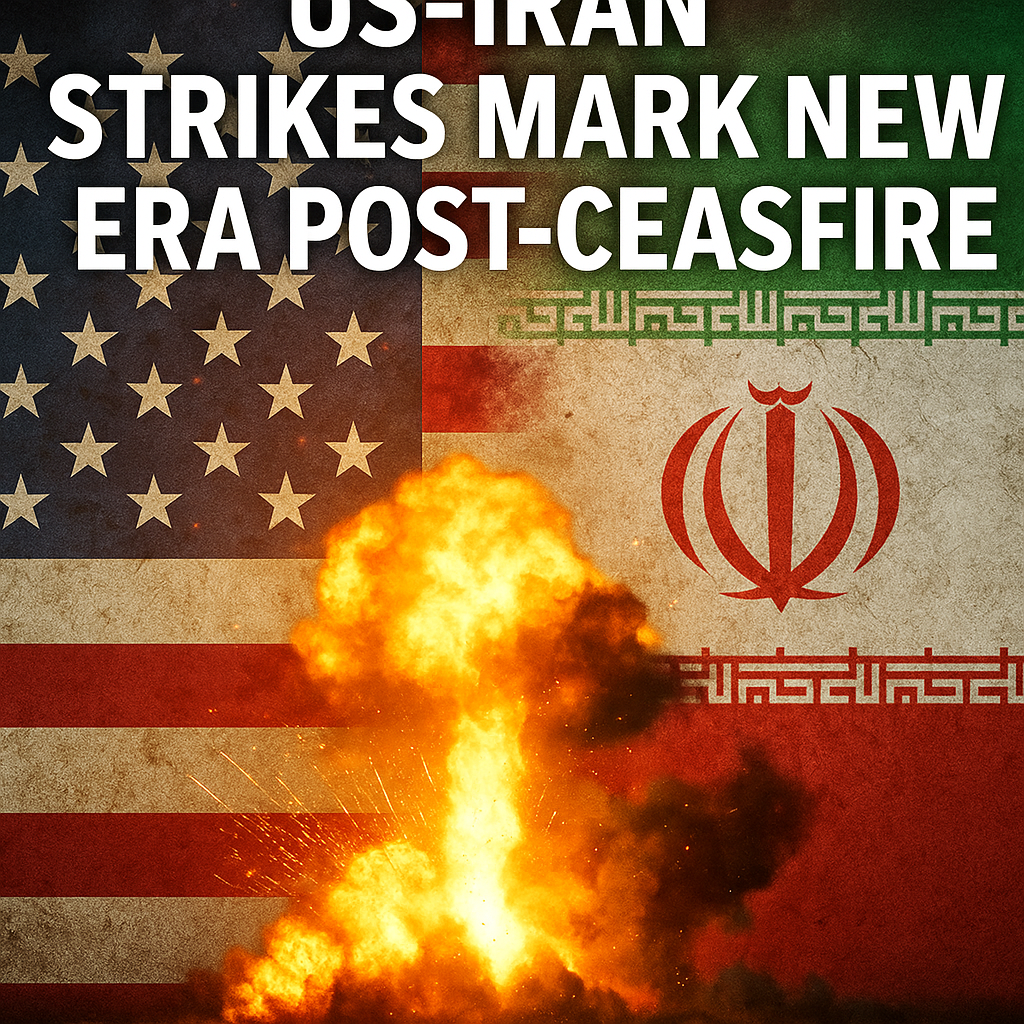
The recent U.S. and Iran military strikes in the Persian Gulf have provoked significant discussion and concern, marking what many analysts view as a pivotal moment in the post-ceasefire landscape. With both parties demonstrating an apparent willingness to escalate their military engagements, the implications of these actions are far-reaching and manifold.

Context of Tensions
The ceasefire that had, up until now, held relative stability in the region appeared to be crumbling with these strikes. Both the United States and Iran seem to be redefining their military postures, influenced by domestic and international pressures. While both sides have expressed a need for security, the methods they’ve employed signal a shift towards a more aggressive stance.


Reports indicate that the U.S. targeted specific military installations linked to Iranian operations, emphasizing the necessity to protect its interests in a region fraught with conflict. On the other hand, Iran’s strikes are perceived as a demonstration of strength and determination to counter what it regards as foreign aggression. This duality of perceptions complicates the narrative, leaving diplomats and strategists grappling with a volatile situation.


Diverging Perspectives on the Strikes
U.S. Justification for Strikes
From the American perspective, the strikes were framed as a necessary response to provocations attributed to Iran, particularly relating to maritime security in the strategically crucial Strait of Hormuz. U.S. officials have emphasized that these operations aim to safeguard both regional allies and global shipping corridors vital for oil transportation. An unnamed Pentagon official stated, “We will not stand idly by while Iran threatens shipping lanes; our commitment to ensuring the safety of these waterways remains unwavering.”
However, critics argue that these strikes could lead to further escalation rather than deterrence. Voices from anti-war organizations remind us that past military interventions fueled prolonged conflicts, suggesting that a diplomatic approach might yield more sustainable solutions than military bombardments.
Iranian Response and Rhetoric
On the Iranian side, officials have issued strong rhetoric in defense of their military actions. Iran’s leadership, including the Iranian Revolutionary Guard Corps (IRGC), has asserted that their strikes are aimed at preserving national sovereignty against what they see as persistent U.S. interference. Iranian authorities claim these operations serve as a warning, indicating that Tehran is prepared to respond decisively to threats.
Furthermore, Tehran’s narrative of resistance has attracted considerable domestic support, utilizing nationalism to bolster public sentiment. This escalating tension could be seen not just as a tactical necessity but as an opportunity for the Iranian regime to project strength at home amidst economic difficulties.
Potential Outcomes and International Reactions
As the situation unfolds, the international community is observing with bated breath. Regional powers are particularly concerned about the potential for wider conflict. Saudi Arabia and other Gulf states are instinctively positioned to respond, given their historical rivalries with Iran.
Meanwhile, diplomatic channels remain crucial. The possibility of renewed talks lingers in the background, yet, current actions complicate the landscape for negotiations. Experts suggest that only coordinated international efforts can stem the tide of escalating military confrontations. There’s a growing sentiment among European nations for both sides to return to the negotiating table and review existing agreements, particularly the Joint Comprehensive Plan of Action (JCPOA).
Conclusion: Navigating a Redefined Landscape
In this evolving context, the U.S.-Iran strikes symbolize not just a momentary breakdown of the ceasefire but a complex intertwining of military action, regional politics, and domestic agendas. With parties increasingly resorting to military solutions, the challenges of diplomacy become steeper.
Conclusively, while both nations gear up for possible heightened confrontations, the future remains uncertain. Observers find themselves at a critical juncture where the need for dialogue is paramount if a new era of conflict is to be averted. As rhetoric intensifies and military postures shift, it is essential to recognize that these strikes might mark not just an increase in hostilities but a call to action for renewed diplomatic engagement before the situation deteriorates further.