US-Iran Tensions Rise Over Hormuz Transit Toll Dispute

Escalating Tensions: The Hormuz Transit Toll Dispute
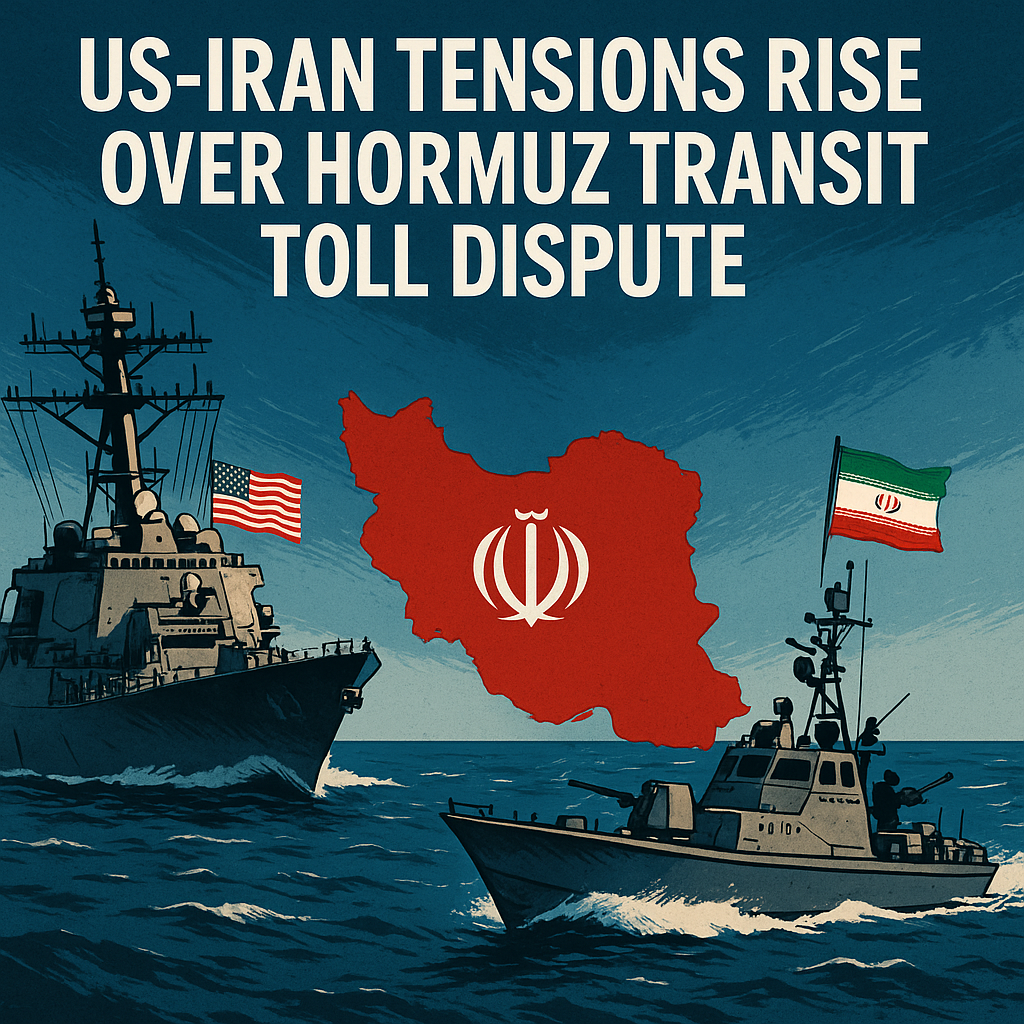
The long-standing tensions between the U.S. and Iran have recently intensified due to a contentious dispute over tolls for maritime transit in the Strait of Hormuz. This narrow waterway is crucial for global oil shipments, handling approximately 20% of the world’s oil supply. The disagreement highlights the fragile state of negotiations and diplomatic relations in a region already marked by volatility.

Navigating the Strait of Hormuz: A Strategic Concerns
Iran’s government has proposed a new toll system on Gulf vessels navigating through the Strait of Hormuz. This move, framed by Tehran as a mechanism to control maritime escort services in a vital international shipping lane, has been met with alarm by the United States and its allies. Iranian officials argue that the fee would finance security measures in the strait, an area where tensions between the U.S. Navy and Iranian forces have flared up in the past.


Reports from various news sources indicate that the proposed toll has exacerbated an already strained relationship, particularly as historical grievances over the U.S.’s military presence in the Gulf resurface. According to RT, Iranian officials have underscored the toll as a sovereign right to collect fees for the safety and security of commercial shipping. On the other hand, Al Jazeera has reported that this toll has been interpreted by Washington as an economically motivated act of aggression aimed at exerting more control over a highly strategic waterway.


Divergent Perspectives: Support and Opposition
The international community’s response to the toll has been mixed, revealing a rift in opinions on the implications of Iran’s actions. Supporters of Iran’s stance, primarily those within the fiercely nationalist factions of the Iranian government, claim that the toll reflects the country’s authority over its territorial waters and is a way to safeguard regional stability. The Iranian leadership emphasizes that shipping in the region must contribute to the security costs incurred by Iran, especially given the perceived threats from U.S. naval operations.
Conversely, the U.S. and its allies, including maritime nations that heavily depend on the Strait of Hormuz for oil transport, dismiss these assertions. They caution that implementing such a toll could provoke a heightened military response, perhaps leading to larger regional conflicts. Sky News has noted that U.S. Secretary of State Antony Blinken condemned the proposed toll, arguing it could lead to disruptions in one of the world’s most vital trade routes.
The Complex Web of Military and Economic Factors
The strait has long been at the center of geopolitical tensions, and the current toll dispute reflects deeper issues. Analysts point out that this conflict is not solely about toll fees but highlights Iran’s ongoing struggle for economic survival amidst crippling sanctions and the U.S.’s strategy to counter Iranian influence in the region. The Middle Eastern dynamics further complicate the situation with other regional actors having vested interests in the outcome.
Moreover, some experts warn that Iran’s potential enforcement of the toll could signal an aggressive posture against U.S. forces in the region, creating an environment ripe for miscalculation. As tensions continue, military encounters in the strait could serve as flashpoints. A series of incidents, including the firing of warning shots between military vessels, raise concerns over accidental escalations that could spiral out of control.
Seeking Stability Amidst Uncertainty
In this evolving context, several uncertainties loom. While Iran asserts its right to impose the toll as part of its sovereign agency, the U.S. continues to proclaim an unwavering stance against what it perceives as destabilizing actions by Tehran. The lack of a clear consensus leaves room for speculation regarding the potential for diplomatic negotiations that may either resolve these tensions or lead to further confrontation.
The outlook remains fraught with complexities. As states navigate these perilous waters, balancing security, economic interests, and geopolitical ambitions will require nuanced approaches. The Hormuz transit toll dispute is a stark reminder that in international relations, particularly in regions like the Gulf, even seemingly minor disputes can have sweeping implications on global stability and security.
As both sides tread carefully, the international community watches closely, hoping for a resolution that will avert the specter of conflict while ensuring the smooth transit of one of the world’s most vital shipping lanes.