
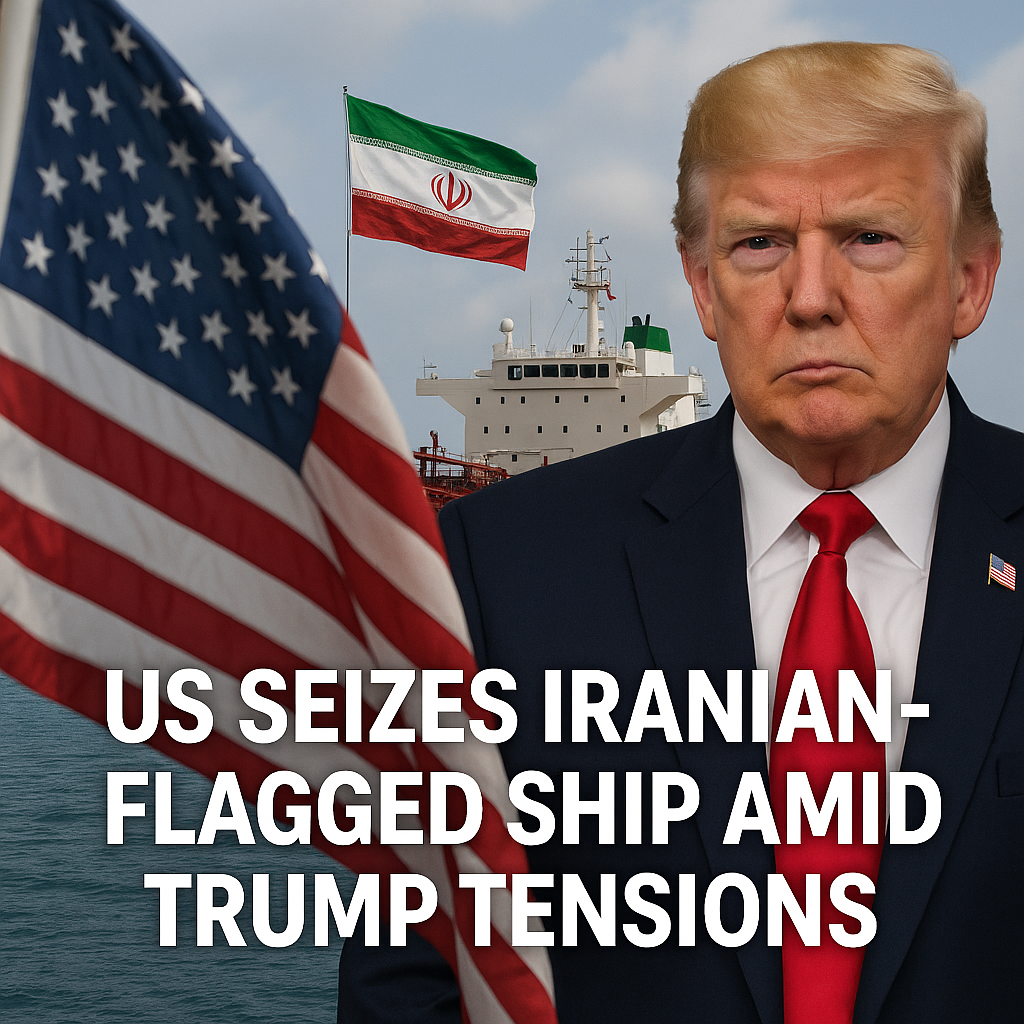
US Seizes Iranian-Flagged Ship Amid Trump Tensions

US Seizes Iranian-Flagged Ship Amid Trump Tensions
The recent seizure of an Iranian-flagged ship by the United States has reignited tensions between the two nations, reflecting the complexities of geopolitical relationships and the legacy of past administrations. This incident unfolds against the backdrop of ongoing discourse surrounding former President Donald Trump’s policies toward Iran, which continue to influence current events.

Background of the Seizure
Reports indicate that the U.S. Navy intercepted the Iranian-flagged ship in international waters. The U.S. government has suggested that the ship was transporting weapons intended for militant groups in the region, a claim that Iran has vehemently denied. This seizure follows a history of maritime confrontations between the U.S. and Iran, further complicated by sanctions and military posturing.


Al Jazeera highlights the broader implications of this incident, noting it as part of a series of tensions that have escalated since Trump’s withdrawal from the Joint Comprehensive Plan of Action (JCPOA) in 2018. This decision not only reimposed heavy sanctions on Iran but also increased mistrust and hostility between the two nations. The Iranian government’s response has highlighted a narrative of victimization, claiming that such actions serve U.S. interests rather than promoting regional stability.


Contrasting Perspectives on the Tensions
The current geopolitical landscape reflects contrasting perspectives from various stakeholders. According to Sky News, U.S. officials argue that actions like these are necessary to ensure security in the Gulf region, particularly against Iranian influence on shipping lanes. They present this as a matter of safeguarding allies and maintaining international law.
Conversely, Iranian officials portray the U.S. actions as reckless and counterproductive, accusing them of exacerbating tensions. Iran’s Foreign Ministry condemned the seizure, asserting that it undermines diplomatic efforts amid ongoing negotiations regarding their nuclear program. This divergence in viewpoints demonstrates the complexity of international relations where actions are often framed through national narratives.
Historical Context: Legacy of Trump’s Policies
Trump’s tenure marked a significant turning point in U.S.-Iran relations, characterized by a hardline approach. The withdrawal from the JCPOA not only stripped away the framework for diplomatic engagement but also arguably pushed Iran closer to pursuing nuclear capabilities. As noted by RT, critics of the Trump administration’s strategy argue that it alienated allies and led to increased regional instability rather than the promised diplomatic breakthroughs.
Moreover, the psychological impact of Trump’s presidency lingers in current dialogues, with many policymakers reflecting on the unpredictability that defined his tenure. The notion that U.S. actions in the region continue to mirror Trump’s confrontational stance brings questions of long-term strategy and whether current administrations will carry forward or pivot from this approach.
Diplomatic Ramifications and Future Outlook
As the U.S.-Iran dynamic evolves, the consequences of such maritime confrontations extend beyond immediate responses. The continuing seizure of vessels could strain diplomatic channels that might have been open for discussions regarding nuclear negotiations or regional security.
Furthermore, a significant aspect to consider is the international response. Allies and adversaries alike are observing how the U.S. navigates this latest incident, with potential implications for multilateral agreements and collective security initiatives. For instance, European nations are increasingly concerned about maintaining alliances while addressing Iranian provocations and U.S. actions.
Uncertain Conclusions
While the seizure of the Iranian-flagged ship has drawn varied reactions, the clearest takeaway may be the persistent state of tension between the U.S. and Iran. With each action taken by either side, the risk of escalation remains palpable. The complexities of international diplomacy often defy simple resolutions, and as such, any future actions must be weighed cautiously.
In conclusion, the U.S. seizure of an Iranian-flagged ship serves as a microcosm of broader geopolitical disagreements shaped by historical actions and current strategies. The interplay between U.S. policies and Iranian narratives will continue to challenge diplomatic efforts and regional stability in the foreseeable future, leaving analysts and policymakers searching for viable paths forward amid an environment defined by mistrust and confrontation.















