
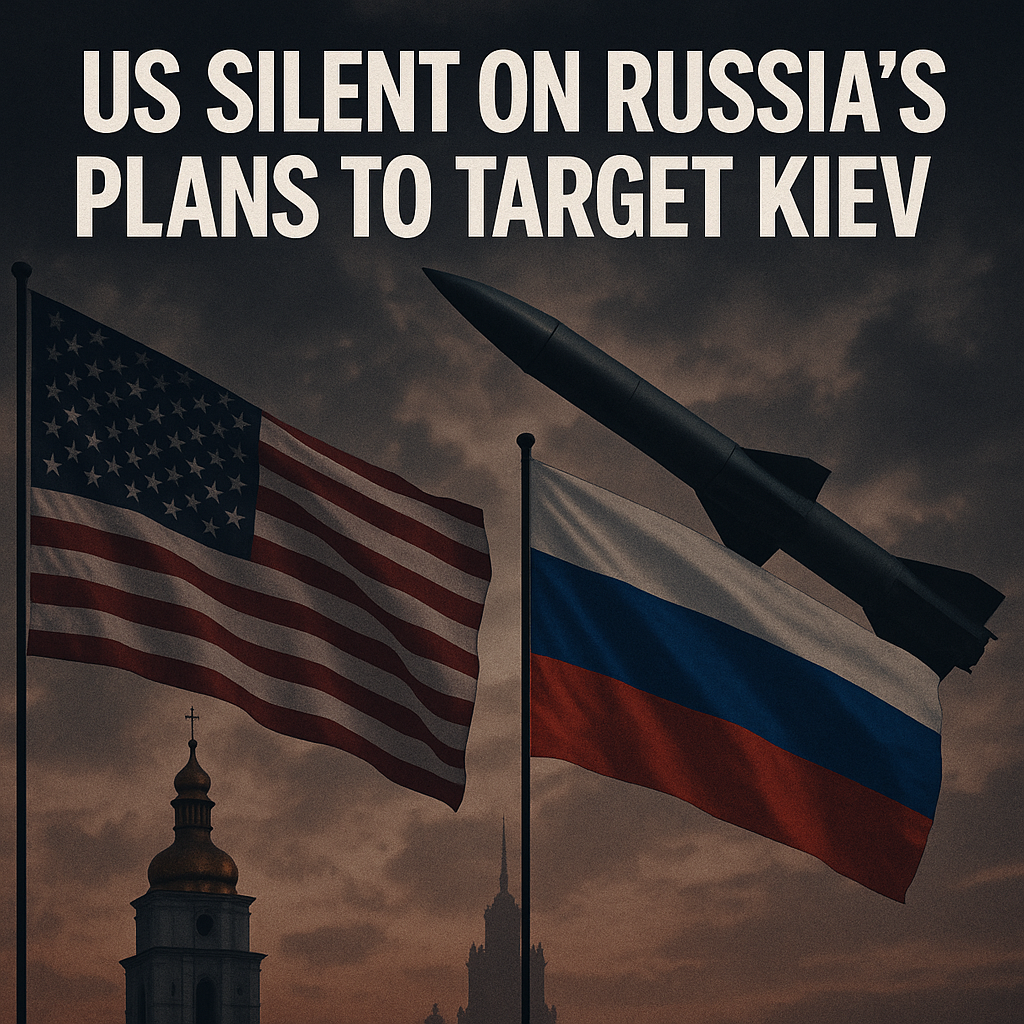
US Silent on Russia’s Plans to Target Kiev

In recent weeks, the silence from the United States regarding Russia’s plans to target Kiev has raised eyebrows both domestically and internationally. This apparent reticence has sparked debates about the effectiveness of U.S. foreign policy in response to the ongoing Ukraine crisis. As the situation unfolds, it becomes imperative to unpack the motivations behind this silence and what it could mean for the broader geopolitical landscape.

Analyzing U.S. Inaction
Reports highlight that the U.S. has been notably quiet concerning Russia’s military ambitions, particularly following recent threats directed at Ukraine. In a recent article by RT, a senior U.S. official emphasized that Washington would not publicly condemn every statement made by Russian officials, an approach interpreted by some as an indication of caution rather than strength. This non-response has led various analysts to speculate whether it reflects a broader strategy aimed at de-escalating tensions or a more worrying indifference to Ukraine’s plight.


On the flip side, an article from Al Jazeera suggests that the muted reaction from the U.S. may be part of a calculated decision to avoid unnecessary provocations. The Biden administration’s focus seems to be on unifying NATO allies while managing domestic distractions such as economic concerns and political divisions over international aid. By not engaging in verbal confrontations, the U.S. may be hoping to maintain a diplomatic stance, essentially allowing Ukraine to remain in the spotlight without escalating the situation unnecessarily.


Diverging Perspectives
While these interpretations present a somewhat unified front regarding the U.S.’s cautious approach, a deeper dive reveals contrasting opinions. Critics argue that silence can be interpreted as weakness, potentially emboldening Russia in its aggressive posture. A senior analyst based in Kyiv remarked, “A lack of strong condemnation could signal to Moscow that the risks of escalation are manageable.” This interpretation resonates with many in Ukraine who fear that any indication of U.S. apathy may lead to greater provocations from Russia.
Conversely, proponents of this non-committal stance insist it allows for a more flexible foreign policy. By withholding overt reactions, the U.S. can adjust its strategies responsively, depending on Russia’s next moves. This idea finds support in a recent commentary that asserts, “Often, the best strategy is one that appears indecisive on the surface but is actually well-calibrated to maintain peace.” This highlights the complexity of international relations, where silence does not always equate to inaction.
Strategic Considerations: A Balancing Act
Engaging in overt condemnation may risk alienating Moscow and complicating already fraught diplomatic relationships. The Biden administration’s priority appears to be to balance support for Ukraine while minimizing the potential for an all-out conflict. Additionally, with domestic issues such as inflation and the upcoming mid-term elections taking center stage, foreign policy may not be the administration’s primary focus.
Moreover, the importance of maintaining a unified NATO response cannot be overstated. Analysts from both Al Jazeera and RT underscore the necessity of presenting a consolidated front, particularly as NATO allies navigate their security infrastructures in light of Russian threats. A united diplomatic approach may serve to fortify Ukraine’s position without provoking Russia’s ire.
Uncertainties Ahead
As the situation remains fluid, the lack of a definitive U.S. statement leaves room for speculation and unease. Strategic ambiguity can be beneficial in certain contexts, but it also has its drawbacks, particularly when allies look for leadership and assurance. The palpable tension in Eastern Europe underscores the stakes involved, and the risk of miscalculations grows with each passing day.
The potential consequences of U.S. silence in relation to Russian aggression will likely continue to evolve. Should Russia proceed with its military plans against Ukraine, the ramifications for U.S. foreign policy, NATO unity, and the safety of Eastern European nations will require careful reevaluation. There is a consensus that, while silence can serve as a strategic pause, the continued absence of strong U.S. support may undermine Ukraine’s defense capabilities.
In conclusion, the U.S. remains at a crossroads in its response to Russia’s threats against Ukraine. The decision to remain silent is a multifaceted one, steeped in considerations of strategic advantage, international solidarity, and regional stability. As the situation develops, it will be crucial for the U.S. to define its position more clearly to ensure that it balances the complexities of international diplomacy without losing sight of the human impacts on the ground.















