
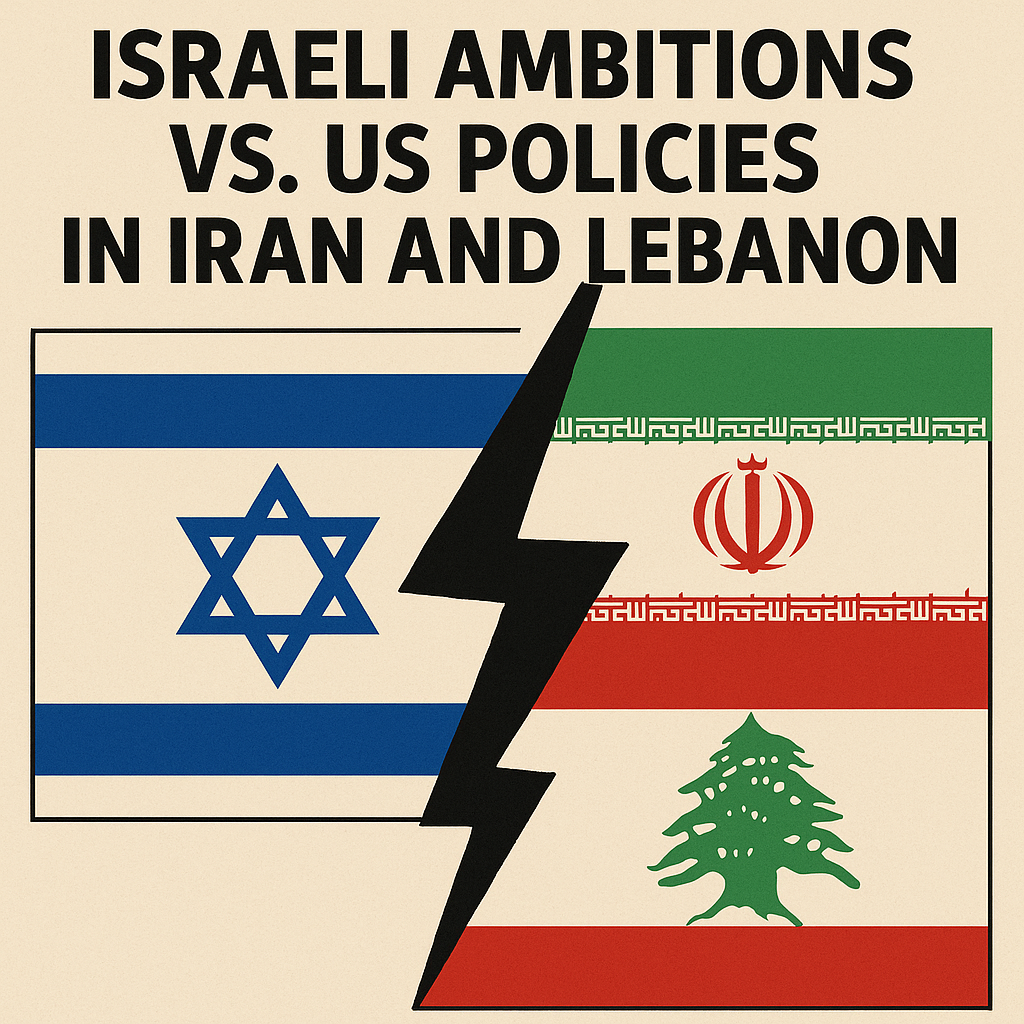
Israeli Ambitions vs. US Policies in Iran and Lebanon

Israeli Ambitions vs. US Policies in Iran and Lebanon
The intricate dynamics of Middle Eastern geopolitics are vividly illustrated by the ongoing tensions between Israeli ambitions and U.S. policies regarding Iran and Lebanon. The interplay of these two nations depicts a landscape filled with historical grievances, strategic calculations, and geopolitical maneuvers that resonate across global spheres.

Israeli Strategic Goals
Israel’s approach to Iran and Lebanon is primarily shaped by its security considerations and its desire to curb hostile influences in the region. Over recent years, Israel has ramped up military actions aimed at countering what it perceives as increasing Iranian encroachment. For instance, operations against Iranian military installations in Syria have become commonplace, as the Israeli government seeks to prevent Tehran from establishing a foothold close to its borders. Such actions are often framed within Israel’s right to defend itself against existential threats.


Moreover, Israel views Hezbollah, the militant Lebanese group backed by Iran, as a direct threat. Israeli officials assert that Hezbollah possesses an arsenal of precision-guided missiles, which raises alarms about national security. This perception has led to enhanced military readiness and calls for pre-emptive measures, underscoring a point of contention between Tel Aviv and Washington. While both nations agree on the threats posed by Tehran, Israel’s more aggressive stance often contrasts with the U.S.’s approach, which tends to emphasize diplomacy and sanctions.


U.S. Policy and Strategic Calculations
The U.S. has traditionally played a balancing act in the region, advocating for diplomatic solutions. American officials have expressed concerns about Iran’s nuclear program and its influence through proxy militias in Lebanon and elsewhere. However, these concerns often come packaged with a restraint that Israel does not always share. The Biden administration, for instance, is focused on revitalizing the nuclear deal, which it believes can stabilize not only Iran but also the broader region. This approach reflects a broader U.S. strategy aimed at reducing direct military engagement in the Middle East.
Furthermore, the American view on Hezbollah is somewhat cautious. While labeling it a terrorist organization, the U.S. prefers to address its activities through sanctions and strategic alliances with Lebanon rather than military confrontation. This divergence fuels friction with Israel, which desires an unyielding stance against Hezbollah and believes a more upfront military engagement may be warranted.
Diverging Perspectives and Implications
The conflict between Israeli ambitions and U.S. policies underscores significant implications for regional stability. Israeli leaders often argue that American policies exhibit an unrealistic optimism about Iran. They express skepticism toward diplomatic negotiations, seeing them as giving Iran more time to advance its nuclear program. Conversely, U.S. officials highlight the need for caution, warning that military actions could further destabilize an already volatile region.
A Complex Relationship
This complex relationship means that whenever a new geopolitical development arises—such as Iran’s advances in missile technology or Hezbollah’s military drills—Israel and the U.S. find themselves in discussions that can quickly become contentious. The fallout can affect diplomatic relations as well as operational partnerships in intelligence sharing and military cooperation.
Multiple sources illustrate these tensions: Al Jazeera notes that Israel has not hesitated to publicly criticize American negotiations with Iran. Reports indicate that Israeli Prime Minister Benjamin Netanyahu has urged a firmer U.S. stance on Tehran, indicating a subtle rift between the allies. Conversely, statements from U.S. officials reveal an understanding of Israel’s concerns but emphasize that military solutions are not always the most sustainable approach to solving complex problems in the region.
Conclusion: Finding Common Ground
As Israel continues its military operations against Iranian influence, the U.S. maintains its preference for dialogue over military action. The challenge lies in reconciling these differing approaches. While both nations share interests in curbing Iran’s ambitions, their pathways diverge significantly.
Ultimately, finding common ground may require nuanced diplomacy, where mutual respect for each nation’s strategic concerns can foster cooperation rather than division. The intricate dance of diplomacy and military might must balance the immediate security concerns of Israel with the long-term goals of American foreign policy—seeking not just peace but sustained stability in a tumultuous region.
By actively engaging in dialogue and understanding the complexities at play, both nations can work toward a collaborative strategy that acknowledges their divergent perspectives, ultimately benefiting regional security and international relations.















