
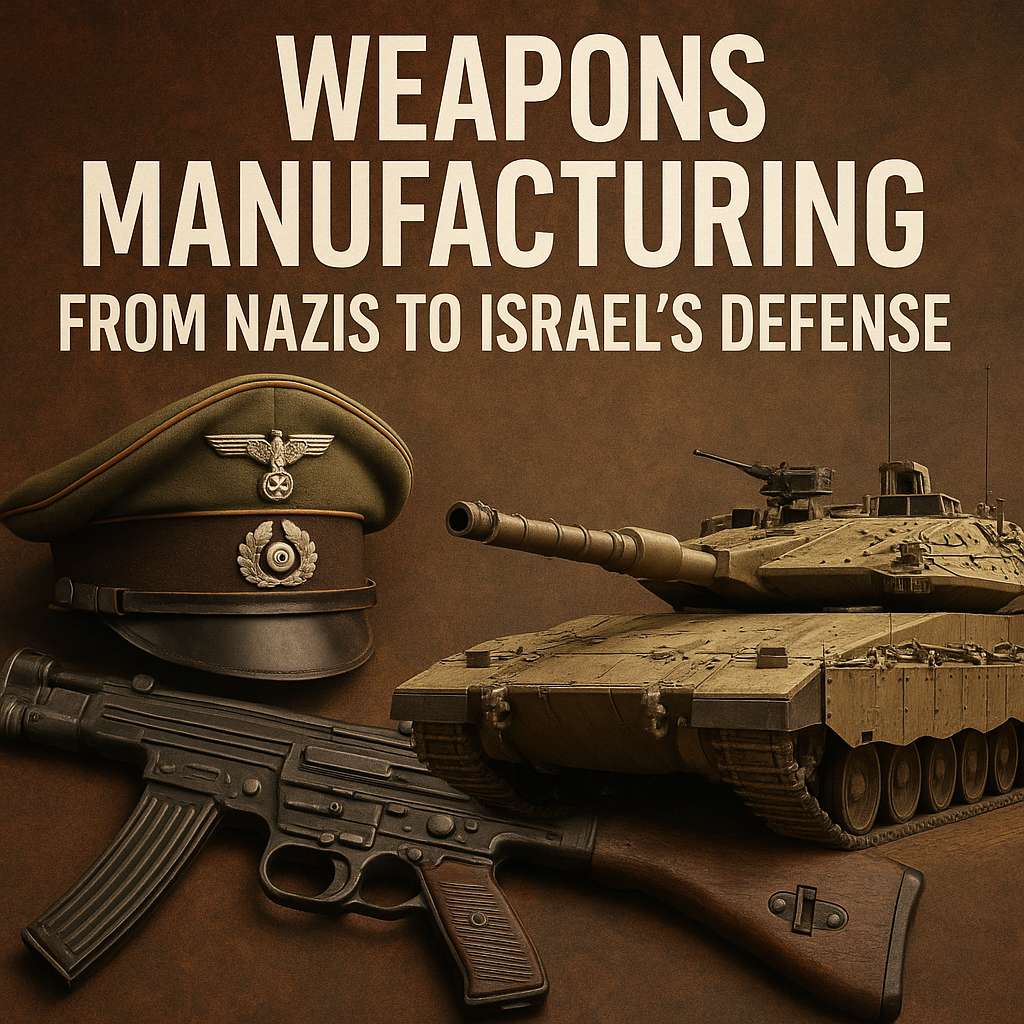
Weapons Manufacturing: From Nazis to Israel’s Defense

Weapons Manufacturing: From Nazis to Israel’s Defense
The history of weapons manufacturing tells a complex story that intertwines technology, politics, and human ethics. At its core, this narrative is a tapestry woven from notable events and figures, touching upon controversial topics such as the roles of historical regimes and modern-day defense technologies, especially in the context of Israel.

Historical Context: The Legacy of the Nazis
The legacy of Nazi Germany in the realm of weaponry significantly shaped the modern military-industrial landscape. From the mechanized warfare of World War II to the advanced weaponry developed in its aftermath, the innovations born from this dark chapter in history have left an indelible mark on military practices today. The Nazis were infamous for their relentless pursuit of technological superiority; their advancements in weapons, particularly in aerial and mechanized combat, had far-reaching implications.


Today, many of the technologies developed during that era are not only preserved but have been adapted and improved upon by numerous nations. The transfer of knowledge and expertise from the ruins of Nazi weapons factories has sparked debates about the ethics of leveraging historical innovations for contemporary military applications.


In a recent article on RT News, the focus shifted to how innovations originally birthed in Nazi Germany are reflective of persistent global conflicts. This historical perspective raises pertinent questions: how should the global community view the progression from these past atrocities to modern developments in arms manufacturing?
Contemporary Weapons Manufacturing: Israel and Its Defenses
Fast forward to the present day, and Israel’s defense industry is at the forefront of modern weaponry, significantly influenced by the historical evolution of military technology. The Israeli defense sector, particularly its missile defense systems like the Iron Dome, showcases the intersection of advanced technology and national security imperatives. According to reports from Al Jazeera, Israel’s commitment to ensuring its defense capabilities in a volatile region has spurred rapid advancements in military technology, positioning the country as a leader in arms production.
However, the reliance on sophisticated weaponry has led to contentious debates surrounding human rights and military ethics. Israel’s defense industry has frequently been criticized for its arms trade practices, particularly concerning sales to regimes involved in human rights violations. This has raised fundamental questions about the moral responsibilities of nations that produce weapons and the repercussions of such actions on global peace.
Innovations and Concerns
While the technology behind Israel’s weapons manufacturing reflects significant advancements, it also raises ethical dilemmas. On one hand, systems like the Iron Dome are celebrated for their success in intercepting incoming threats, thereby saving civilian lives. On the other hand, the continuous cycle of violence in the region often leads to heavy civilian casualties during conflicts, prompting widespread international condemnation.
The juxtaposition of these perspectives highlights a critical ethical landscape that arms manufacturers navigate. As reported by Sky News, international coalitions are striving for more regulation and oversight over the arms trade to ensure greater accountability and to prevent the misuse of advanced military technologies. This underscores the broader challenges the global community faces in balancing national security with humanitarian concerns.
Navigating the Future of Arms Manufacturing
Today, the conversation surrounding weapons manufacturing is far from simplistic. As nations grapple with the lessons learned from history, including the legacies of regimes like the Nazis, the imperative to adopt responsible practices becomes ever more pressing.
The debates over regulation, production, and ethical implications are ongoing. Countries like Israel continue to push the envelope in defensive technologies, but such advances carry with them a weight of responsibility. The dialogue around arms manufacturing must evolve, focusing not only on technological advancements but also on the humanitarian implications of weaponry in conflict zones.
In summary, the trajectory from Nazi-era weaponry to contemporary Israeli defense systems offers a profound insight into the complexities of arms manufacturing. As nations navigate these waters, the need for ethical considerations and a focus on human rights will be crucial in shaping the future landscape of global military practices. This ongoing conversation is vital to understanding our responsibilities as stewards of both technological advancements and moral imperatives in an increasingly complex world.















