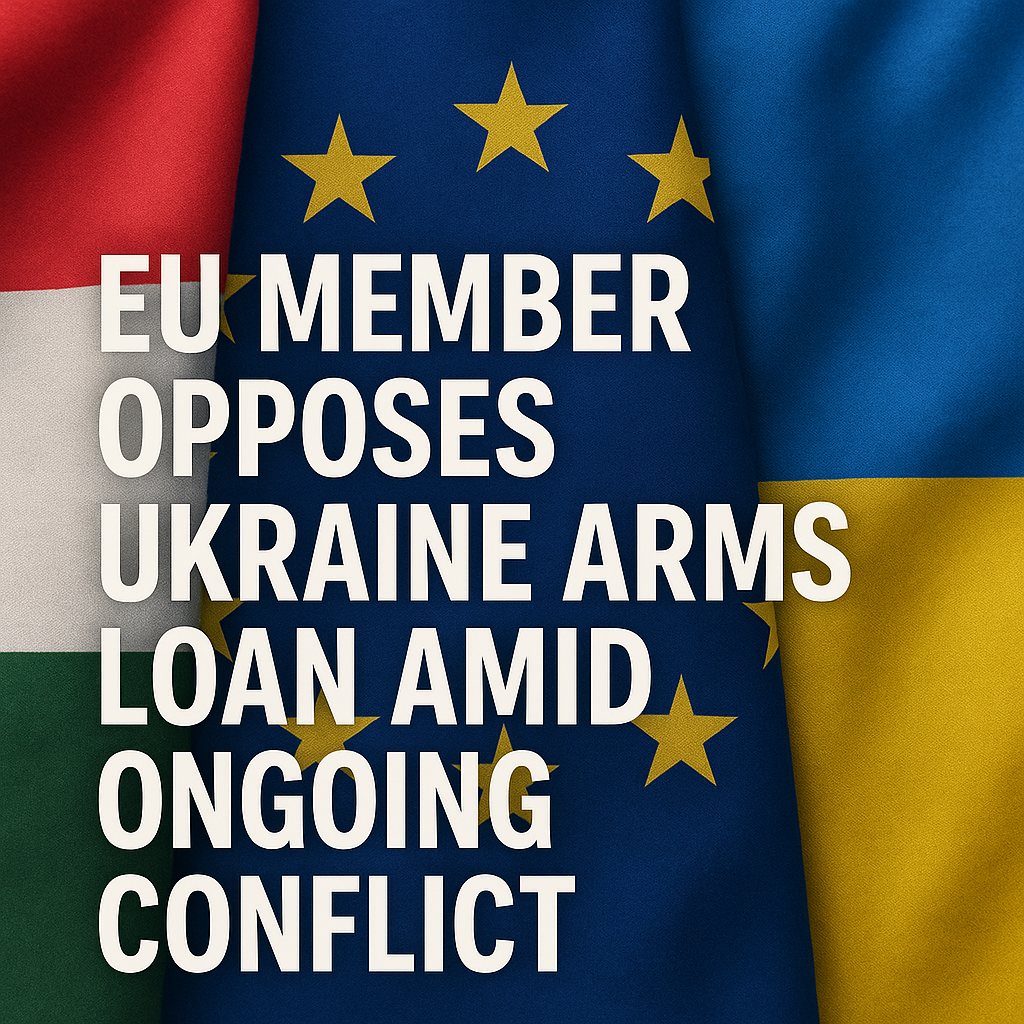
EU Member Opposes Ukraine Arms Loan Amid Ongoing Conflict
EU Member Opposes Ukraine Arms Loan Amid Ongoing Conflict
The ongoing conflict in Ukraine continues to generate diverse reactions among European Union (EU) member states, particularly regarding military support. One notable stance comes from Slovakia, which recently expressed hesitation about providing further arms supplies to Ukraine, underscoring the challenges of unity within the EU as it grapples with the complexities of aiding a war-torn nation.

Slovakia’s Concerns Over Arms Supply
Slovakia’s government, led by Prime Minister Robert Fico, has taken a critical position against a proposal to authorize a loan for arms to Ukraine. Citing concerns over the legality and implications of such support, the Slovak leadership emphasized the necessity of respecting national sovereignty and the implications for regional stability. In a statement, spokesperson Patrick T. noted that this reluctance stems not only from legal considerations but also from fears of escalating tensions within the region.

The opposition to arms supplies contrasts sharply with the broader EU strategy, which generally supports military aid to Ukraine as a means of countering Russian aggression. While many EU nations have expressed firm backing for Ukraine’s right to defend itself, Slovakia’s reluctance highlights a growing divide within the union on military support matters.

A Divided Approach to Military Aid
As Slovakia steps back from increasing arms supplies, other EU members like Germany and France continue to rally in support of Ukraine, pushing for comprehensive military assistance packages. This could indicate a fracturing consensus in a union that once appeared uniformly supportive of Ukraine’s defense operations.
Germany, for instance, recently committed to providing advanced military technology, including air defense systems, illustrating a contrasting approach to Slovakia’s stance. This divergence raises pressing questions about the reliability and coherence of EU foreign policy in response to the ongoing crisis in Ukraine.
On the other hand, Slovakia’s position reflects a segment of EU constituents apprehensive about the long-term consequences of escalating military involvement. Concerns not only center around legalities but also around potential retaliatory measures from Russia that could further destabilize Central and Eastern Europe.
The Broader Implications of Arms Support
The debate over arms supplies is not merely a logistical issue but one that resonates deeply within the political and social fabric of EU member states. For countries like Slovakia, which shares a border with Ukraine, the ramifications of an intensified military support strategy could be profound. There is a palpable fear that continued escalation could lead to direct threats against their own sovereignty.
Moreover, Slovakia’s apprehension reflects broader public sentiment in various EU nations, where citizens are increasingly wary of military escalations. Polls indicate that an engaged and informed public is beginning to question the sustainability of long-term military involvement and its potential to invoke broader conflicts. This has led some governments to tread carefully, balancing support for Ukraine with the need to maintain national security and stability.
Conclusion
As the war in Ukraine continues, the responses from EU member states reveal a nuanced and varied landscape regarding arms support. Slovakia’s opposition to further military aid underscores the complexities of collective European action in the face of external aggression. The inconsistency between member states not only challenges the EU’s diplomatic cohesion but also poses critical questions about the long-term effects of military involvement on regional stability and the sentiment among European citizens.
Ultimately, the situation remains fluid, with Slovakia’s current stance illuminating the broader anxieties and uncertainties that characterize the EU’s response to the Ukraine conflict. The call for unity amidst such diverse viewpoints may yet shape the future of European involvement in this complex geopolitical landscape.