
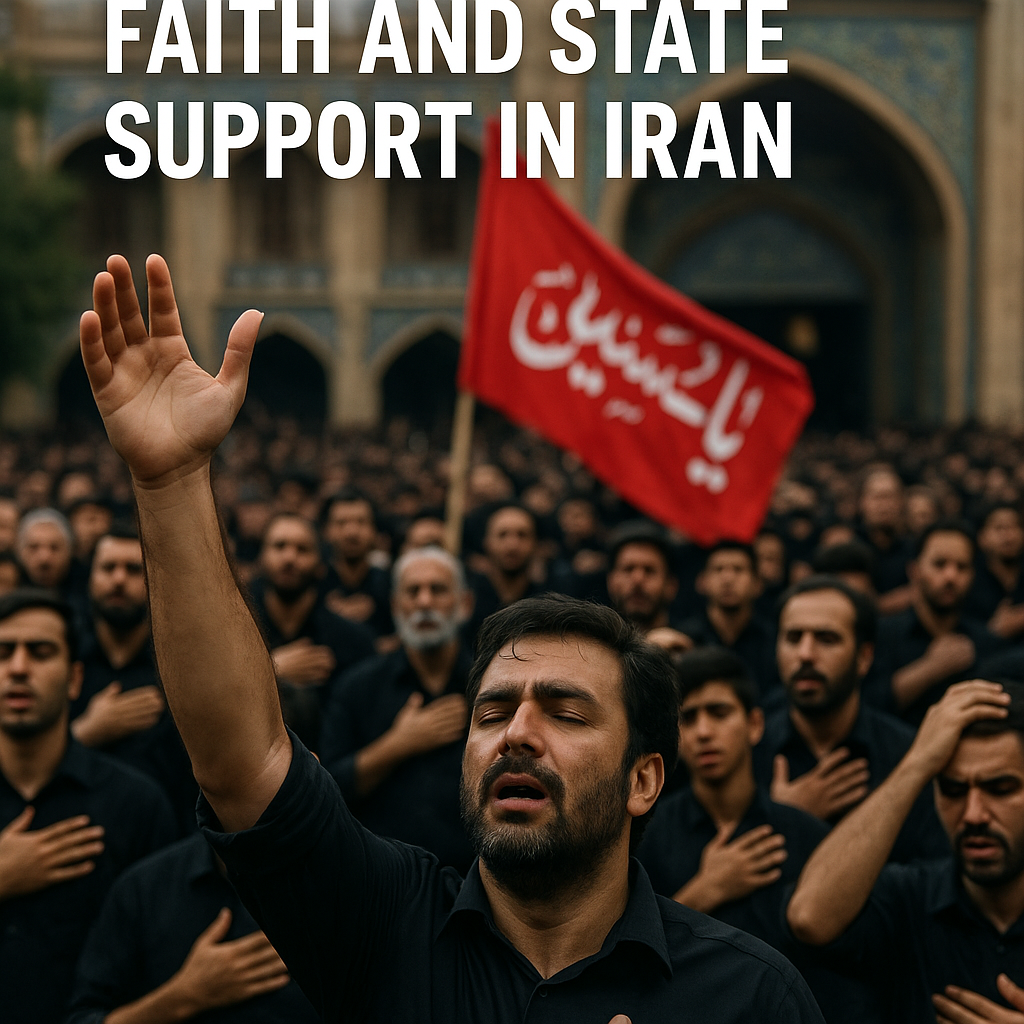
Ashura Ceremonies: Faith and State Support in Iran
Ashura Ceremonies: Faith and State Support in Iran
The Ashura ceremonies in Iran serve as a poignant reminder of the complex interplay between faith and state support in the country. These rituals, steeped in Shia Islamic tradition, not only commemorate the martyrdom of Imam Hussein but also reflect the political dynamics at play within the Iranian sociopolitical landscape.

Historical Context of Ashura in Iran
Ashura, observed on the 10th day of Muharram, marks a pivotal moment in Islamic history—the Battle of Karbala, where Imam Hussein, the grandson of the Prophet Muhammad, was martyred. This event has profound religious significance for Shia Muslims, symbolizing the struggle against tyranny and injustice. For centuries, the day has been marked by mourning rituals, processions, and public displays of grief.

In Iran, which has the largest Shia population globally, Ashura ceremonies are particularly significant. They foster a sense of community, as millions participate in gatherings that can include reenactments, poetry recitals, and communal meals. However, these ceremonies also serve as a platform for emotional expression regarding current political issues, reflecting the merging of faith and national identity.

The Intertwining of Faith and State
Recent observations of the Ashura ceremonies have highlighted how the Iranian government has positioned itself as a supporter and organizer of these rituals. Government involvement has been critiqued by some as an effort to consolidate power while simultaneously promoting a narrative that intertwines Islamic values with national governance.
Government Support
State-sponsored events, often backed by local authorities, underscore the regime’s commitment to promoting unity through shared religious observance. The government uses Ashura as a means to strengthen its legitimacy, presenting itself as the protector of Shia Islam. This is evident in various public displays and slogans during the ceremonies that often reflect the regime’s political messaging.
Despite the intrinsic religious significance of Ashura, the Iranian authorities sometimes leverage these events to exert political control. Reports indicate that security forces are present at many gatherings, which can lead to a blend of solemn mourning with state propaganda. This has led many participants to experience a conflict between genuine grief for Imam Hussein and the underlying political undertones propagated by the state.
Diverse Perspectives
However, not all citizens perceive the state’s involvement in Ashura ceremonies positively. Some critics assert that the government’s attempts to align itself with religious practices serve to dilute the spiritual essence of the observance. They argue that this politicization undermines the foundation of the rituals, which at their core are meant to represent personal and communal faith, rather than be a showcase for political theater.
Conversely, many Iranians embrace the coupling of faith with state support, viewing it as a necessary unification that strengthens national identity. They believe that in a country facing ongoing economic and social challenges, the collective engagement in Ashura reinforces both spiritual and national resilience.
The Role of the International Community
The role of outside perspectives in shaping the understanding of Ashura ceremonies in Iran cannot be understated. Various international commentators have pointed out the inherent contradictions within the Iranian regime as it promotes Ashura. The festivals are often seen as an opportunity for the state to position itself as a champion of oppressed populations, while simultaneously facing international scrutiny over its human rights record.
Reports from various global news outlets highlight that the ceremonies can attract attention from both supporters of the Iranian regime and critics alike, creating a complex environment where global political tensions further complicate local observances.
Conclusion: A Complex Interplay
In conclusion, the Ashura ceremonies in Iran exemplify a rich tapestry woven from threads of religious devotion and political maneuvering. While the deep emotional resonance of mourning for Imam Hussein remains central to the observance, the intertwining of faith with state support introduces layers of complexity. Observers and participants alike grapple with the impact of governmental influence on their spiritual practices, revealing a society that is both deeply faithful and acutely aware of its political realities.
As the world watches, the ceremonies continue to unfold as a remarkable testament to the power of collective memory, spiritual commitment, and the intricate dance between faith and governance in modern Iran.















