
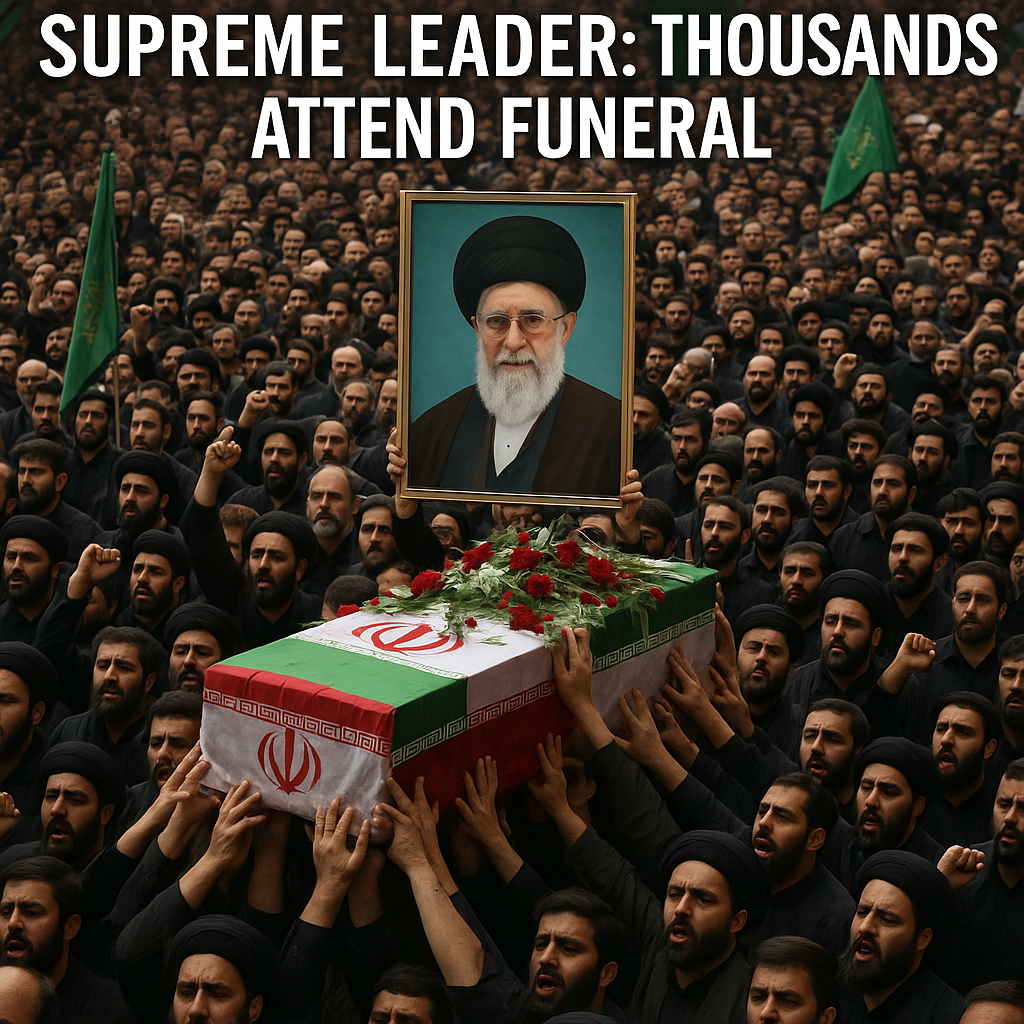
Iran’s Assassinated Supreme Leader: Thousands Attend Funeral
Thousands Attend Funeral of Iran’s Assassinated Supreme Leader
The assassination of Iran’s Supreme Leader has sent shockwaves through the nation, prompting thousands of mourners to gather for a funeral marked by both grief and defiance. The public outpouring of emotion underscores the complex nature of political and religious identity in Iran, as well as the uncertain future that lies ahead for the country in the wake of this tragedy.

The Mourning Procession: A Reflection of Governance and Belief
As the streets of Tehran filled with somber faces, the sheer scale of the funeral reflected the pivotal role that the Supreme Leader played in Iranian society. Reports indicate that hundreds of thousands participated in the ceremony, carrying banners and chanting slogans that not only honored the deceased but also conveyed messages of loyalty to the Islamic Republic.

A Sky News report noted a significant military presence at the event, showcasing the regime’s insistence on projecting strength amidst uncertainty. This emphasis on security highlights ongoing tensions within Iran, a country grappling with internal dissent and external pressures. The attendance was also bolstered by statements from various factions within the government that characterized the assassination as an attack on Iran itself, rallying citizens to unite against perceived foreign adversaries.

However, some analysts contend that while the funeral demonstrated overwhelming support, it also revealed underlying fractures within the Iranian populace. Al Jazeera pointed out that the atmosphere of mourning was tinged with skepticism, particularly among younger generations who may feel disconnected from the ideals espoused by the Supreme Leader. This divergence in sentiment emphasizes a growing trend of youthful discontent, as many young Iranians have expressed a desire for more reform and greater freedoms.
Diverging Views on the Ripple Effects of the Assassination
The assassination has prompted varied responses not only within Iran but also from international observers. On one side, state media have painted a picture of collective sorrow and resilience, framing the funeral as a moment of national solidarity. Iranian authorities have called for vigilance against those they claim will attempt to capitalize on the situation to disrupt stability.
Conversely, foreign analysts remain cautious. Reports from RT News suggest that the murder could potentially destabilize the already fragile political landscape. Some experts warn that power struggles may intensify as factions within the government vie for influence in the absence of a strong leader. The event marks a critical juncture for Iran, with questions surrounding who will step into the leadership vacuum and how this might affect both domestic and foreign policy.
Furthermore, disparities in response to the assassination indicate a divided populace. While many mourn the loss, others display a sense of resignation or disillusionment with the ongoing political system. Observers speculate that heightened tensions could lead to protests or unrest in the future, as public dissatisfaction bubbles beneath the surface.
Conclusion: Navigating Uncertainty Amid Grief
The funeral of Iran’s assassinated Supreme Leader serves as a powerful reminder of the complexities surrounding governance, identity, and public sentiment in the nation. As thousands mourn, the broader implications of this tragedy continue to unfold. Balancing the dual narratives of loyalty to the regime and the calls for reform will be crucial for Iran’s future.
In the coming weeks and months, the world will be watching closely to see how the leadership crisis impacts both internal stability and Iran’s relations with neighboring countries and global powers. The outpouring of grief at the funeral signifies more than just a loss; it encapsulates a nation at a crossroads, balancing the weight of tradition and the need for change in an increasingly uncertain landscape.















