
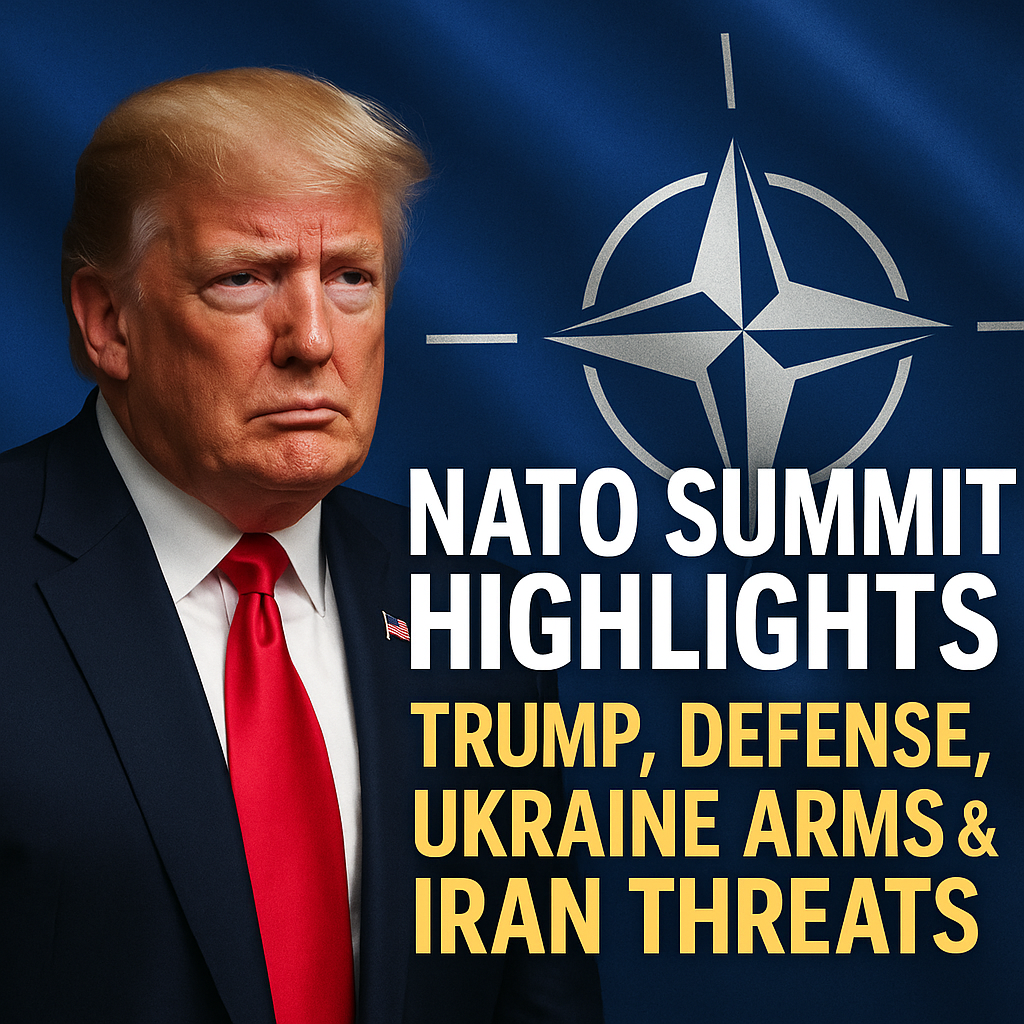
NATO Summit Highlights: Trump, Defense, Ukraine Arms & Iran Threats
NATO Summit Highlights: Trump, Defense, Ukraine Arms & Iran Threats
The recent NATO summit has brought to the forefront critical discussions surrounding defense strategies, global security, Ukraine’s ongoing conflict, and emerging threats from nations like Iran. This meeting marked a pivotal moment for the alliance, encapsulating diverse viewpoints and urgent matters that could define NATO’s future role in world affairs.

Key Takeaways on Defense Strategies
During the summit, NATO leaders underscored the significance of bolstering defense capabilities to counter rising global threats. An emphasis was placed on increasing military spending among member countries, with calls for nations to meet the NATO guideline of spending at least 2% of their GDP on defense. This target has become a contentious issue, with some members, particularly in Europe, lagging behind.

Former President Donald Trump’s notable presence at the summit reignited discussions from his administration, particularly his robust stance on NATO spending. According to sources, Trump reiterated that European nations ought to contribute more to collective defense—a sentiment echoed by some leaders who argue that reliance on U.S. military resources may hinder Europe’s own defensive preparedness.

– Increased Defense Budgets: Several member states, such as Poland and the Baltic Republics, announced immediate plans to ramp up defense spending significantly.
– Enhanced Military Exercises: NATO plans to enhance military readiness through joint exercises, signaling its commitment to deterrence.
The Ukrainian Conflict and Arms Supply
Ukraine’s ongoing conflict with Russia remained a central theme of the summit, with NATO affirming continuing support for Kyiv. The alliance’s collective stance is to provide arms and training to bolster Ukraine’s defense capabilities. Reports suggest that substantial military aid packages were discussed, focusing on advanced weaponry and logistical support.
According to Al Jazeera, the support for Ukraine was framed as essential not only for the country’s sovereignty but also as a matter of continental stability. The potential for a prolonged conflict could have ramifications well beyond Ukraine’s borders, influencing global energy markets and heightening security concerns acutely felt in NATO’s Eastern flank.
However, opinions diverge on the implications of continued military aid. Some analysts caution that while supporting Ukraine is vital, unchecked military escalation may serve to further strain relations with Russia. Others maintain that a firm stance against Russian aggression is crucial for the preservation of democratic norms in Europe. This contrast underscores the complex nature of the geopolitical landscape NATO navigates.
Rising Threats from Iran
Iran’s nuclear ambitions and regional influence emerged as another pressing issue at the summit. Leaders discussed the growing threats posed by Iran, particularly its advancements in uranium enrichment and its destabilizing role in areas such as Syria and Yemen. Officials voiced concerns over the broader ramifications of Iran’s actions on regional stability, especially in the context of its support for proxy groups that challenge NATO allies.
This sentiment is echoed by a variety of commentators. Some argue that a more proactive stance is necessary to deter Iran’s influence, suggesting comprehensive strategies that combine diplomatic efforts with defense readiness. Critics, however, warn against overly militaristic approaches, advocating instead for renewed negotiations or diplomatic channels that could alleviate tensions without resorting to force.
Contemplations on Future NATO Directions
As the dust settles from the summit, the path ahead for NATO appears laden with both challenges and opportunities. The alliance finds itself at a crossroads; while unity in defense spending and arms support for Ukraine signifies a coordinated effort to address immediate threats, the differences in approach towards Iran and Russia exemplify the undercurrents of divergent national interests.
In summary, the NATO summit underscored the intricate balance the alliance must strike between defense spending, commitment to Ukraine, and dealing with threats emanating from Iran. NATO’s future efficacy will certainly hinge on how well it can integrate these varying perspectives and form a cohesive strategy that addresses not only military readiness but also nuanced diplomatic relations. With internal and external pressures mounting, the necessity for a well-rounded and thoughtful approach has never been more apparent.















