
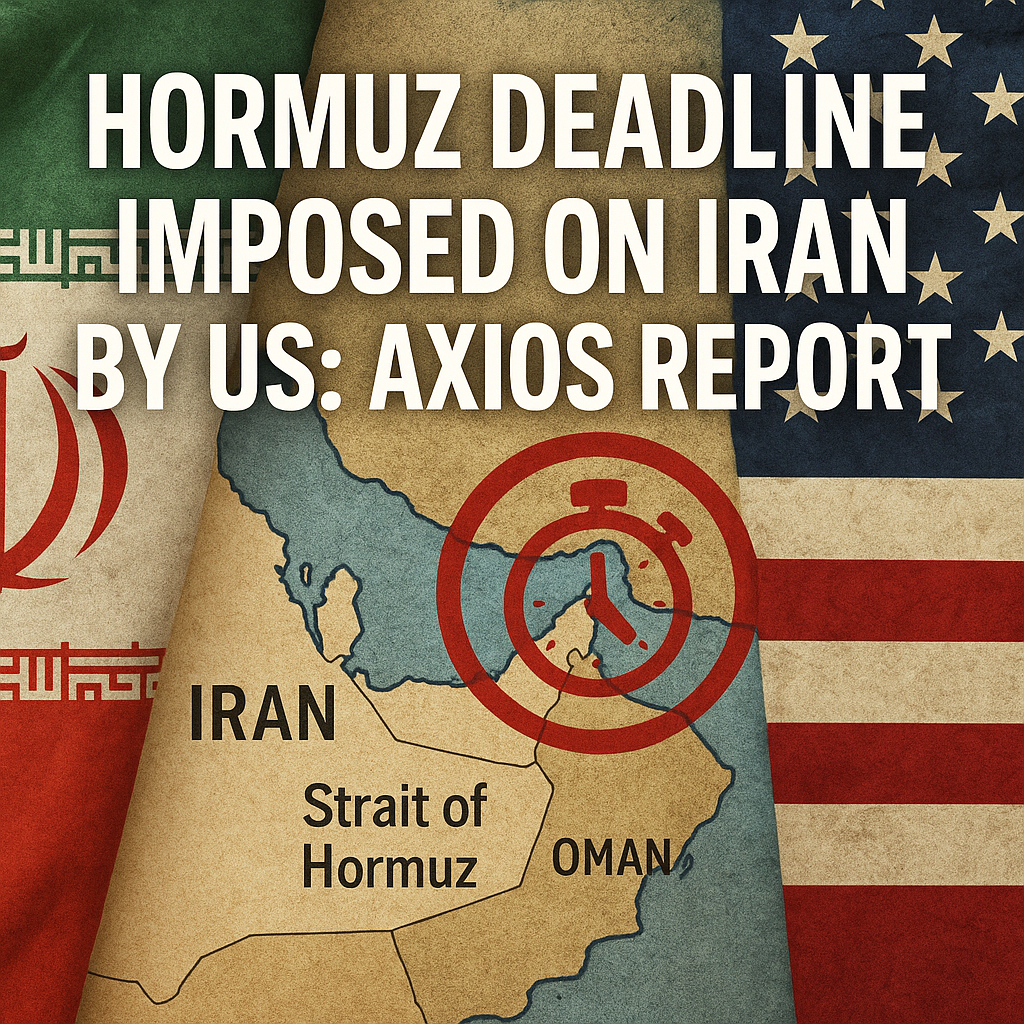
Hormuz Deadline Imposed on Iran by US: Axios Report
Understanding the Hormuz Deadline Imposed on Iran by the US
In recent developments, the United States has reportedly set a deadline for Iran regarding its activities in the strategic Strait of Hormuz. This move has sparked various reactions and discussions among global observers and regional powers, particularly concerning maritime security and diplomatic relations.

The Strategic Importance of the Strait of Hormuz
The Strait of Hormuz holds immense geopolitical significance as it is one of the world’s most critical chokepoints for oil transportation. Approximately 20% of the world’s oil supply transits through this narrow passage, making it a focal point for energy security. Given its importance, any unilateral action in this region can have far-reaching implications not just for local countries but for the global economy.

The U.S. has long maintained a military presence in the area to ensure the free flow of maritime trade. Historically, tensions with Iran have escalated in this region, leading to various confrontations at sea. In light of the recent deadline imposed by the U.S., Iran has been urged to cease activities deemed provocative, such as the harassing of commercial vessels transiting the strait.

Diverse Perspectives on the Deadline
The Axios report, serving as a primary source for this development, highlights a pressing timeframe imposed by the U.S. on Iran to alter its current maritime conduct or face potential repercussions. According to the report, U.S. officials are concerned about Iran’s actions, which they view as attempts to disrupt the maritime traffic of vessels, thereby threatening global oil supply chains.
However, this perspective is met with skepticism and cautious criticism from various points of view. Some analysts argue that the deadline appears more reactive than proactive, driven by recent incidents involving Iranian naval forces. Critics point out that setting a deadline might only antagonize Iran further, potentially heightening hostilities rather than leading to productive negotiations.
Conversely, Iranian officials have dismissed the U.S. ultimatum, claiming it lacks legitimacy and is merely an attempt to exert pressure on Tehran. They argue that the U.S. military presence in the region is the real issue, stating that the presence of foreign forces contributes to instability and insecurity in the Gulf area.
The Road Ahead: Diplomacy or Escalation?
As the deadline approaches, the question remains whether this situation will pave the way for renewed diplomatic efforts or escalate tensions further. Some commentators advocate for renewed dialogue, suggesting that a diplomatic approach remains the best path forward. They note that engagement could lead to mutually beneficial agreements that enhance security for all involved, including the U.S., Iran, and regional allies.
On the other hand, the inclination toward military readiness suggests that some policymakers believe a show of strength may be necessary to deter Iranian naval provocations. This gives rise to fears of a potential confrontation, which could destabilize not just maritime shipping routes but also influence the regional security architecture.
Iran, for its part, has taken steps to bolster its naval capabilities, asserting its right to protect its territorial waters while warning against foreign military operations near its shores. This complex interplay suggests that the Hormuz deadline could lead to a variety of outcomes ranging from escalated military engagement to diplomatic breakthroughs.
Conclusion: A Complex Nexus of Interests
The deadline imposed by the U.S. on Iran regarding its activities in the Strait of Hormuz highlights the multifaceted nature of international maritime security. While there is a clear emphasis on maintaining freedom of navigation and ensuring stability in global oil supplies, the path ahead remains fraught with uncertainty.
The juxtaposition of military readiness against diplomatic engagement underscores the complex dynamics at play among the U.S., Iran, and regional stakeholders. Observers remain watchful, aware that the next moves could significantly influence the geopolitical landscape of the Gulf region and beyond. As both parties navigate this intricate situation, the outcome will hinge not just on deadlines but on the willingness to engage in meaningful dialogue aimed at lasting resolution.















