
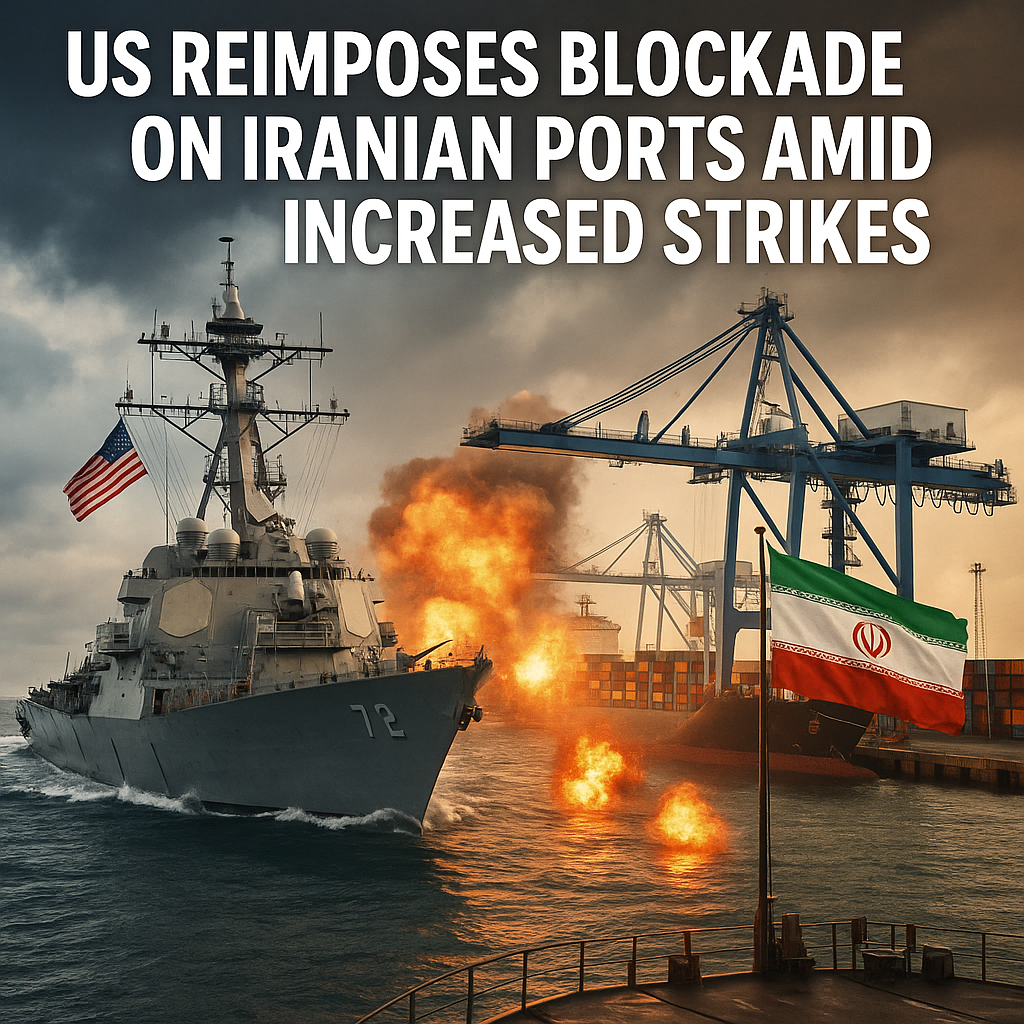
US Reimposes Blockade on Iranian Ports Amid Increased Strikes
US Reimposes Blockade on Iranian Ports Amid Increased Strikes
In recent developments, the United States has responded to escalating tensions in the Gulf by reinstating blockade measures on Iranian ports. This decision has garnered varying reactions, reflecting the complexities of geopolitical dynamics in the region.

Escalating Tensions and Military Action
The backdrop to the renewed blockade includes a series of military strikes carried out by both the U.S. and Iran. Analysis indicates that these strikes have not only heightened tensions but have also led to casualties and significant infrastructure damage. According to several reports, the U.S. targeted operational capabilities of Iranian forces involved in supporting regional proxies and threatening shipping routes in the Strait of Hormuz.

On the other hand, Iran has retaliated with an array of drone and missile strikes targeting Gulf states, further complicating the situation. Iranian officials have publicly vowed to retaliate against attacks on their soil, asserting their right to defend national interests. These actions reveal a tit-for-tat escalation in military posturing, raising concerns about a broader regional conflict.

Economic Implications of the Blockade
The reinstatement of the blockade is expected to have profound economic repercussions, both for Iran and global markets. By restricting access to crucial ports, the U.S. aims to exert maximum pressure on the Iranian economy, which has already been grappling with the fallout from previous sanctions. The blockade is likely to exacerbate existing economic hardships for ordinary Iranians, as access to goods and essential supplies will be further limited.
Conversely, some analysts argue that reinforcing sanctions could potentially backfire, leading to greater solidarity among Iranian factions and increased defiance against U.S. policies. Historical context shows that such measures often lead to nationalistic sentiments, where the targeted country unites against external pressures.
Divergent Perspectives on the U.S. Tactics
The U.S. government’s stance has been met with both support and criticism. Proponents of the blockade argue that the measure is essential for safeguarding international shipping lanes and curbing Iranian aggression. They highlight the necessity of maintaining a strong deterrent against threats to global oil supply routes, which are vital for economic stability.
However, critics of U.S. policy question the efficacy of renewed blockades and sanctions, pointing to a record of limited success in altering Iranian behavior. They argue that such measures often lead to diplomatic stalemates and could inadvertently strengthen hardline factions within Iran, making future negotiations even more challenging.
To complicate matters further, some experts believe that a focus solely on military solutions may neglect potential diplomatic avenues. They stress the importance of engaging with Iran through negotiations, rather than solely relying on sanctions that could reinforce adversarial postures.
International Reactions and Future Considerations
The international community’s reaction to the blockade and military actions has been mixed. While some nations align themselves with U.S. efforts to contain Iranian influence, others advocate for a more measured approach that prioritizes dialogue over confrontation. For instance, European countries have expressed concern about the potential for an arms race in the region stemming from aggressive U.S. tactics.
Future considerations hinge on various factors, including potential shifts in U.S. foreign policy with changing administrations and the evolving landscape of regional alliances. The interplay of diplomacy, military action, and economic sanctions will undoubtedly continue to shape the trajectory of U.S.-Iran relations and broader Gulf dynamics.
Conclusion
The reinstatement of the blockade on Iranian ports amidst increased military strikes underscores a critical juncture in U.S.-Iran relations. While the U.S. emphasizes a need for security and deterrence, the implications of such measures extend far beyond military objectives. As the situation develops, it will be crucial to monitor the affects on both regional stability and the Iranian economy. Navigating these complexities requires a balanced understanding of the broader geopolitical landscape and an awareness of historical context.
In an era marked by increasing global interdependence, the resolution of these tensions may ultimately rely on diplomatic engagement and cooperative strategies rather than isolationist tactics alone.















