
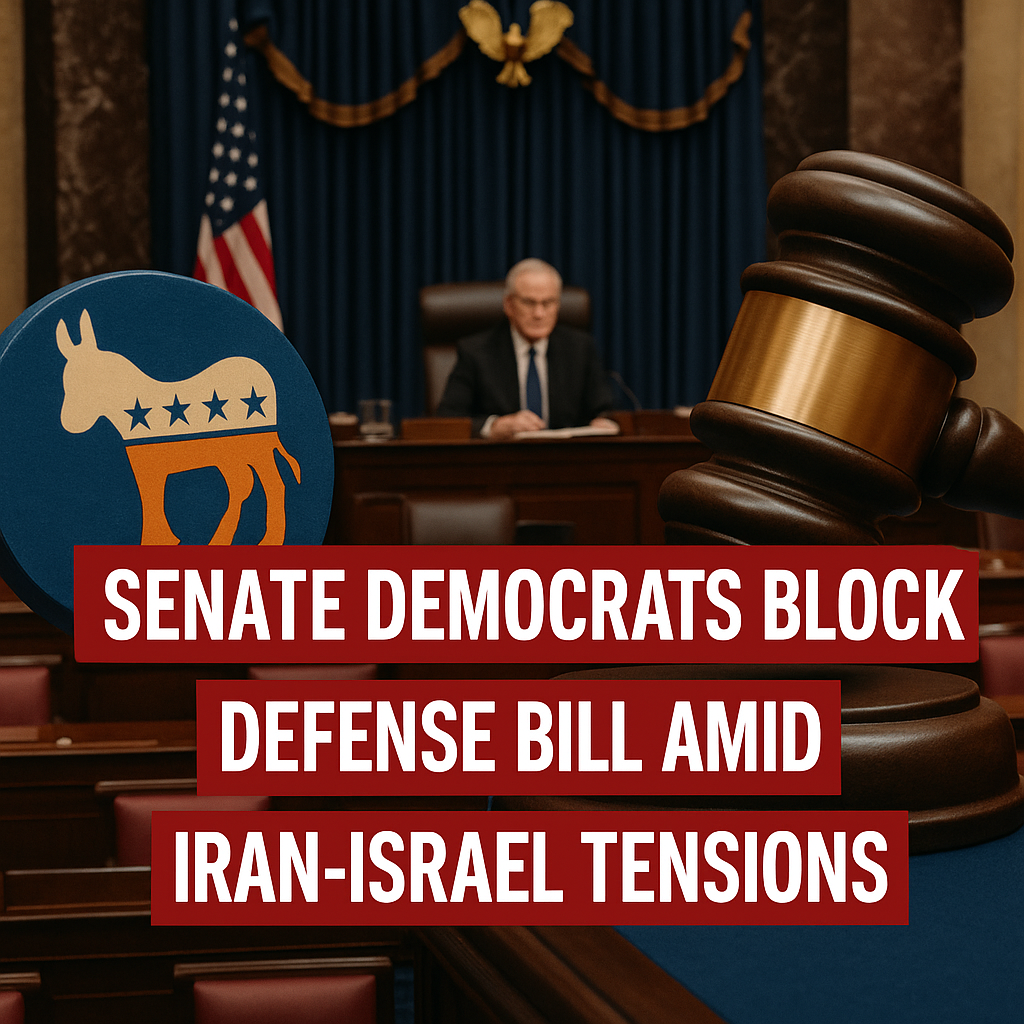
Senate Democrats Block Defense Bill Amid Iran-Israel Tensions
Senate Democrats Block Defense Bill Amid Iran-Israel Tensions
In a significant move within the U.S. Senate, Democrats have blocked a defense bill that included critical provisions related to the ongoing tensions between Iran and Israel. This decision underscores the widening complexities in U.S. foreign policy and the political divides that shape legislative outcomes.

Background on the Defense Bill
The defense bill in question was designed to allocate funding for the military and to introduce provisions that would strengthen America’s stance towards both Iran and Israel. One of the most controversial aspects was its potential support for military actions in the region, specifically against Iranian interests. Some lawmakers argued that these provisions were necessary to ensure U.S. interests in the Middle East, especially amid escalating threats. However, the consensus among Senate Democrats indicated a deep-seated apprehension regarding the potential consequences of military escalation in such a volatile region.

Critics of the defense bill, including prominent Democratic senators, expressed concern that the proposed military actions could lead to further destabilization and conflict. Senator Bob Menendez articulated his views, suggesting that it was crucial to avoid scenarios reminiscent of past Middle Eastern engagements that resulted in prolonged wars and significant loss of life.

Political Divide Over Foreign Policy
The rejection of the defense bill reveals a stark divide within Capitol Hill on the issue of foreign intervention. On one side, Republicans generally supported the bill, advocating for a more aggressive approach towards both Iran and perceived threats to Israeli security. They framed the legislation as necessary for deterrence and protection of allies. For instance, Senator Mitch McConnell emphasized that the defense bill was essential for reinforcing U.S. commitments in the region.
Conversely, Senate Democrats highlighted a need for diplomacy over military action, echoing sentiments that resonate with a growing portion of the American public who prefer non-interventionist policies. With recent polls indicating a declining appetite for military entanglement, especially after decades of involvement in the Middle East, Democrats positioned their opposition as a reflection of constituents’ desires for more careful considerations of military engagements.
Outreach and Implications
The consequences of blocking the defense bill extend beyond immediate legislative outcomes. The decision to halt funding has geopolitical ramifications and may impact U.S.-Israel relations. Supporters of the bill cautioned that limiting military support could embolden adversaries in the region. They argue that a diminished U.S. presence might lead to increased Iranian influence, which could undermine Israeli security.
However, those opposing the bill contended that unconditional military support does not equate to actual security for Israel. They argued for a more nuanced approach that includes diplomatic measures and economic strategies aimed at fostering stability. This divergence speaks to a broader trend in foreign policy debates, where proponents of realpolitik clash with advocates for a more humanitarian outlook.
Conclusion
Ultimately, the blocking of the defense bill is a reflection of the complexities surrounding U.S. foreign policy, particularly in regions fraught with conflict. It serves to emphasize a growing divide among lawmakers, one that mirrors public sentiment increasingly wary of military interventions. As the situation in Israel and Iran continues to evolve, the implications of this legislative decision may redefine U.S. strategy in the region, necessitating a careful balance between advocating for allies and the pursuit of diplomatic solutions to longstanding tensions. The unfolding landscape will likely challenge lawmakers to rethink their approaches, urging a dialogue that accommodates multiple perspectives while addressing the uncertainties inherent in international relations.















