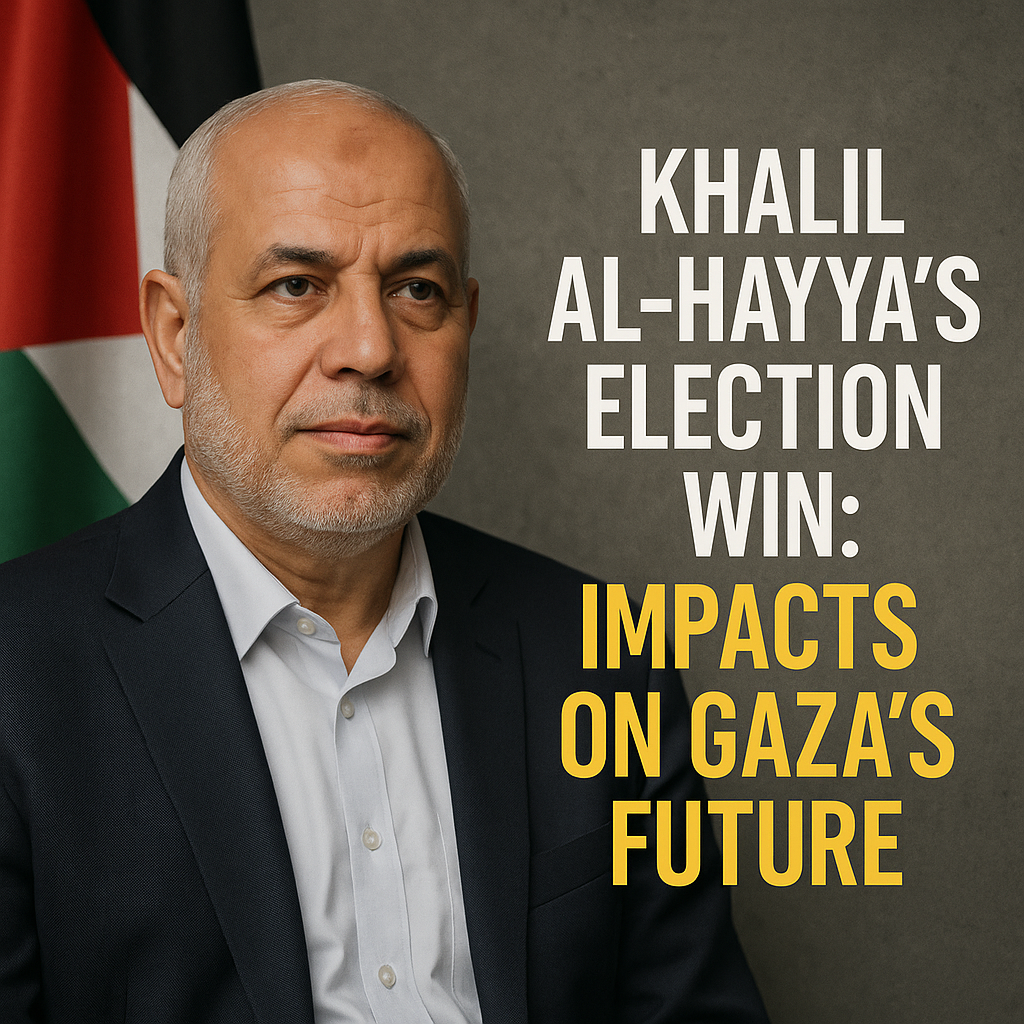
Khalil al-Hayya’s Election Win: Impacts on Gaza’s Future
Khalil al-Hayya’s Election Win: Impacts on Gaza’s Future
Khalil al-Hayya’s recent election victory marks a pivotal moment for Gaza, with potential ramifications that could reshape the region’s political landscape. As a senior member of Hamas, al-Hayya’s leadership style and policies will be closely scrutinized, especially regarding their implications for governance, security, and international relations in Gaza.

Understanding al-Hayya’s Political Landscape
Khalil al-Hayya, who has served in various capacities within Hamas, emerged victorious amidst a backdrop of significant political tension in both Gaza and broader Palestinian territories. His election signifies not only a continuation of Hamas governance but also raises questions about the future strategies the group might pursue in response to ongoing conflicts with Israel and internal Palestinian divisions.

Diverse Perspectives on the Election

Equally important to note is the spectrum of opinions surrounding al-Hayya’s rise to power. Supporters argue that his election could foster a more robust stance against Israeli policies, emphasizing resistance and advocacy for Palestinian rights. They perceive his leadership as vital in unifying various factions within Gaza, possibly bringing a more strategic approach to Hamas’s long-standing policies.
Conversely, critics express apprehension that al-Hayya may adhere closely to hardline policies, limiting the potential for dialogue with Israel. Some Palestinian factions advocate for a dual strategy that includes diplomatic negotiations, yet it remains unclear whether al-Hayya will embrace such an approach or focus predominantly on military resistance. Reports suggest that his governance might resist fragmentation and consolidate power within Hamas while stifling efforts toward easing tensions.
Potential Impacts on Gaza’s Future
The implications of Khalil al-Hayya’s leadership extend beyond immediate administrative changes. Gaza faces critical socioeconomic challenges, including high unemployment rates and infrastructure deficits. If his administration fails to address these pressing issues, the already fragile state of public trust could deteriorate further.
Possible Outcomes of His Leadership:
1. Increased Militarization: Al-Hayya may intensify military initiatives against Israel, which could result in escalated violence. Such a stance raises alarm not only among Israeli authorities but also within the international community, which might respond with sanctions or reduced aid.
2. Internal Political Dynamics: As Hamas solidifies its power under al-Hayya, the likelihood of suppressing dissent among rival factions in Gaza increases. Whether this leads to stability or heightened tensions is uncertain, dependent largely on al-Hayya’s political maneuvering.
3. International Relations: Hamas’s stance on diplomacy with Israel will likely define its relationship with other nations. While some factions within Palestine advocate for negotiation, Hamas’s history of resistance complicates potential peace efforts. Should al-Hayya reject engagement, it may lead to isolation from key global players, diminishing aid to Gaza.
4. Humanitarian Concerns: With Gaza’s dire humanitarian situation—a consequence of prolonged conflicts and economic stress—al-Hayya’s governance will be critically evaluated. His policies could either prioritize humanitarian assistance or exacerbate the already existing crises, resulting in public dissent and unrest.
A Complex Path Ahead
In summary, Khalil al-Hayya’s election poses significant uncertainties for Gaza’s trajectory. While he retains grassroots support within Hamas, his upcoming decisions will weigh heavily on both local and international dynamics. The balance of military action and humanitarian responsibility will be crucial in determining how his leadership is perceived—not only within Gaza but also across the region.
As events unfold, it is clear that both supporters and critics of al-Hayya will monitor his policies closely, with the hope that his actions will foster a shift toward stability amid decades of conflict. The continuing evolution of political affairs in Gaza necessitates a discerning watch, as the consequences of al-Hayya’s administration may echo far beyond the immediate territory, impacting regional geopolitics and international relations concerning Palestine.