
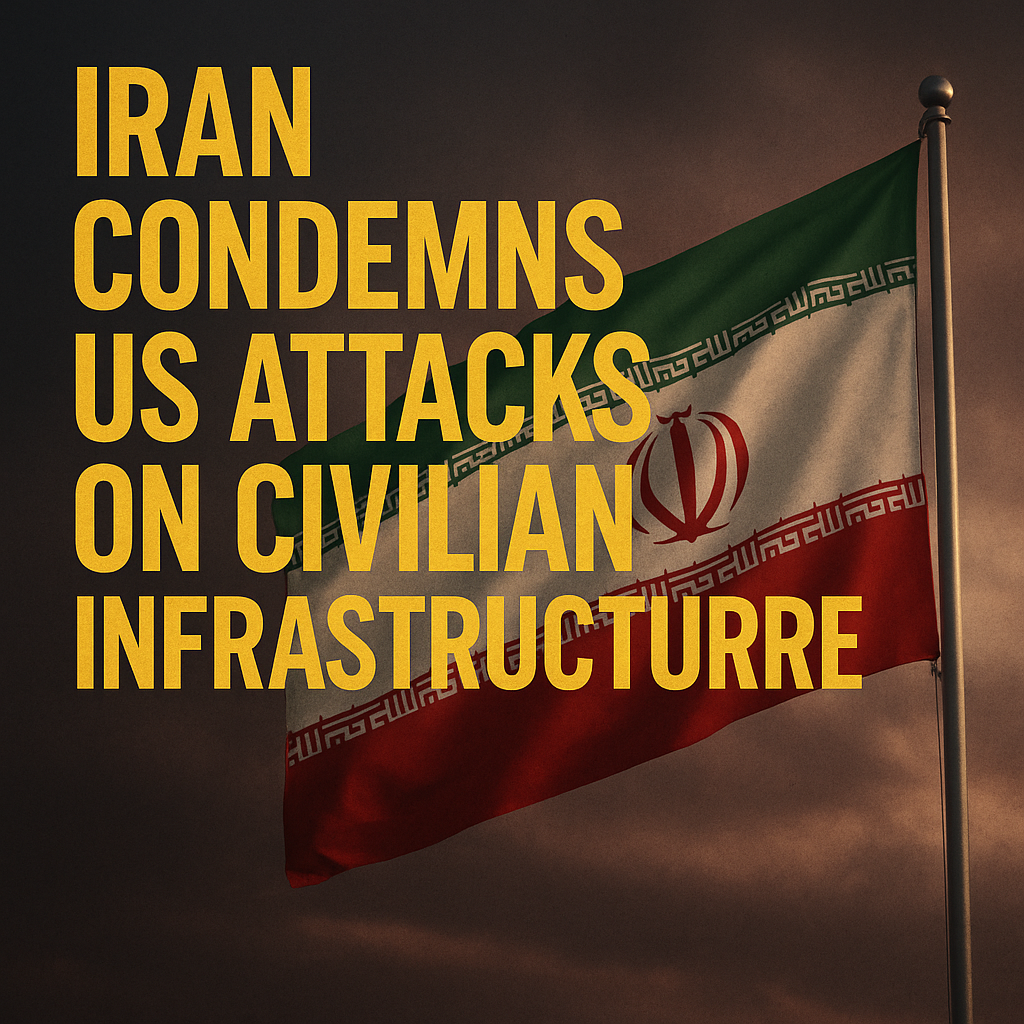
Iran Condemns US Attacks on Civilian Infrastructure
Iran has condemned recent U.S. attacks on civilian infrastructure, igniting a profound debate on the impact of such military actions in conflict zones. As tensions escalate between the two nations, the ramifications of U.S. strategies in the region are drawing critical scrutiny from global observers and analysts alike.

The Nature of the Condemnation
Iranian officials have vocally denounced the U.S. strikes, claiming that they specifically target civilian sites, which they argue is a clear violation of international law. News reports indicate that these attacks have been positioned by the U.S. government as necessary for national security, ostensibly aimed at suppressing militant activities. However, Iranian leaders assert that the resultant damage disproportionately affects innocent civilians and infrastructure, exacerbating the humanitarian crises already present in conflict zones.

According to sources, Iranian Foreign Ministry spokesperson Nasser Kanaani articulated that such confrontations not only contravene global humanitarian principles but also inflict lasting harm on the country’s societal fabric. He emphasized that these targets often include schools, hospitals, and other civilian amenities, arguing that the resultant instability further fuels animosity and conflict.

Diverse Perspectives on U.S. Military Strategy
While Iran’s condemnation reflects a consistent response during periods of heightened military engagement, international reactions offer a diverse spectrum of perspectives. Some geopolitical analysts argue that the U.S. is caught in a paradox; while defending its actions as necessary for safeguarding its interests, it simultaneously risks alienating local populations and further destabilizing regions already beset by violence.
Conversely, proponents of U.S. military actions argue that these strikes are a form of preemptive defense, intended to thwart potential threats before they can manifest into more significant security challenges. U.S. officials maintain that striking at militant targets, even when adjacent to civilian areas, is a required measure to ensure broader national and regional stability.
Humanitarian Concerns and Legal Implications
What exacerbates the complexity of this situation is the humanitarian fallout of military engagements. Organizations such as Amnesty International and Human Rights Watch have criticized both the U.S. and Iranian governments for their actions in the region, urging accountability and greater respect for international law. Reports indicate that civilian casualties have surged due to military operations, leading various human rights advocates to call for a re-evaluation of U.S. military strategies that inadvertently harm non-combatants.
Despite the opposing viewpoints, a recurring theme emerges: the urgent need for dialogue and diplomatic resolutions to diffuse tensions. Diplomacy, some argue, remains an essential ingredient for lasting peace in a region fraught with historical animosities and ongoing disputes.
The Path Ahead: Navigating Tensions
As Iran continues to assert its position against U.S. military engagement, the response from Washington and the international community remains crucial. The calls for both nations to rethink their military postures suggest that a re-examination is necessary—whether through negotiations or increased oversight of military operations to mitigate civilian harm.
In addition, there appears to be growing recognition that military solutions alone may not yield sustainable results. Many voices in the international community emphasize the importance of establishing mechanisms to address the underlying causes of unrest—be it political, economic, or social.
The complexity of U.S.-Iran relations undoubtedly underscores the challenges in navigating foreign policy in a multi-faceted geopolitical landscape. As military strategies evolve, so too must the approaches to tackling the fundamental issues at hand. The call for renewed dialogue presents an opportunity to foster understanding and ultimately forge a path toward a more peaceful resolution.
In summary, while Iran’s condemnation of U.S. attacks on civilian infrastructure sheds light on the humanitarian implications of military action, it also serves as a reminder of the larger need for cautious and informed engagement. The international community remains watchful, hoping for an approach that prioritizes human life and paves the way for long-term tranquility in the region.















