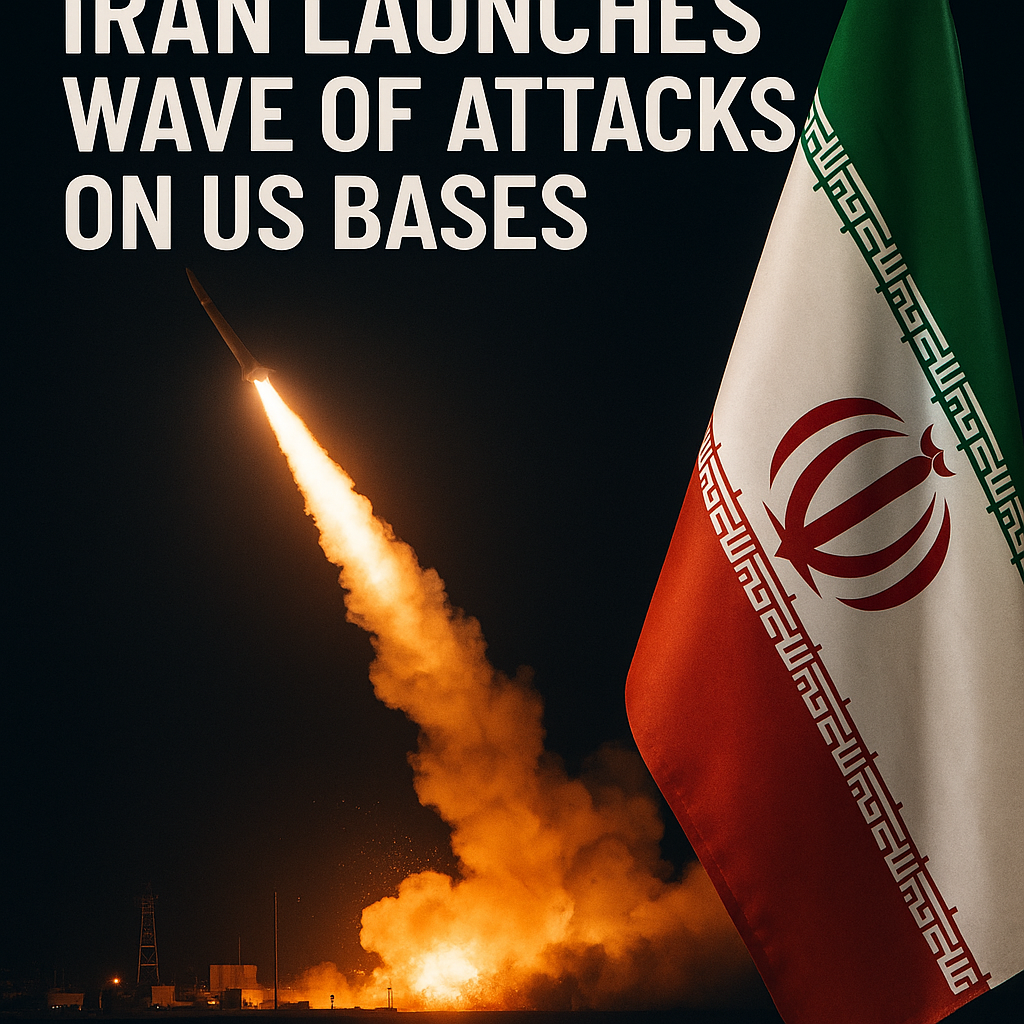
Iran Launches Wave of Attacks on US Bases
Iran’s recent wave of attacks on U.S. bases marks a significant escalation in tensions in the Middle East. With the potential to reshape regional dynamics, these strikes highlight the complexities of U.S.-Iran relations, reflecting both the geopolitical landscape and the ongoing effect of military and diplomatic strategies in the region.

Overview of the Attacks
In a series of coordinated attacks, Iran targeted U.S. military installations in Bahrain, a significant ally of Washington in the Gulf. According to reports from multiple sources, including RT News, these strikes were characterized by their intensity and strategic execution, suggesting a calculated move by Tehran amidst ongoing sanctions and geopolitical isolation. The Iranian military asserted that these attacks were retaliation for what they consider U.S. aggression in the region.

These actions occur against a backdrop of heightened instability influenced by years of U.S. involvement in Middle Eastern conflicts, particularly following the U.S. withdrawal from the Joint Comprehensive Plan of Action (JCPOA) in 2018. Iran has repeatedly condemned U.S. presence in the region, asserting its right to defend its sovereignty against foreign interference.

Diverse Perspectives on the Motives
Analysts and experts have varied viewpoints on Iran’s motives for this escalation. Some argue that the timing of the attacks is a strategic signal from Iran, demonstrating its military capabilities and deterrence against ongoing U.S. pressures. This perspective is supported by statements from Iranian military leaders who emphasize the necessity of responding to perceived threats.
Conversely, other analysts interpret these actions as a desperate measure by the Iranian government to consolidate internal support and distract from domestic issues, particularly economic strife exacerbated by international sanctions. According to Al Jazeera, the Iranian leadership may see military engagement as a pathway to rally nationalistic sentiments amidst growing discontent. This viewpoint highlights the dual narrative of aggression and vulnerability that often shapes Iran’s foreign policy actions.
The Broader Geopolitical Implications
The implications of these attacks extend beyond U.S.-Iran relations, potentially affecting the broader stability of the Gulf region. Experts from various platforms, including Sky News, assert that this escalation may provoke a stronger U.S. military response, which could lead to an increased military presence in the region. Such actions risk igniting further conflict in an already volatile landscape marked by rivalries among several nations and non-state actors.
The delicate balance of power in the Middle East, already influenced by countries like Saudi Arabia and Israel, will likely be tested further as U.S. policymakers grapple with how to respond to Iranian provocations without escalating to full-scale conflict. The strategic considerations for Washington include weighing the desire to maintain regional allies against the need to manage Iran’s destabilizing actions.
The Path Forward: Uncertainty and Reactions
As international reactions unfold, the path forward remains uncertain. The United States has called for a review of its military strategy in the region while emphasizing the importance of intelligence in preventing further strikes. However, the absence of a cohesive and strategic response raises questions about how effectively the U.S. can deter future Iranian aggression.
Iranian officials have signaled that they are prepared for potential reprisals, further complicating the security landscape in the region. The cycle of retaliation and military posturing could lead to an escalated conflict, making diplomatic avenues increasingly urgent yet fraught with difficulty.
In conclusion, while the recent Iranian attacks on U.S. bases illustrate a troubling escalation in tensions, they also reflect a complex web of motivations and geopolitical considerations. The interplay of militaristic and diplomatic strategies continues to shape the realities on the ground, leaving observers to navigate a landscape marked by uncertainty and potential for further conflict. As history has shown, the responses to these provocations will be critical in determining not just the future of U.S.-Iran relations but the broader stability of a region long fraught with contention and conflict.