
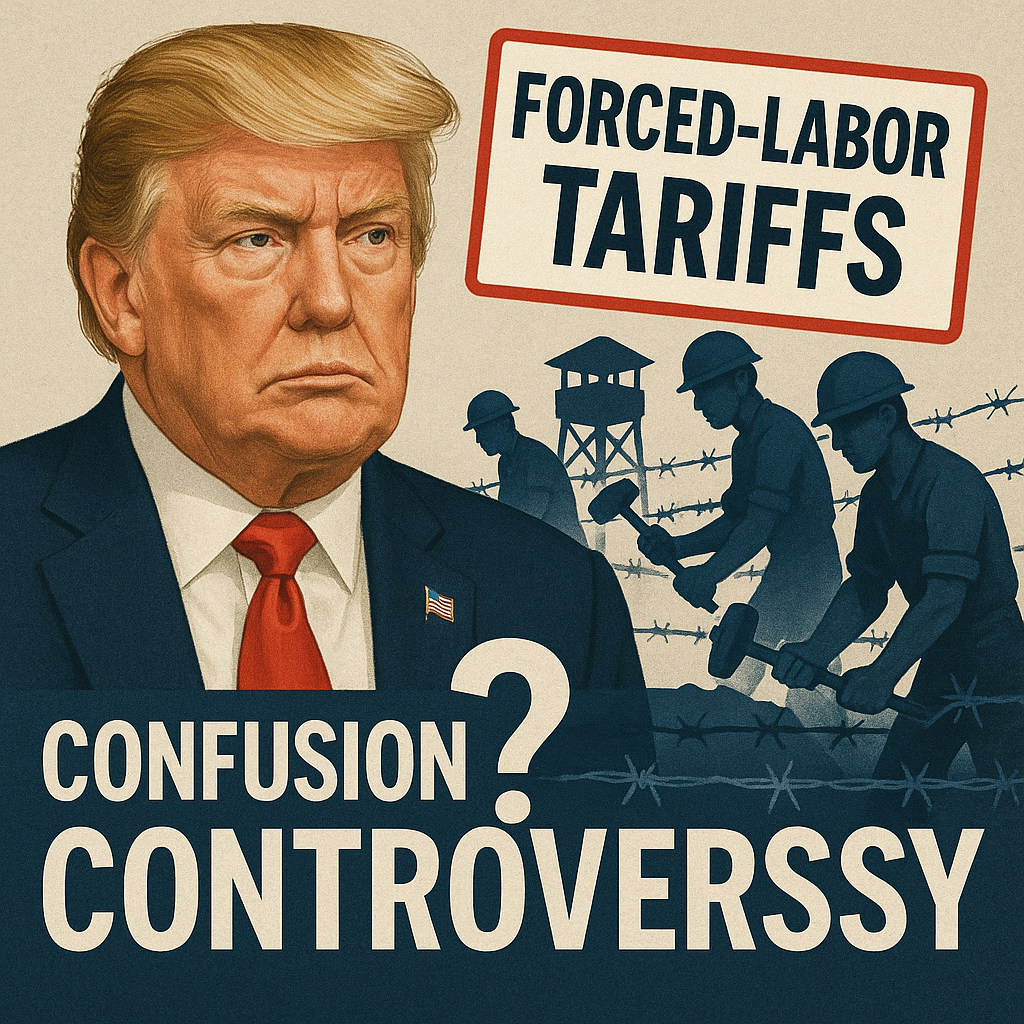
Trump’s Forced-Labor Tariffs: Confusion and Controversy
Trump’s Forced-Labor Tariffs: Confusion and Controversy
The discussion surrounding Trump’s forced-labor tariffs has ignited significant debate in both political and economic realms. These tariffs, aimed at addressing labor practices in imported goods, have generated a mix of support and opposition from various stakeholders.

The Objectives of the Tariffs
At the core of these tariffs is the goal to curb human rights violations, particularly those involving forced labor in countries like China. According to a report from RT News, the Biden administration has continued these tariffs established during Trump’s presidency, arguing that they are essential in promoting ethical trade practices. The intention is clear: to hold nations accountable for their labor conditions and ensure that American consumers are not unwittingly supporting products tied to human rights abuses.

Proponents of the tariffs, including various human rights organizations, argue that these measures are crucial in the global fight against modern slavery. They believe that by placing a financial burden on goods produced under unethical conditions, the U.S. is sending a powerful message about its commitment to human rights. An Al Jazeera article discussed recent actions taken to enforce these tariffs, emphasizing the moral imperative behind such moves.

However, the implementation of these tariffs has not been without its complications.
Economic Impact and Confusion
While the moral arguments are compelling, the economic ramifications of these tariffs have sparked concern among manufacturers and economists. Critics argue that these tariffs can create supply chain disruptions and inflate prices for consumers. In an analysis from Sky News, industry experts warned that many U.S. businesses rely on imported goods and the imposition of tariffs could lead to higher retail prices as companies adjust to these costs.
Furthermore, the ambiguity surrounding which products fall under the forced-labor tariffs adds another layer of complexity. Given the challenges of tracing supply chains, businesses often find themselves in a precarious position where compliance becomes a daunting task. This uncertainty can lead to companies either absorbing the costs or passing them onto consumers, both of which could have lasting impacts on the U.S. economy.
The lack of clarity has led to concerns over whether these tariffs will effectively contribute to meaningful change. As reported by multiple news outlets, including Al Jazeera, there are ongoing discussions in Congress about the need for clearer guidelines that would help businesses navigate the constraints of forced-labor tariffs.
The Broader Debate: Human Rights vs. Economic Pragmatism
The ongoing debate is multifaceted, encompassing not just the ethical dimensions of the tariffs but also their economic consequences. Supporters argue that prioritizing human rights should outweigh any short-term economic disadvantages. They point to the growing demand among consumers for ethically sourced products as a sign that the market can adapt.
Conversely, detractors assert that the U.S. must strike a balance between upholding human rights and maintaining strong economic policies. The conflicting perspectives have caused a divide among lawmakers, with some pushing for stricter enforcement of tariffs while others advocate for a more lenient approach that considers economic impacts.
Moreover, accusations of protectionism have emerged, with some believing that these tariffs could be a guise for shielding domestic industries from international competition. The RT News report highlighted how these policies could backfire by threatening to alienate key trading partners, potentially leading to retaliatory measures against U.S. exports.
Navigating the Future of Tariffs
As the Biden administration continues to uphold these tariffs, the path forward appears uncertain. While human rights advocates welcome stringent measures against forced labor, economic leaders emphasize the need for a more nuanced approach that safeguards the interests of American consumers and businesses alike. The necessity for robust dialogue among stakeholders cannot be overstated.
In conclusion, the controversy surrounding Trump’s forced-labor tariffs illustrates a complex interplay between ethical imperatives and economic realities. The challenge lies in crafting policies that not only protect human rights but also foster a resilient economy. As both sides of the debate continue to voice their concerns, the outcome remains a pivotal topic that will require careful navigation in the months to come.















