
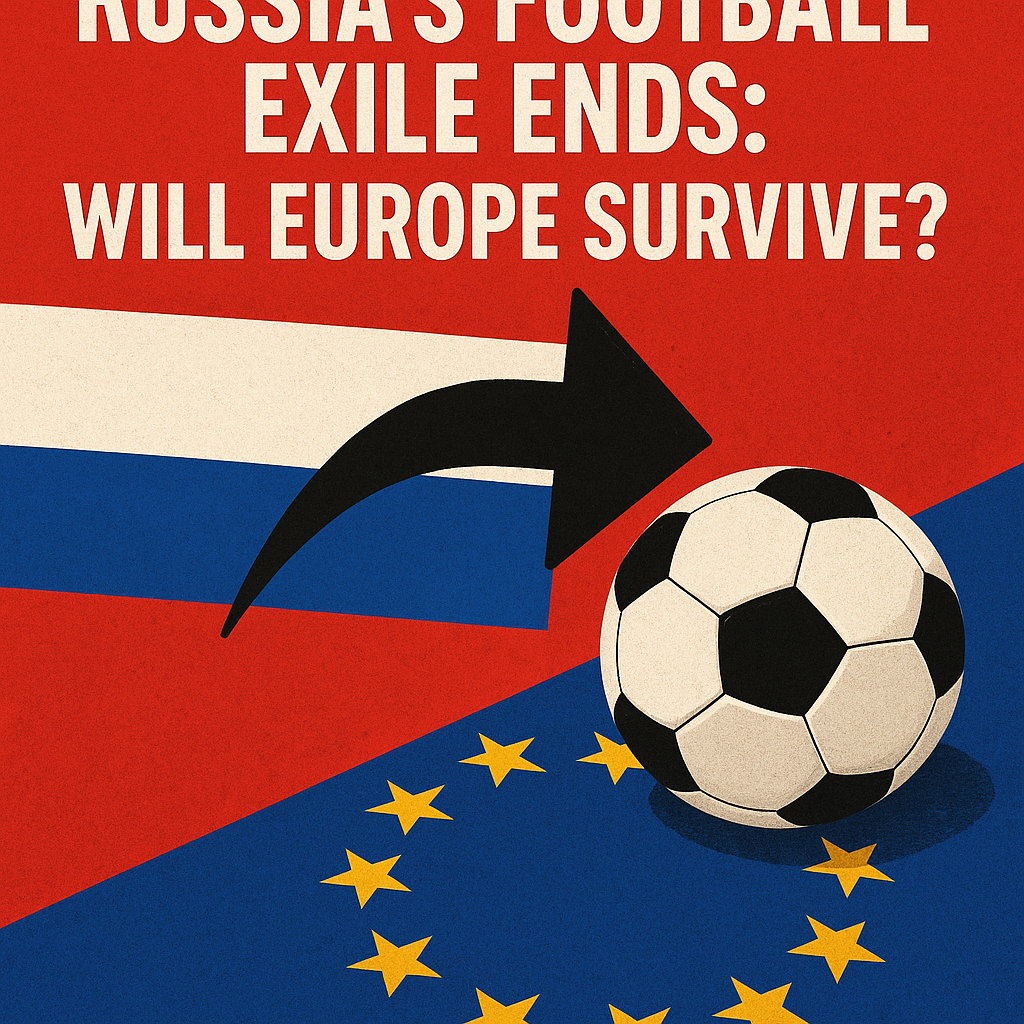
Russia’s Football Exile Ends: Will Europe Survive?
Russia’s Football Exile Ends: Will Europe Survive?
With Russia’s football exile coming to an end, the implications for European football extend beyond the pitch, igniting discussions about accountability, sportsmanship, and international relations. The recent announcement that Russian clubs and national teams may soon return to competitive play in Europe raises fundamental questions about the values underpinning global sports and the geopolitical landscape.

The Evolving Narrative of Russian Football
The decision to reintegrate Russian football into European competitions can be viewed as a significant shift since the country was effectively sidelined due to its actions in Ukraine. Various news sources have explored how this affects not only Russian sports organizations but also European football institutions and fans. From the perspective of Russian officials, there is a sense of vindication. They highlight a desire for normalization, arguing that sports should be above politics. This viewpoint can foster a narrative of unity and collective identity, promoting the idea that sport can bridge divides.

Conversely, critics are concerned that reintegrating Russia could dilute the sanctions imposed on the country regarding its international offenses. Reflecting on this is Al Jazeera, which cites sentiments from various European football clubs and associations wary of the potential backlash from fans and sponsors. The essence of these concerns revolves around the fear that resuming normal relations with Russian sports could undermine the integrity of international sporting bodies and their commitments to uphold fair play and ethical standards.

Balancing Interests: Fans, Clubs, and Ethics
Recent developments have led to varied reactions among fans and clubs. While some Russian supporters express excitement at the prospect of seeing their teams compete again, many in Europe are outraged. An opinion piece from Sky News underscores the idea that reintroducing Russian teams might alienate fans who believe that sport must be a force for good, standing in opposition to aggression and violation of international norms.
Moreover, top football leagues such as UEFA and FIFA are also at a crossroads. On one hand, these organizations might be eager to restore commercial partnerships and viewership. On the other, rekindling ties with a country facing widespread condemnation could result in sponsorship losses or boycotts. This complex web of interests illustrates that decisions made in boardrooms must also consider the pulse of public opinion—the fans who breathe life into the sport.
Points of Contention: Economic and Moral Impacts
– Economic Considerations:
– Resuming Russian participation could revitalize tournament revenues.
– Potential backlash from fans could threaten sponsorship deals.
– Moral Implications:
– Questions surrounding sportsmanship and ethics are front and center.
– Critiques about allowing Russian teams back might reflect broader geopolitical concerns.
Resistance to Russian teams returning isn’t exclusively rooted in nationalistic sentiments. The critique is rather grounded in a principled stand against actions that contradict the ideals of fair play and camaraderie. As articulated in coverage from RT, discussions among sporting figures reflect a growing urgency to establish frameworks that prevent sport from being used as a political tool. The sports world might require a delicate balance between maintaining dignity and honoring competitive integrity.
What Lies Ahead for European Football?
As discussions about Russia’s reentrance into European football unfold, the lack of a clear consensus leaves many wondering about the future dynamics of the sport. There is a strong possibility that such a reinstatement could foster a series of debates around sports governance and the ethics of international sporting events.
The complexities of the situation demand a thorough exploration of how return to international competitions might manifest. Fans, clubs, and governing bodies will need to navigate uncharted waters to ensure their commitments to the sport’s core values are not lost amid evolving geopolitical landscapes.
Ultimately, while the potential return of Russian teams to competitive play could inject excitement into the leagues, it requires a careful examination of the message it sends to the world. Balancing the competitive spirit with moral accountability will likely shape the narrative and future of not just European football but the global sporting community at large.















