
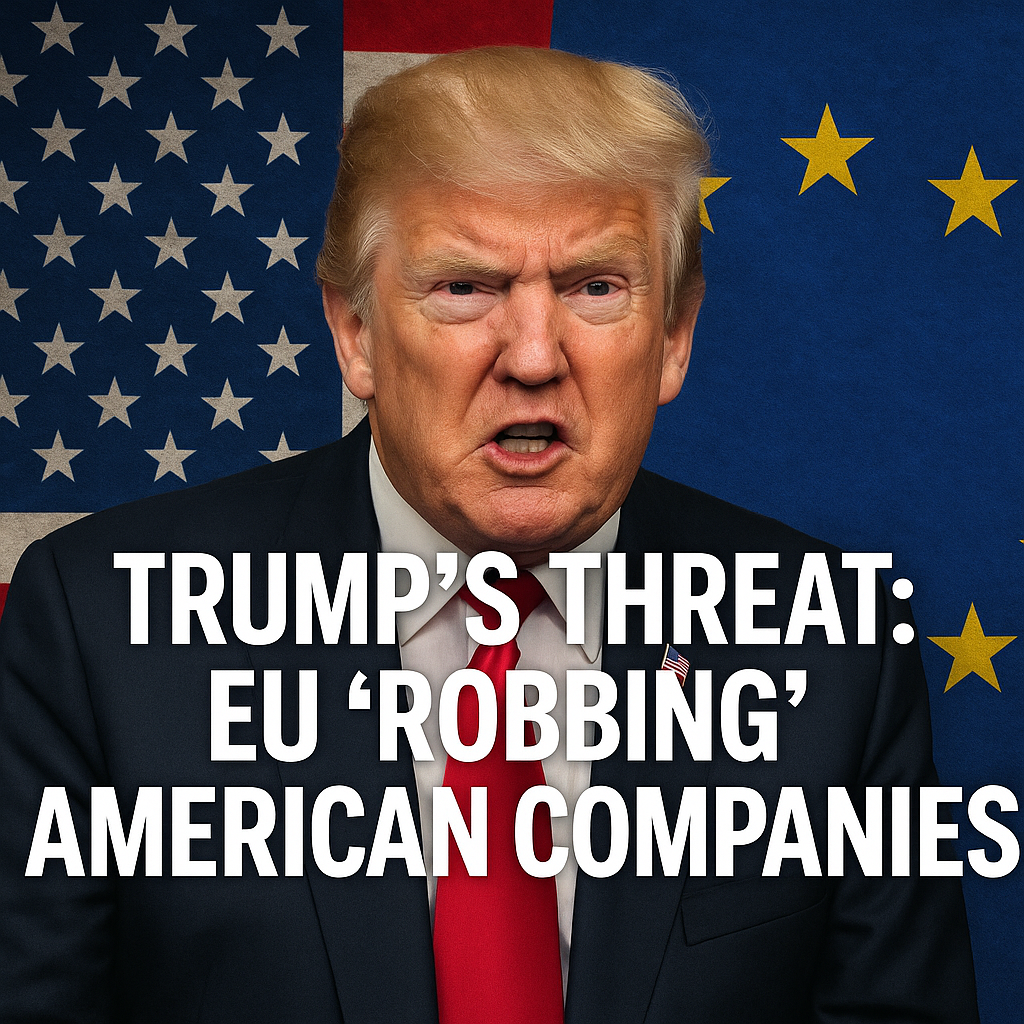
Trump’s Threat: EU ‘Robbing’ American Companies
Trump’s Threats: EU ‘Robbing’ American Companies
In recent remarks, former President Donald Trump has accused the European Union of engaging in practices he describes as robbing American companies. This assertion has reignited discussions about transatlantic trade relations and the implications of regulatory frameworks within the EU compared to the United States.

The Basis of Trump’s Allegation
Trump’s comments stem from his concerns over regulatory practices that he believes disadvantage American firms. He specifically addressed concerns regarding data regulations that require companies like Google to adhere to strict privacy laws within the EU, which he argues stifles innovation and hinders American companies from competing on equal footing.

According to a piece from RT, Trump stated, “The European Union is robbing us blind with their regulations, and it has to stop.” He suggested that these measures not only undermine American businesses but also have a broader negative impact on the economy. This sentiment resonates with a segment of the American business community, who have long criticized international regulations as impediments to free trade.

Perspectives on American and EU Regulatory Practices
While Trump’s views represent a strong critique, they also reflect a more extensive dialogue about the balance between consumer protection and market access. Advocates for the EU’s regulatory approach argue that stringent data protection laws are essential for safeguarding consumers. They point to the General Data Protection Regulation (GDPR) as a framework designed to enhance individual privacy rights, thus elevating consumer confidence in digital services.
From the viewpoint of European policymakers, the intention behind these regulations is not to exclude American companies but to establish a safer digital environment. They assert that compliance with these laws should not be seen merely as a barrier but as a standard measure to ensure accountability and transparency in digital markets.
However, there is a growing concern among European businesses as well. They express that high compliance costs associated with these regulations may stifle smaller enterprises and innovation within Europe itself. This juxtaposition of interests illustrates the complexity of transatlantic trade dynamics.
The Broader Implications of Trump’s Narrative
Trump’s statements tap into a larger narrative about nationalism and economic sovereignty, appealing to a constituency that feels threatened by globalization. Polls indicate a significant divide in public sentiment regarding international trade, where many Americans believe their jobs are being jeopardized by foreign competition.
Critics of Trump’s position argue that his approach may lack the nuance necessary to address the multifaceted challenges presented by global trade. They note that rather than framing the EU’s regulations as a “robbery,” a more constructive dialogue could focus on finding common ground that respects both consumer rights and the need for open market practices.
Conclusion: A Complex Landscape
As this conversation evolves, the impact of Trump’s rhetoric and the reality of EU regulations will continue to shape transatlantic relations. There remains a significant divide in how both parties perceive the trade landscape, compounded by differing economic philosophies.
The challenge lies in reconciling these perspectives while fostering an environment where innovation can thrive alongside necessary consumer protections. Dialogue and negotiation will be key as both sides navigate these complex waters, aiming to preserve economic interests without compromising fundamental values. Ultimately, understanding these nuances will be crucial for stakeholders on both sides of the Atlantic as they strive for a fairer trade environment.















