
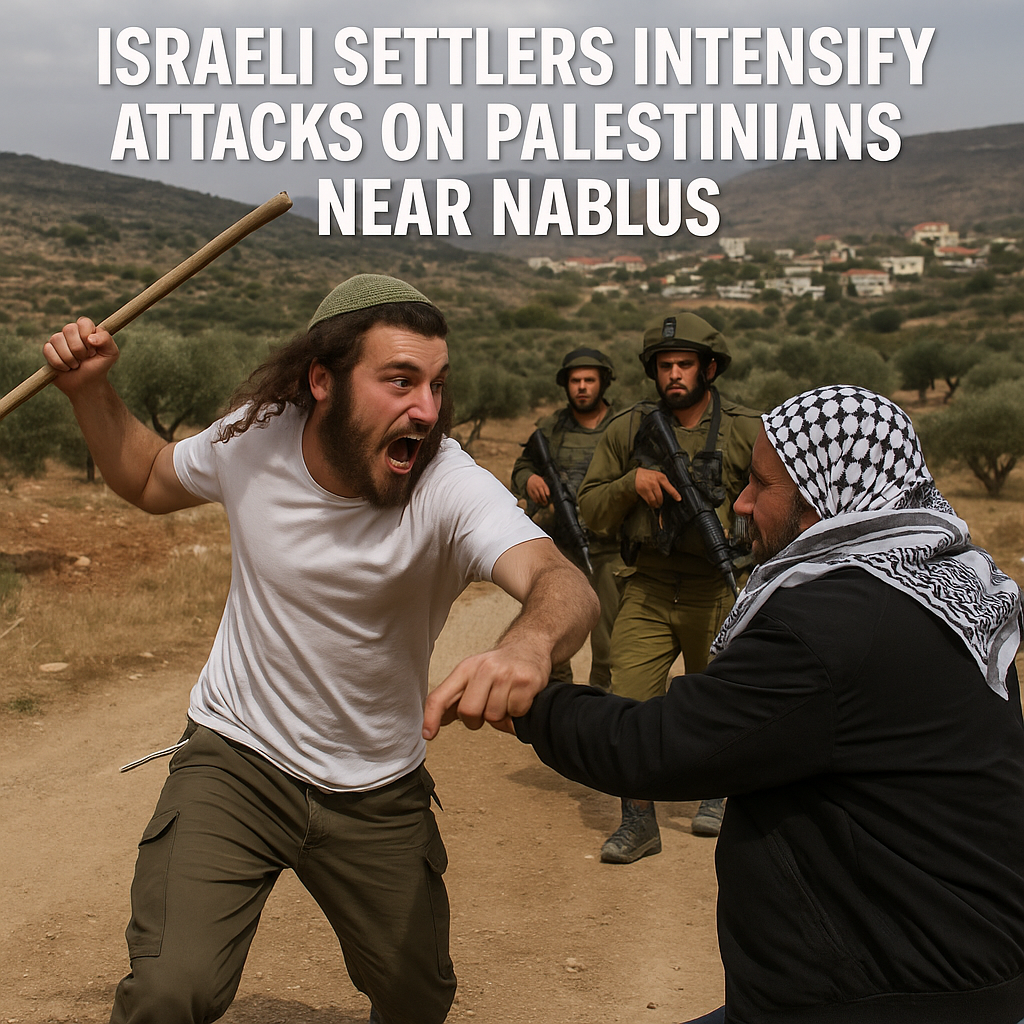
Israeli Settlers Intensify Attacks on Palestinians Near Nablus
Escalating Conflicts: Israeli Settlers Intensify Attacks on Palestinians Near Nablus
In recent weeks, tensions in the West Bank have dramatically escalated, particularly around Nablus, as reports indicate that Israeli settlers are intensifying their attacks on Palestinian communities. This alarming trend raises critical questions about security, human rights, and the broader implications for Israeli-Palestinian relations.

The Rising Tensions in Nablus
The geographical and political significance of Nablus cannot be understated. Strategically located in the northern West Bank, it has witnessed historical claims and contestations from both Israelis and Palestinians. As Israeli settlers assert their presence with increased frequency and aggression, local Palestinians find themselves under mounting pressure.

Reports from various news outlets highlight a troubling pattern: settlers have been engaged in frequent violent encounters with Palestinians, leading to injuries and, in some cases, fatalities. Al Jazeera points out that these violent acts are sometimes justified by settlers through claims of self-defense, yet local witnesses and Palestinian activists view them as unprovoked assaults aimed to assert control over disputed lands. This has created a prevailing atmosphere of fear and insecurity for Palestinian residents, as they navigate their daily lives amidst escalating violence.

In stark contrast, other reports, such as those from RT, emphasize the perspective of Israeli settlers and their claims regarding the need for security in an area they consider to be historically theirs. They argue that their actions are a response to perceived threats and attacks from militant factions. The narrative from this viewpoint portrays settlers as victims seeking to protect their homes and families, complicating the overall understanding of this multifaceted conflict.
Humanitarian Impact and International Reactions
The spike in violence has not gone unnoticed on the international stage. Human rights organizations have raised alarms regarding the humanitarian impact of settler attacks. Reports indicate that communities in and around Nablus have seen increased displacement and property damage due to settler violence, further exacerbating the already tense living conditions for Palestinians.
Sky News reports on international condemnations of these actions, highlighting calls for investigations into the attacks. There is a growing demand from the global community for accountability and a more proactive role from the Israeli government to safeguard Palestinian rights. Critics argue that the lack of legal repercussions for settlers fosters an environment where violence can proliferate unchecked.
However, the situation remains complex. Proponents of settlement activities often rally political support within Israel, framing the push into areas like Nablus as essential for national security and heritage. This internal political dynamic contributes to delays in governmental action against extremist settler violence, leading many to perceive a tacit endorsement of such behaviors.
Looking Towards a Solution
As violence continues to surge, the pressing need for dialogue and de-escalation becomes clear. Some analysts advocate for increased international mediation, arguing that longstanding grievances on both sides must be addressed to move toward a sustainable solution. This includes not only addressing the immediate violence but also the underlying issues that fuel animosity, such as settlement expansion and restrictions on movement for Palestinian communities.
Finding common ground may seem daunting, but promoting understanding and reconciliation could pave the way for a more stable coexistence. Grassroots initiatives that bring Israelis and Palestinians together for dialogue, truth-telling, and shared experiences could potentially diminish hostilities and offer a path forward.
Conclusion
The intensified attacks by Israeli settlers on Palestinians near Nablus highlight a critical juncture in an ongoing conflict that has far-reaching implications. As perspectives diverge and narratives clash, the need for a balanced approach—one that recognizes the rights and security concerns of both communities—is more urgent than ever.
As observers worldwide keep a close eye on the developments in Nablus, the hope remains that collaborative efforts can emerge to foster peace and security for all those affected by the conflict. The way forward must combine accountability with compassion, addressing both the immediate violence and the lasting realities of displacement and trauma.















