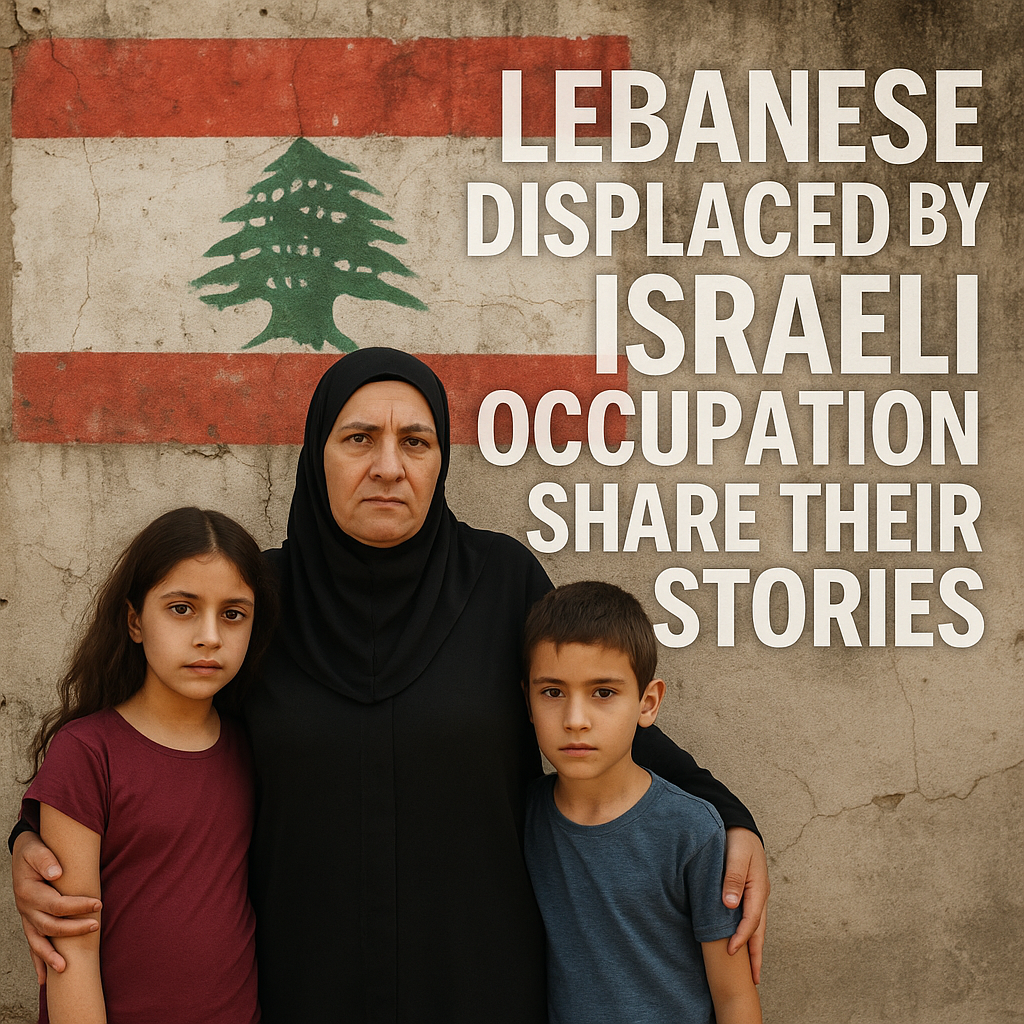
Lebanese Displaced by Israeli Occupation Share Their Stories
The Voices of Displaced Lebanese: Stories from the Ground
The stories of Lebanese displaced by the Israeli occupation offer a poignant glimpse into the ongoing struggles and resilience of communities affected by conflict. These narratives, shaped by historical events and personal experiences, exemplify the complex interplay of politics, identity, and emotional survival.

Historical Context and Displacement
The Israeli occupation of Lebanon, which began in the late 1970s and had significant ramifications throughout the following decades, has left deep scars on the landscape and the people. As reported by various news outlets, including Al Jazeera and RT, hundreds of thousands of Lebanese have been displaced, experiencing the profound effects of both physical and psychological upheaval.

In the early 1980s, an Israeli invasion aimed at rooting out Palestinian armed groups operating from Lebanon exacerbated an already volatile situation. The result was not only military engagement but also widespread displacement. Many families were forced to abandon their homes in southern Lebanon, leading to a humanitarian crisis that continues to reverberate today. As residents share their personal accounts, the statistical narratives of conflict often fall short of capturing the raw emotions and deep-seated fears that accompany such loss.

Life Under Occupation
Personal stories of displacement are deeply intertwined with everyday realities. Individuals recount the anxiety of airstrikes, the uncertainty of relocation, and the challenge of rebuilding lives in unfamiliar territories. One poignant narrative shared through Al Jazeera features a family who fled their ancestral home, holding onto hopes of return while grappling with the harsh realities of living as refugees in their own country. The impact on children, who grow up with the echoes of conflict, underscores the generational trauma that results from such dislocation.
According to reports, many displaced individuals speak of identity crises stemming from their uprooting. The once vibrant local cultures within cities like Tyre and Sidon have faced significant erosion, as the migrants struggle to retain their cultural heritage while adapting to new environments. This dynamic creates a rich tapestry of resilience, with communities finding ways to sustain connections and traditions despite the challenges.
Reflections of Resilience and Hope
Despite the grim circumstances, the resilience of displaced Lebanese shines through their stories. They reflect on how their communities have managed to support one another, fostering a spirit of solidarity in the face of adversity. Many have formed networks aimed at not only providing immediate assistance but also ensuring long-term psychological support.
A common thread among these personal accounts is the desire for peace and stability. Displaced individuals often express hopes for a future where their children can pursue their dreams without the shadow of conflict. The narratives illustrate a yearning for clarity and justice, where the historical grievances are acknowledged, and pathways to reconciliation are explored.
Conversely, the ongoing political stalemate and inadequate support systems hinder the quest for normalcy. Some voices from the region bring to light the frustrations associated with the lack of international intervention aimed at addressing their plight. They call for global awareness and empathy toward their circumstances, urging the world to recognize their humanity amidst the political discourse that often oversimplifies complex realities.
Conclusion: The Path Forward
The stories of Lebanese displaced by Israeli occupation serve not only as a reminder of the human cost of conflict but also highlight the need for comprehensive policies that prioritize their rights. Engaging with these narratives requires not just compassion but an active commitment to shaping a future where such displacements do not repeat.
As we reflect on these experiences, it becomes clear that acknowledging the plight of displaced individuals is a critical step toward understanding the implications of regional conflicts. The complexity of their journey—marked by loss, resilience, and hope—compels us to listen, learn, and advocate for a world where peace is not merely a dream but a realistic aspiration. The voices of the displaced are more than mere testimonies; they are foundational to the dialogue on peace, justice, and the reconstruction of identity in the wake of conflict.