
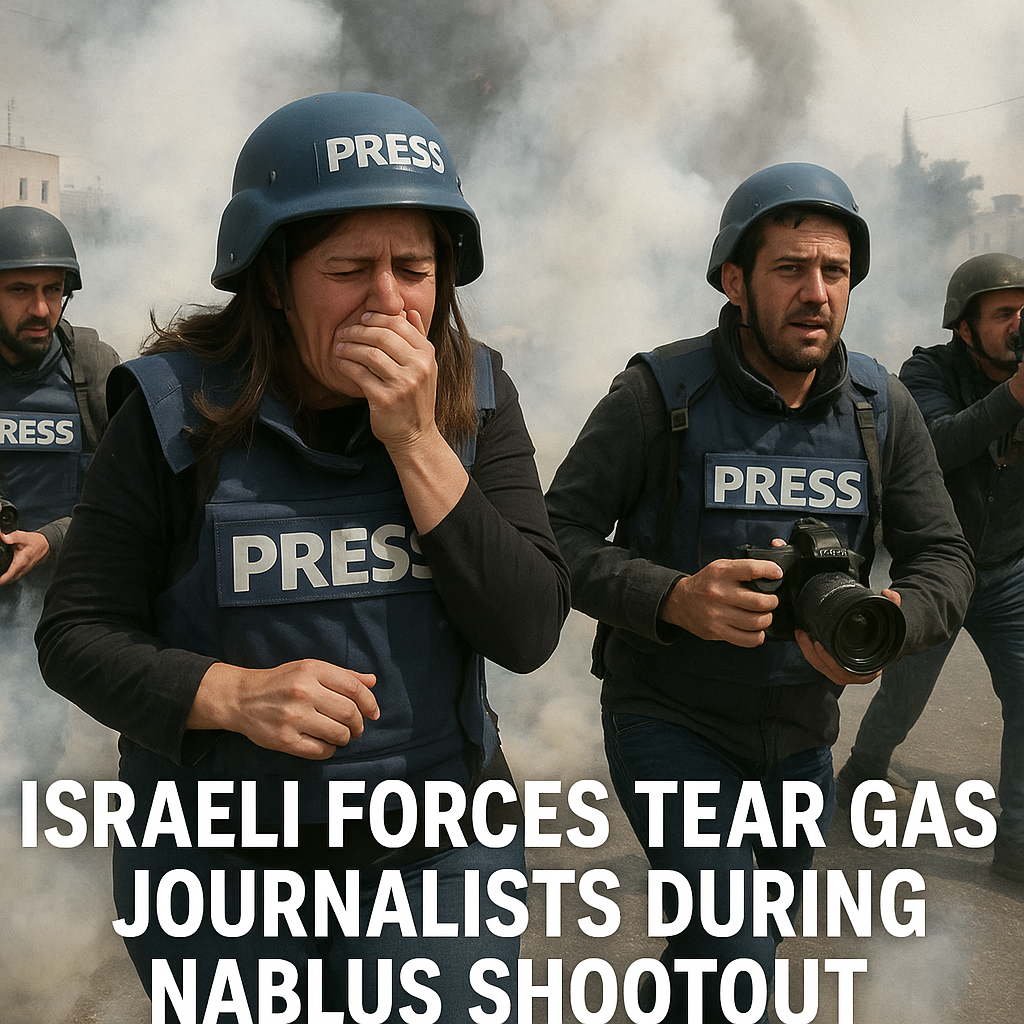
Israeli Forces Tear Gas Journalists During Nablus Shootout
Israeli Forces Tear Gas Journalists During Nablus Shootout: The Impact on Press Freedom
In recent weeks, the situation in the West Bank has escalated, with notable incidents raising concerns over press freedom and the treatment of journalists. One such incident occurred during a shootout in Nablus, where Israeli forces reportedly fired tear gas at journalists while they were covering the unfolding event. This event underscores the complexities surrounding the Israeli-Palestinian conflict and the vital role of independent reporting in war-torn areas.

The Incident in Nablus: Context and Reactions
On the day of the shootout, journalists from various media outlets gathered to report on an armed clash between Israeli forces and Palestinian gunmen in the densely populated area of Nablus. According to video footage and accounts from those present, Israeli forces discharged tear gas canisters toward the journalists, an action that has ignited outrage among various news organizations and human rights groups.

Reports from Al Jazeera indicate that several journalists experienced difficulty breathing and were forced to flee. They described the scene as chaotic, highlighting how press members often find themselves in perilous situations while covering conflicts. This action sparked condemnation, with calls from organizations like the Committee to Protect Journalists emphasizing the essential role of the media in documenting violence, and asserting that attacks on journalists are unacceptable.

Conversely, Israeli authorities defended their actions by stating that the tear gas was utilized to disperse crowds and maintain order, arguing that the risks posed by armed individuals in the vicinity necessitated a robust response. Israeli military spokespeople have framed their operations in the West Bank as protective measures against terrorism, arguing that their soldiers operate under strict engagement protocols.
Press Freedom Under Threat: Broader Implications
The Nablus incident adds to a troubling trend regarding press freedom in the region. Reports suggest that media professionals working in conflict zones often face harassment, violence, and obstruction from state forces. According to RT, this atmosphere of tension has resulted in several journalists feeling increasingly unsafe, with many opting to limit their reporting or rely on safer, remote coverage options when possible.
Moreover, the impact of such incidents extends beyond individual reporters; it raises critical questions about the public’s access to information. When journalists are hindered from doing their jobs, it not only affects their safety and well-being but also diminishes the quality of reporting available to global audiences. With misinformation proliferating in the absence of credible news, the stakes have grown higher for both the media and the populace they aim to inform.
Navigating Aggressive Responses: Toward a Solution
The dynamic between security forces and journalists in conflict regions brings forward a complex challenge. While security concerns are paramount, particularly in areas with frequent clashes, it is also incumbent upon military and police forces to ensure that journalists can operate without fear of violence or aggression. This balance is essential not only for the protection of media professionals but also for the integrity of journalism itself.
International entities, including human rights organizations and media advocacy groups, must continue to monitor these situations while exerting pressure on governments to uphold the principles of press freedom. While Israeli forces stress their accountability, the repeated occurrences of journalist attacks suggest that implementation of protective measures remains inadequate.
It is crucial for the Israeli government to engage in dialogue with journalists and media organizations to establish clearer protocols that protect reporters on the ground. By creating frameworks for cooperation, it may be possible to mitigate some of the risks associated with covering volatile situations, fostering a safer environment for media professionals.
Conclusion: Keeping Perspectives in Focus
The recent incident involving tear gas fired at journalists during the Nablus shootout serves as a stark reminder of the challenges faced by the media in conflict zones. It highlights the need for an ongoing conversation about press freedom, especially within the context of military operations and public safety. As we reflect on the events, it is vital to uphold the principles of transparent reporting while recognizing the legitimate concerns of those tasked with maintaining security.
An informed public is better equipped to engage in discourse surrounding contentious issues, including those involving human rights and international law. The road towards improved press freedom in areas like Nablus is complex, but through continued advocacy and dialogue, there remains hope for a more harmonious coexistence between journalists and security forces in the region.















