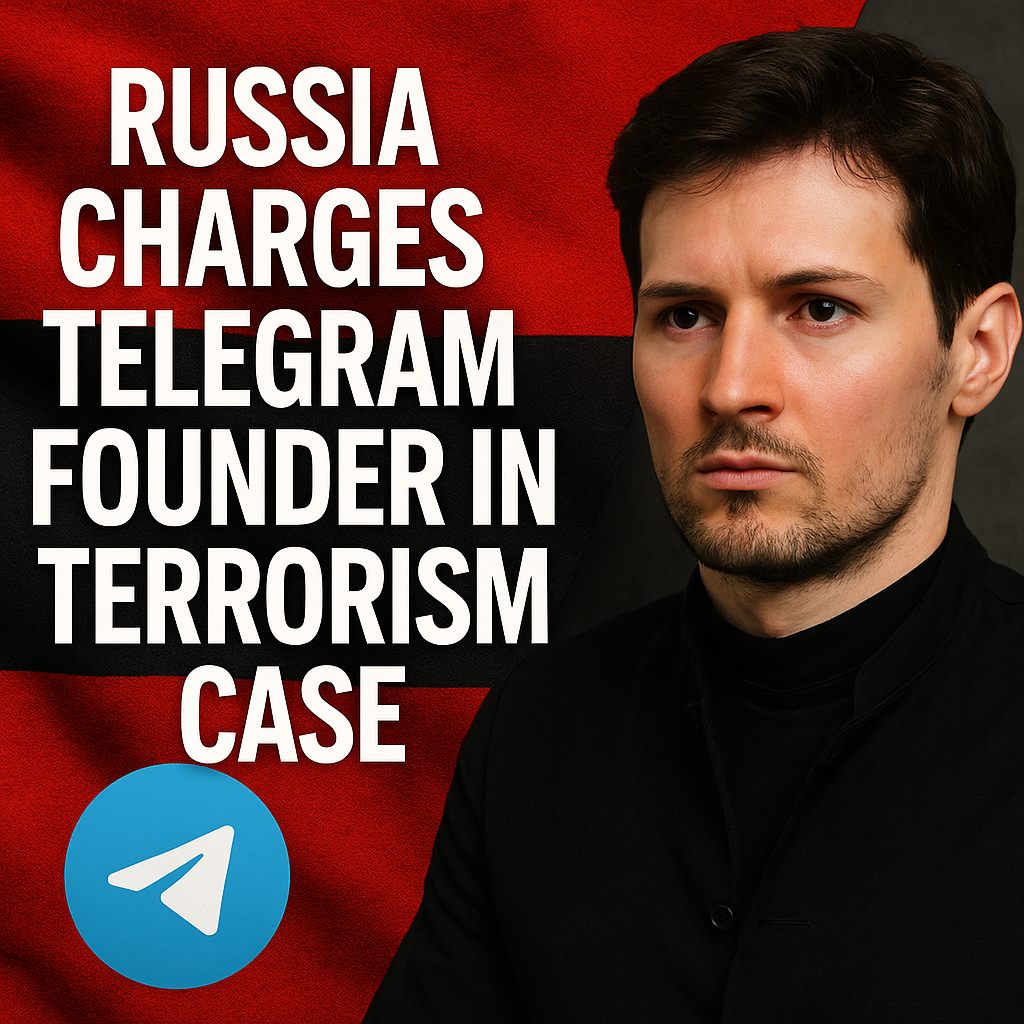
Russia Charges Telegram Founder in Terrorism Case
Russia Charges Telegram Founder in Terrorism Case
Russia’s recent charges against Pavel Durov, the founder of the popular messaging app Telegram, have ignited international concern and debate over freedom of expression and state control in the digital age. Durov has been accused of facilitating terrorism, a claim that sits at the intersection of national security and the intricate dynamics of technological freedom.

The Allegations: A New Wave of Tension
The charges stem from Durov’s refusal to comply with Russian authorities regarding user data and content moderation. According to reports, the Russian government alleges that Telegram has been used by terrorist organizations to communicate and coordinate actions that threaten public safety. The State Duma has focused its argument on how Durov’s platform became a conduit for extremism, particularly highlighting its use during events like protests and civil unrest.

While some commentators, like those from Russian state media, emphasize the state’s duty to ensure security, critics argue that these charges are indicative of a broader crackdown on dissent and a move to silence opposition voices. A contributor for Al Jazeera noted that the case appears less about genuine national security and more about the Kremlin’s intent to control digital spaces that operate beyond its strict oversight.

Freedom of Expression vs. National Security
The tension between national security needs and personal freedoms is a challenge faced by many nations, but it becomes particularly pronounced in Russia. Telegram, which boasts over 700 million active users globally, has a history of resisting pressure from the Kremlin, often positioning itself as a protector of user privacy and free speech. Durov has previously stated, “A true messenger should be able to resist censorship.”
This philosophy has resonated throughout various parts of the world, where many view the platform as a haven for free speech. However, the Russian government’s charges raise significant questions about the responsibilities of digital platforms in preventing misuse while maintaining their commitments to freedom of expression. Those supporting the charges often argue that tech companies should be held accountable for content spreading violence or hate, suggesting a more complicated relationship between platforms and their regulatory environments.
Diverging Perspectives and Global Reactions
International reactions to Durov’s situation have been diverse and illuminating. On one hand, the government-aligned media outlet RT presents a narrative focusing on the necessity for restrictive measures in a world increasingly threatened by terrorism. The perspective aligns with a long-standing viewpoint within the Kremlin that emphasizes state sovereignty over personal liberties, framing law enforcement actions as essential.
Conversely, European and American viewpoints lean towards alarm over what many perceive as an infringement on digital rights. Advocacy groups have rallied, voicing concerns that the charges are part of a larger pattern of authoritarian governance that affects digital communication globally. A strong condemnation from human rights organizations stresses the inherent risks when governments impose sweeping controls over digital platforms, labeling such actions as a violation of fundamental rights.
Despite the polarized views, there remains a substantive gray area. Some analysts suggest that both arguments contain valid points. For instance, while Durov champions privacy, the potential for misuse of platforms like Telegram cannot be ignored. The radicalization of individuals via digital channels is a genuine threat, necessitating some level of oversight. Therefore, the discourse should not merely focus on supporting or opposing the charges but rather on finding a balanced approach that accommodates both freedom and security.
Navigating a Complicated Landscape
As Durov faces these charges, the implications extend beyond his situation alone. The case serves as a barometer for the evolving relationship between governments, tech giants, and users. The outcome could set a precedent not just for privacy rights within Russia but could reverberate throughout the global tech landscape.
With both sides entrenched in their positions, it remains uncertain how the legal proceedings involving Durov will unfold. Will the Kremlin assert its authority over digital platforms, or will international pressure encourage a reevaluation of such measures? As the world watches closely, this case highlights the need for dialogues that can bridge the necessity for security with adherence to fundamental rights—an ongoing challenge that encompasses much of the digital landscape today.