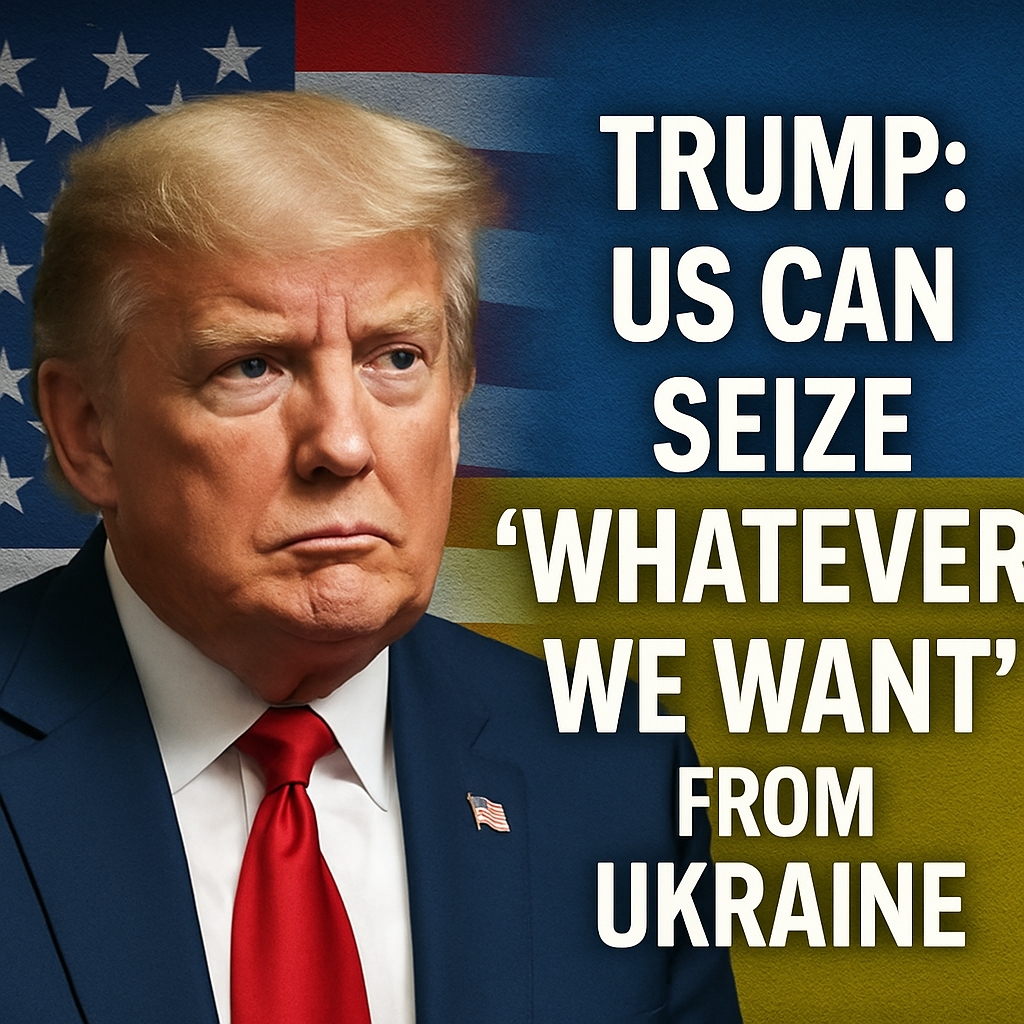
Trump: US Can Seize ‘Whatever We Want’ from Ukraine
Trump’s Perspective on U.S. Actions in Ukraine
Donald Trump’s recent comments regarding the U.S.’s ability to seize resources from Ukraine have ignited heated discussions across various political and international forums. During a speech, Trump proclaimed that the U.S. could take “whatever we want” from Ukraine, revealing his administration’s distinctive approach to foreign aid and military involvement. This statement not only reflects his controversial leadership style but also raises essential questions about ethical diplomacy, international law, and the U.S. role on the global stage.

The Context of Trump’s Assertion
Trump’s remarks need to be viewed within the context of Ukraine’s ongoing conflict with Russia, a situation where the U.S. has been a significant provider of military and financial assistance. The war has prompted extensive discussions about sovereignty, foreign intervention, and the consequences of support given to nations under siege. Trump, who has often critiqued American involvement abroad, appears to advocate for a more transactional nature to U.S. foreign policy.

In historical terms, discussions around appropriation of resources can evoke memories of colonialism and imperialism, where powerful nations seized territories or resources without regard for the local populations. Critics of Trump’s statement argue that such an outlook dangerously undermines international norms and laws which are designed to uphold sovereign rights.

Diverse Perspectives on Foreign Aid
The U.S.’s global role has always elicited a spectrum of opinions. Supporters argue that American aid to Ukraine is a moral imperative, given the context of defending democracy against autocratic aggression. They view Trump’s comment as a potential signal that the U.S. could shift from a supportive ally to a more opportunistic player in international relations.
Conversely, skeptics contend that Trump’s remarks reflect a troubling sentiment that could redefine the U.S.’s involvement in global conflicts. Commentators from various platforms, including Al Jazeera and Sky News, have raised concerns that such statements could embolden adversarial nations, as they threaten to create a perception of American imperialism. This sentiment is compounded by worries over the implications for U.S.-Europe relations, especially if interpretations of American intentions vary among allied nations.
The Ethical Implications
The ethical considerations of Trump’s assertive stance on Ukraine cannot be overlooked. Can the U.S. justify taking actions that may appear self-serving under the guise of protection or support? International law is designed to govern relationships between states, ensuring that one nation does not arbitrarily seize another’s resources. A policy based on the notion of seizing “whatever we want” would not only violate international norms but also risk stoking more conflict and instability.
Moreover, the economic implications cannot be disregarded. Trump’s comments may raise alarm bells for investors and partners who value stability and predictability in international affairs. If the U.S. were to adopt an aggressive posturing in Ukraine, it could lead to a chilling effect on future foreign investments both in Ukraine and in regions where U.S. influence is pivotal.
Balancing Perspectives and Future Implications
In weighing these perspectives, it becomes clear that while Trump’s rhetorical style and approach to international relations offer a glimpse into his administration’s philosophy, they also highlight the complexities facing U.S. foreign policy today. On one hand, there is the urgent need for a robust response to aggression that threatens democracy. On the other hand, state actions must adhere to a framework of legality and ethics that fosters long-term peace rather than immediate gain.
Critically, whether Trump’s vision for U.S. engagement in Ukraine resonates or repels could significantly influence the 2024 elections and shape American foreign policy for years to come. As various opinions continue to emerge, it is crucial for discourse to remain grounded in constructive dialogue that emphasizes morality, legality, and the pursuit of peaceful resolutions to international conflicts.
In conclusion, Trump’s assertion regarding U.S. capability to seize from Ukraine has opened up myriad discussions, highlighting the diversity of views on America’s role in global affairs. The ensuing debate underscores the importance of navigating the intricate tapestry of ethics, legality, and global diplomacy with care and consideration, as the implications of these discussions will echo far beyond the present moment.