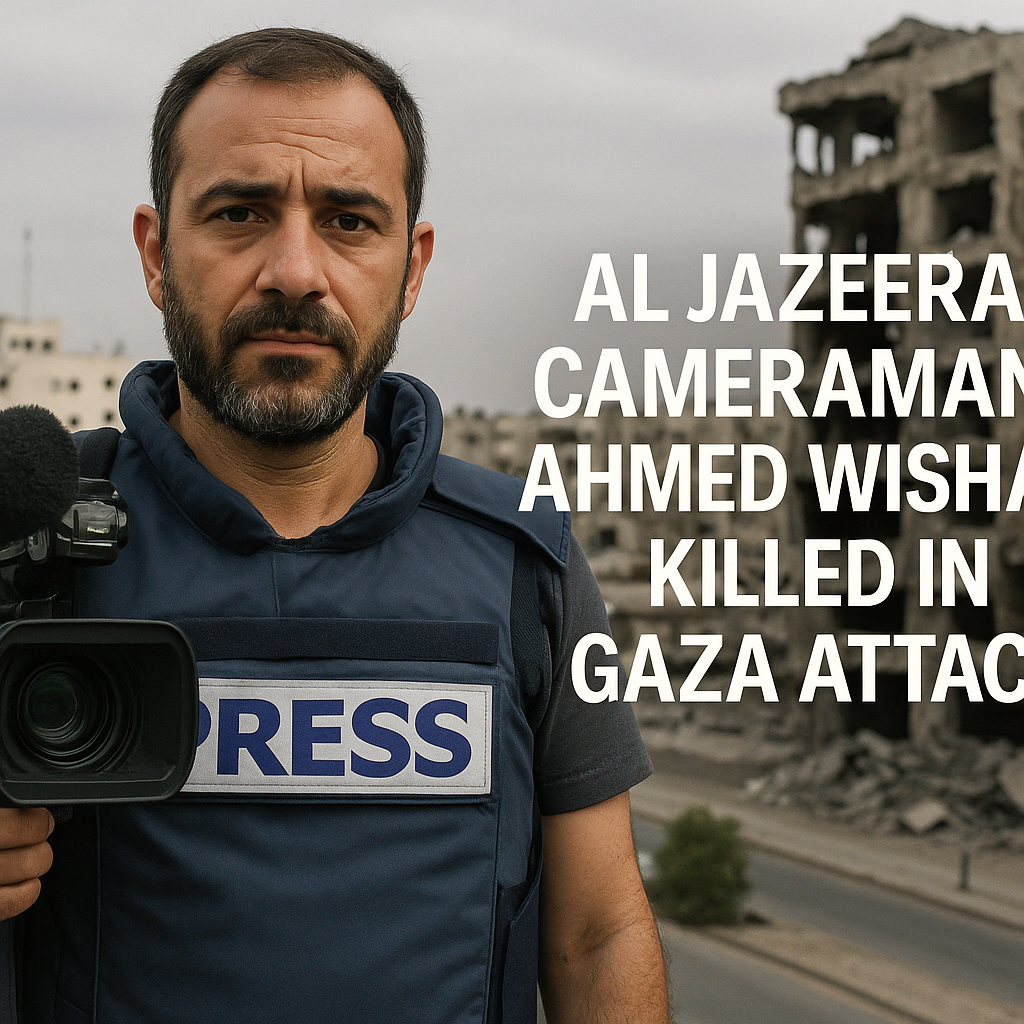
Al Jazeera Cameraman Ahmed Wishah Killed in Gaza Attack

On June 20, 2026, the tragic death of Al Jazeera cameraman Ahmed Wishah amidst escalating violence in Gaza sent shockwaves through the journalistic community and beyond. This incident highlights not only the dangers faced by journalists covering conflict zones but also raises critical questions about media freedom and the protection of civilians in wartime.

The Context of the Incident
Ahmed Wishah was killed while on assignment in Gaza, an area that has been the site of intense scrutiny and violence for decades. According to Al Jazeera, the attack occurred during a broader military operation, which further exacerbated the already volatile situation in the region. The Israeli Defense Forces (IDF) have claimed that their operations target militant groups but have faced severe criticism regarding civilian casualties, particularly when journalists are involved.


Witnesses reported that Wishah was providing live coverage when the attack occurred, illustrating the perilous conditions under which journalists work in conflict zones. His death has reignited discussions about the fundamental rights of media professionals under international law, particularly the Geneva Conventions, which emphasize the protection of non-combatants, including journalists covering armed conflicts.


The Response from Various Sides
Following the incident, reactions poured in from various stakeholders. Al Jazeera expressed profound sorrow over the loss of one of its devoted workers, calling on international bodies to ensure the safety of journalists in conflict zones. The network’s officials emphasized the need for accountability and urged for a serious investigation into the circumstances surrounding Wishah’s death. They highlighted a pattern of attacks on journalists, which undermines the freedom of the press and the public’s right to information.
On the other hand, Israeli officials offered their condolences but maintained that their military operations aim to neutralize threats from militant groups, asserting that they adhere to strict protocols to minimize civilian harm. This stance, however, is met with skepticism from various human rights organizations, which argue that the IDF’s operations often disregard civilian safety. Organizations such as Human Rights Watch and Reporters Without Borders have called for a thorough investigation into the incident and for measures that would better protect journalists in hostile environments.
Broader Implications
The killing of Ahmed Wishah raises alarming questions about the safety of journalists operating in conflict zones around the world. According to the Committee to Protect Journalists (CPJ), the number of journalists killed in such areas has been steadily increasing, highlighting a worrying trend where the line between civilian and combatant continues to blur amidst modern warfare tactics.
Moreover, this incident puts into perspective the role of media in shaping public understanding of conflicts. With journalists often being targets during military operations, the repercussions extend beyond individual lives; they impact the public’s access to unbiased information and, consequently, informed discourse about ongoing conflicts.
Continued Call for Action and Awareness
As the discussion following this tragic event unfolds, it becomes crucial for both governments and international organizations to take decisive action. The protection of journalists is not merely a legal issue; it is a moral imperative that underscores the value of a free and independent press in democratic societies. Advocacy for stronger protections can involve increased training for journalists on safety protocols in conflict zones, as well as calls for nations to uphold international agreements that safeguard those reporting from the front lines.
In the wake of Ahmed Wishah’s death, it is essential for the global community to rally together not just to condemn violence against journalists but also to foster an environment where media professionals can operate safely. It remains to be seen whether this tragic incident will serve as a turning point in how journalists are protected in war-torn regions; nevertheless, it undoubtedly underscores the importance of sustained dialogue on the safety of media personnel.
The memory of Ahmed Wishah, who dedicated his life to covering the stories from the ground, emphasizes both the courage of reporters in conflict zones and the urgent need for protection and respect for the rights of all individuals in these volatile environments.