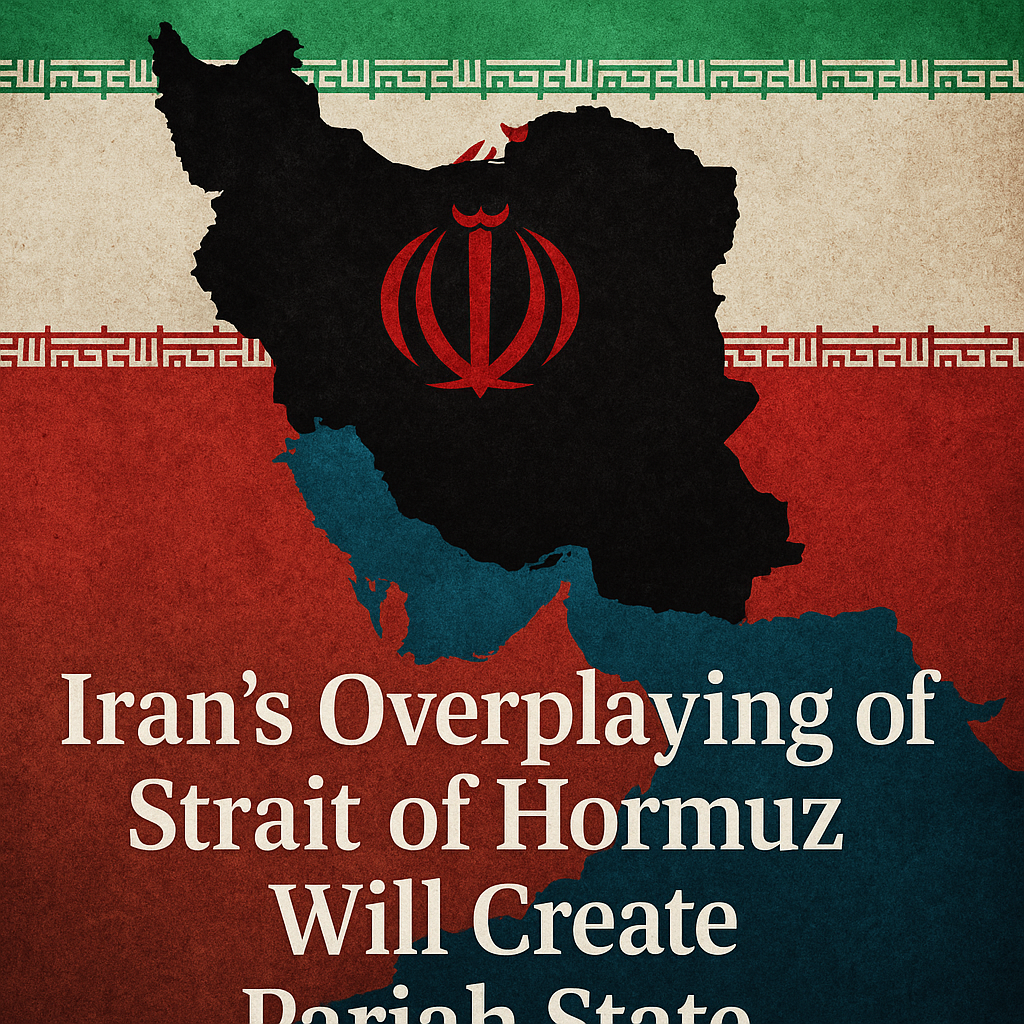
Iran’s Overplaying of Strait of Hormuz Will Create Pariah State

Iran’s Overplaying of the Strait of Hormuz: Implications for Its Global Standing
The Strait of Hormuz, a narrow channel that connects the Persian Gulf to the Arabian Sea, is a strategic geopolitical point increasingly coming under scrutiny as tensions rise between Iran and various international stakeholders. Recent analyses indicate that Iran’s heavy-handed approach to leveraging this critical waterway might transform it into a pariah state, with significant ramifications for its diplomatic relationships and economic future.

The Geopolitical Landscape of the Strait of Hormuz
The Strait of Hormuz is noteworthy due to its role as a major transit route for oil—approximately 20% of the world’s petroleum passes through it. This makes the strait not only vital for global energy supplies but also a flashpoint for international conflicts. Iran has long maintained that it holds sway over this chokepoint and has used this leverage to assert its regional power.


In a recent article from Al Jazeera, analysts argue that Iran’s continual militaristic posturing and threats to block the strait are counterproductive. While these threats might establish Iran as a formidable regional actor, they simultaneously alienate potential allies and reinforce narratives that paint the country as a destabilizing force. Consequently, the risk of becoming a pariah state increases, facing isolation not just from Western nations but potentially from neighboring Gulf states as well.


The Consequences of Aggressive Diplomacy
Iran’s tactical maneuvers in the Strait of Hormuz could backfire. Reports indicate that escalating tensions could prompt strengthened military coalitions among its adversaries, notably the United States and its Gulf allies. As RT outlines, any aggressive act against shipping through the strait would likely lead to a rapid military response, further isolating Iran in the international community.
Critics within Iran, including political analysts and former diplomats, warn that the regime’s belligerent stance could undermine its economic stability. “For every aggressive action,” one analyst stated in a recent interview, “there will be an economic consequence that could further impoverish our people.” This trend suggests that while Iran intends to assert power through aggressive tactics, the backlash may lead to a crippling economic downturn as trade relations nosedive.
Perspectives on Iran’s Strategy
Diverse opinions exist regarding the efficacy of Iran’s strategy. Supporters of the current regime advocate that a robust stance is necessary for safeguarding national interests against perceived threats from the U.S. and its allies. They argue that such a posture has historically kept Iran relevant on the global stage.
Conversely, diplomatic experts contend that instead of reinforcing Iran’s regional influence, an overreliance on the Strait of Hormuz card may provoke international sanctions or military interventions that would further tighten the noose around its economy. A recent analysis from Sky News supports this perspective, citing the potential for increased sanctions from Western nations disapproving of Iran’s handling of the strait as a bargaining tool.
Navigating Toward Resilience or Isolation?
Iran currently finds itself at a crossroads. Its strategies involving the Strait of Hormuz reflect a profound complexity in balancing regional influence while maintaining international legitimacy. The critical question arises: Can Iran’s regime recalibrate its approach in such a way that it avoids the trajectory toward becoming a pariah state?
Potentially, the answer lies in diplomacy. Engaging in open dialogues with Gulf nations and the West might alleviate the fear and distrust that lead to confrontations. Experts recommend that Iran could benefit from demonstrating a commitment to cooperation in ensuring safe passage through the strait, which would enhance its standing as a responsible stakeholder in regional security rather than as a provocateur.
Conclusion
In summary, while Iran’s maneuvers in the Strait of Hormuz could be seen as an assertion of power, the broader implications suggest a perilous pathway that risks its status on the global stage. As the geopolitical landscape evolves, navigating the strait’s complexities through a balanced mixture of assertiveness and diplomacy may be key to avoiding a future of isolation. A path toward mutual respect and constructive engagement, rather than confrontational tactics, could indeed determine the fate of Iran’s international relations in the years to come.