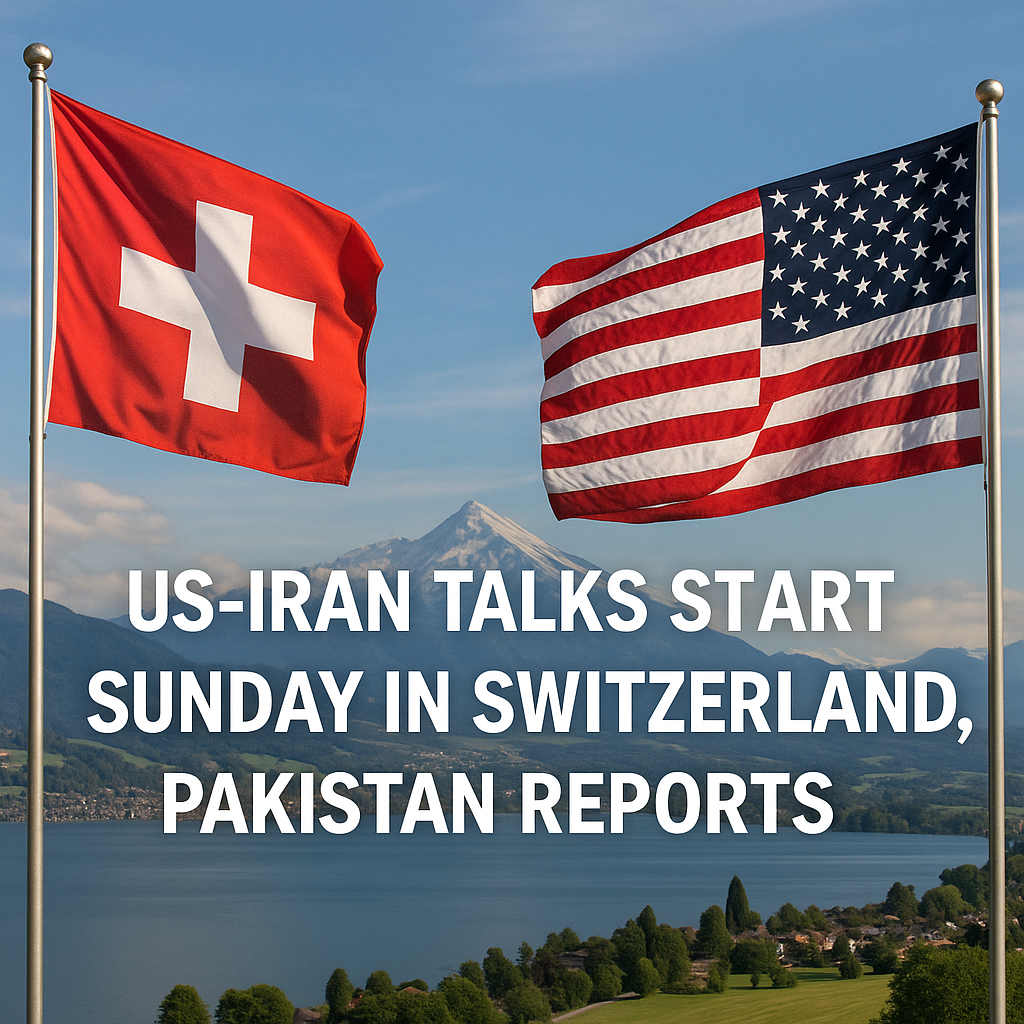
US-Iran Talks Start Sunday in Switzerland, Pakistan Reports

US-Iran Talks Begin on Sunday in Switzerland: Implications and Perspectives
As U.S.-Iran talks are set to commence this Sunday in Switzerland, the international community eagerly anticipates the discussions aimed at easing long-standing tensions between the two nations. This negotiation represents a significant effort to address complex geopolitical issues and may set the stage for future interactions.

Historical Context of US-Iran Relations
The relationship between the U.S. and Iran has traditionally oscillated between periods of hostility and tentative diplomacy. Since the 1979 Iranian Revolution, when the U.S. embassy in Tehran was seized, both nations have largely engaged through conflict and sanctions rather than dialogue. The culmination of these tensions was the U.S. withdrawal from the Joint Comprehensive Plan of Action (JCPOA) in 2018, an agreement that aimed to curtail Iran’s nuclear capabilities in exchange for economic relief.


However, recent developments suggest a renewed willingness to engage. Iranian President Ebrahim Raisi has emphasized a commitment to diplomatic negotiations, highlighting the economic challenges posed by international sanctions. Meanwhile, the Biden administration is reportedly interested in exploring further diplomatic avenues, especially in light of rising tensions in the Middle East and the ongoing war in Ukraine.


Diverse Perspectives on the Upcoming Talks
The anticipated talks have elicited a range of reactions from experts and analysts worldwide. Proponents of the negotiations argue that they represent an opportunity to stabilize not just U.S.-Iran relations but the broader Middle East. A report from Al Jazeera underscores that any diplomatic breakthrough could facilitate dialogues concerning regional security and humanitarian issues. Furthermore, the discussions could set the groundwork for potential agreements regarding Iran’s missile program and its influence in volatile regions such as Syria and Iraq.
Conversely, skeptics express caution about the efficacy of the talks. Critics argue that Iran’s continued ballistic missile tests and its support for proxy groups in the region create a trust deficit that complicates negotiations. Some analysts from RT highlight that previous agreements have failed to curb Iran’s aggressive posture, raising concerns about the sincerity of its commitment to change. The disconnect in perspectives underscores a fundamental uncertainty that characterizes the negotiations, framing them as a potential gamble for U.S. policymakers.
Key Factors Influencing Negotiations
Several critical factors could shape the outcome of these talks:
– Domestic Pressures: Both nations face internal challenges that could impact their negotiating stances. In the U.S., there is a heightened focus on international crises, including the situation in Ukraine, which may lessen the urgency to make concessions to Iran. Conversely, Iran’s economic difficulties are pushing its leadership to seek relief from crippling sanctions.
– Regional Dynamics: The roles of other Middle Eastern countries will also play a crucial part. Nations such as Saudi Arabia and Israel have historically been wary of any rapprochement between the U.S. and Iran, expressing concerns over Iran’s nuclear capabilities and regional influence. Their reactions to the negotiations will inevitably affect the landscape of support or opposition to any potential agreements.
– Global Reactions: The international community’s response will further complicate the atmosphere surrounding the talks. As global powers like China and Russia engage with Iran, the West must navigate a complex geopolitical chessboard, balancing diplomacy with the realities of shifting alliances.
Conclusion: A Complex Road Ahead
While the U.S.-Iran talks beginning this Sunday in Switzerland represent a critical moment in diplomatically addressing decades of tension, the path forward remains fraught with complexities. The contrasting views on the viability of these discussions highlight the deep-rooted challenges both sides face. As negotiations unfold, the international community will remain vigilant, hoping for an outcome that not only promotes stability but also paves the way for a more cohesive future in the region. The stakes are high, and the potential implications extend far beyond the negotiating table.