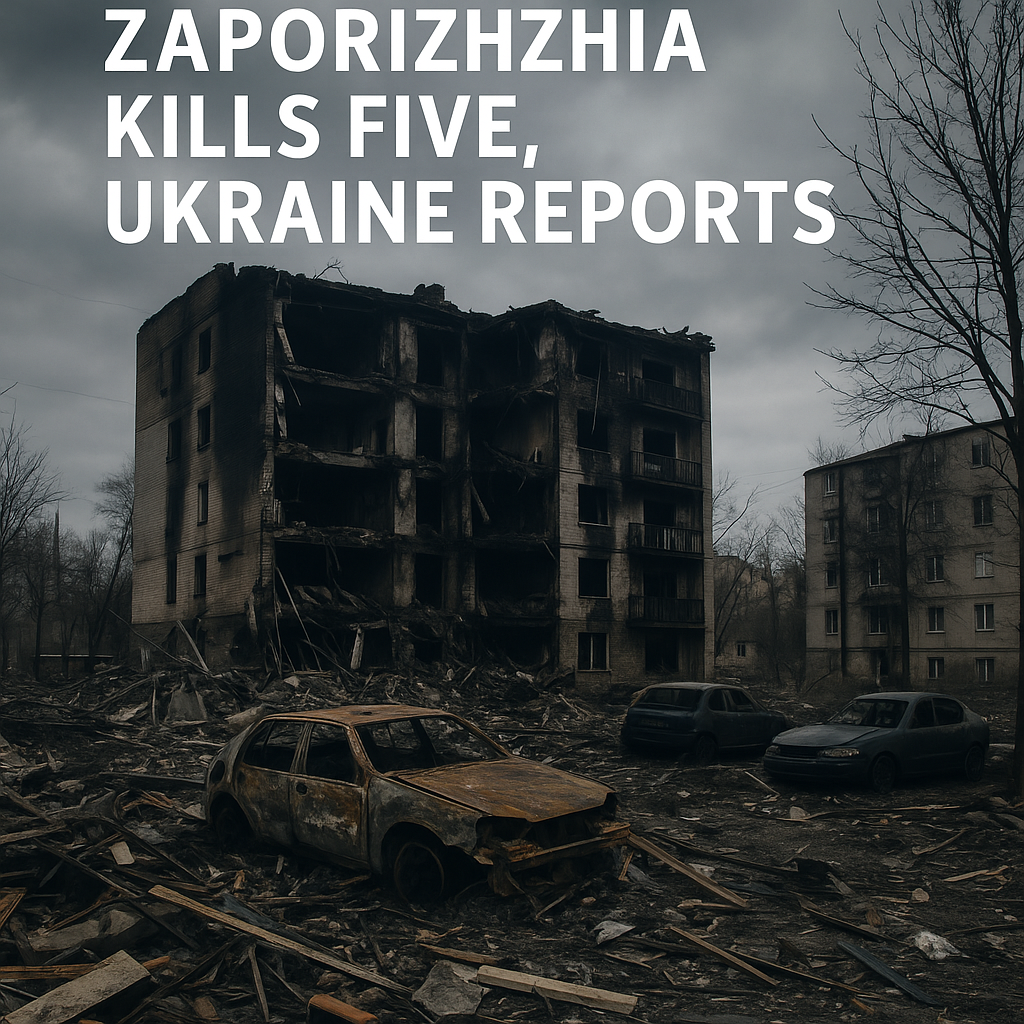
Russia’s Attack in Zaporizhzhia Kills Five, Ukraine Reports

Casualties and Consequences: Russia’s Attack in Zaporizhzhia
On a grim day for Ukraine, reports confirm that Russia’s recent attack in Zaporizhzhia resulted in the deaths of five people. This incident underscores the persistent volatility in the region amidst an ongoing conflict that has caused immense human suffering and economic disruption.

Context of the Attack
The Zaporizhzhia region has long been a focal point of intense conflict, especially since Russia’s annexation of Crimea in 2014. The recent strike occurred in a civilian area, a tragic reminder of the war’s reach into everyday life. Al Jazeera reports that local authorities expressed horror over the attack, emphasizing the targeted nature of civilian infrastructures such as homes and schools. This aspect has generated widespread outrage, calling into question the ethical ramifications of such military actions.


Conversely, Russian sources, including RT, have framed the attacks as necessary military operations aimed at debilitating Ukrainian military capabilities. However, critics argue that such justifications cannot erase the humanitarian toll evident in the recent casualties. The complexities are further amplified by the fact that both sides use propaganda to shape narratives, making it challenging for outsiders to discern the full scope of events.


The Impact on Civilians
The human cost of the conflict is increasingly apparent in incidents like this one. Observers note that the attack in Zaporizhzhia adds to a growing list of civilian casualties that have sparked widespread condemnation from international bodies. The United Nations and various NGOs have voiced concerns about the escalating violence and its impact on non-combatants. Humanitarian organizations are exacerbated by the increased difficulty in providing aid to affected areas.
Many civilians are left grappling with the trauma of living under constant threat. Reports indicate that families in Zaporizhzhia struggle not only with the emotional aftermath but also with the practical challenges of displacement and loss of livelihood. As the war grinds on, the foundation of normal life crumbles, turning communities into ghost towns filled with grief and uncertainty.
International Reactions
International responses to the recent violence have varied. Western governments have responded swiftly, reaffirming their support for Ukraine through diplomatic channels and additional military assistance. Leaders from NATO member countries have publicly condemned the attack, labeling it as an egregious violation of international law. They emphasize the need for accountability, hoping to deter further escalation of hostilities.
On the other hand, Russia continues to maintain its stance, dismissing accusations and claiming that its military actions are targeted strikes against “militant groups” and not aimed at civilians. This defensive posture is symbolic of the wider discourse at play, where both sides leverage narratives to garner support from their respective allies.
Looking Ahead: A Challenging Path to Peace
In light of the tragedy in Zaporizhzhia, analysts speculate on the ramifications for peace negotiations. The recent attack may complicate diplomatic efforts, as restoring trust becomes increasingly difficult amidst such violence. Previous attempts at brokering peace have faltered, often stalled by entrenched interests and a lack of genuine dialogue.
Some experts caution that unless there is a seismic shift in strategy from both sides, regions like Zaporizhzhia will continue to bear the brunt of military confrontations. The need for a sustained dialogue—focusing not just on military concerns but also on humanitarian needs—is urgent. As the international community watches closely, the situation remains precarious, with potential consequences that extend far beyond Ukraine’s borders.
Conclusion
The tragic events in Zaporizhzhia illuminate the ongoing humanitarian crisis resulting from the conflict. As lives are lost and communities suffer, the call for peace grows louder. Yet, the path forward remains fraught with uncertainty, as both sides prepare for a drawn-out struggle. In such an environment, the voices of civilians caught in the crossfire must remain a central focus in the quest for both justice and lasting peace.