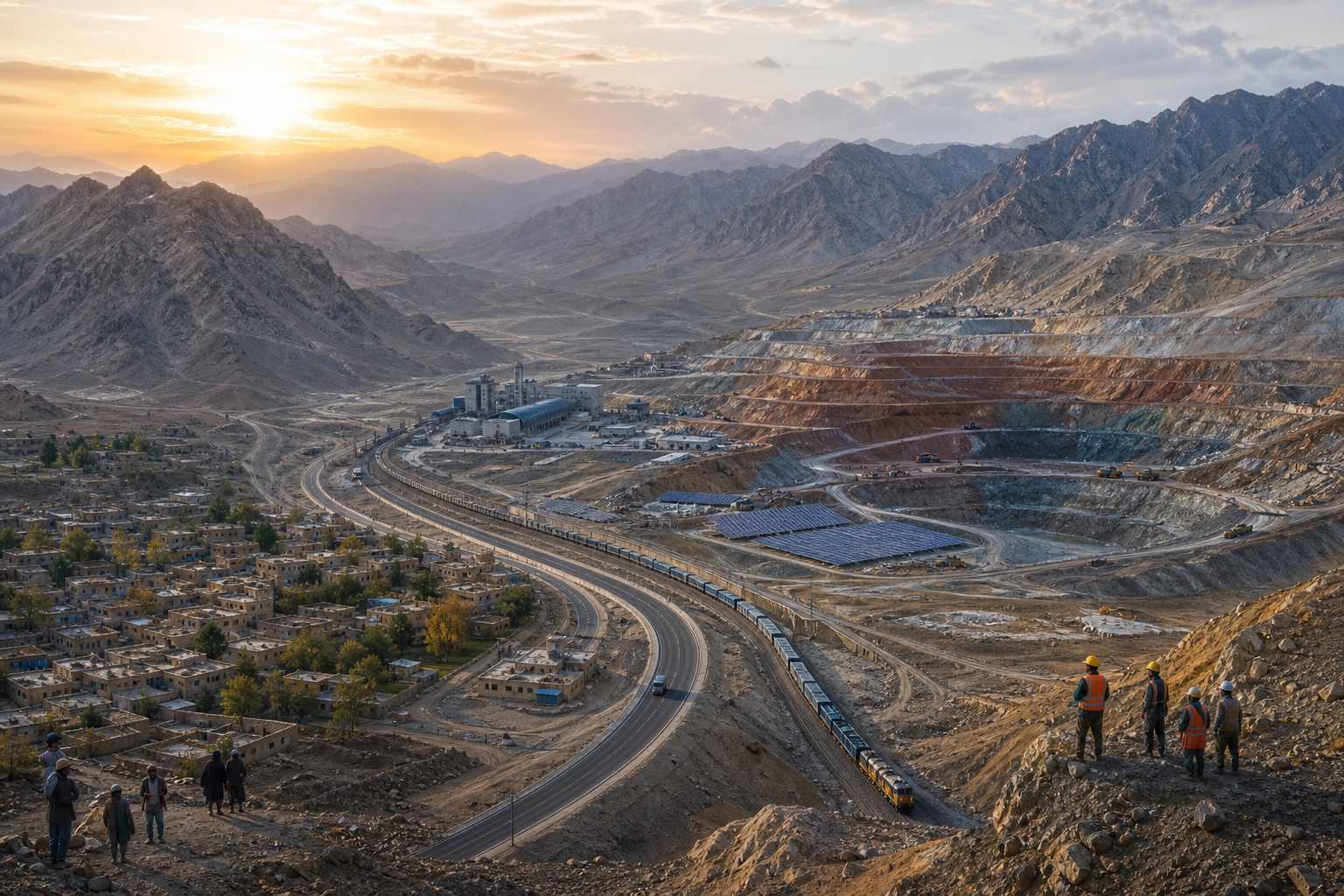
Afghanistan’s Mineral Wealth: Why Its Natural Resources Matter to the Region
Afghanistan has significant deposits of copper, iron ore, gold, lithium, lead, zinc and precious stones. Resources such as Mes Aynak copper and Hajigak iron ore, along with critical minerals needed for batteries and renewable energy, have attracted regional and international interest.
Developing these resources could create jobs, increase government revenues and connect Afghanistan to Central and South Asian markets. However, progress depends on infrastructure, investment, skilled workers, transparency, environmental protection and benefits for local communities.
Afghanistan is known for its mountains, historical trade routes and diverse cultural heritage, but beneath its rugged landscape lies another important asset: a wide range of mineral resources.
Geological studies have identified significant deposits and occurrences of minerals including copper, iron ore, gold, lithium, lead, zinc and precious stones. Afghanistan also has potential resources that could become increasingly important as global demand for critical minerals grows.

Copper is among Afghanistan’s best-known mineral resources. The Mes Aynak deposit in Logar province has attracted international attention for years, while iron ore deposits such as Hajigak have also been considered important for the country’s future mining sector.
Lithium and other critical minerals have attracted particular interest because they are important for modern technologies, including batteries and renewable-energy systems. However, mineral potential does not automatically translate into economic wealth. Developing large-scale mining requires geological research, infrastructure, investment, skilled workers and effective management.

Afghanistan’s geographical position also gives its mineral resources wider regional significance. The country lies between Central and South Asia and has the potential to connect mineral production with regional markets through roads, railways and other trade routes.
For Afghanistan, developing its mineral sector could create employment, increase government revenues and support industries linked to mining and processing. Responsible development would also require attention to environmental protection, transparency, local communities and long-term economic benefits.

Afghanistan’s mineral resources therefore represent more than underground deposits. If developed responsibly, they could become an important part of the country’s economic future and strengthen its role in the wider regional economy.