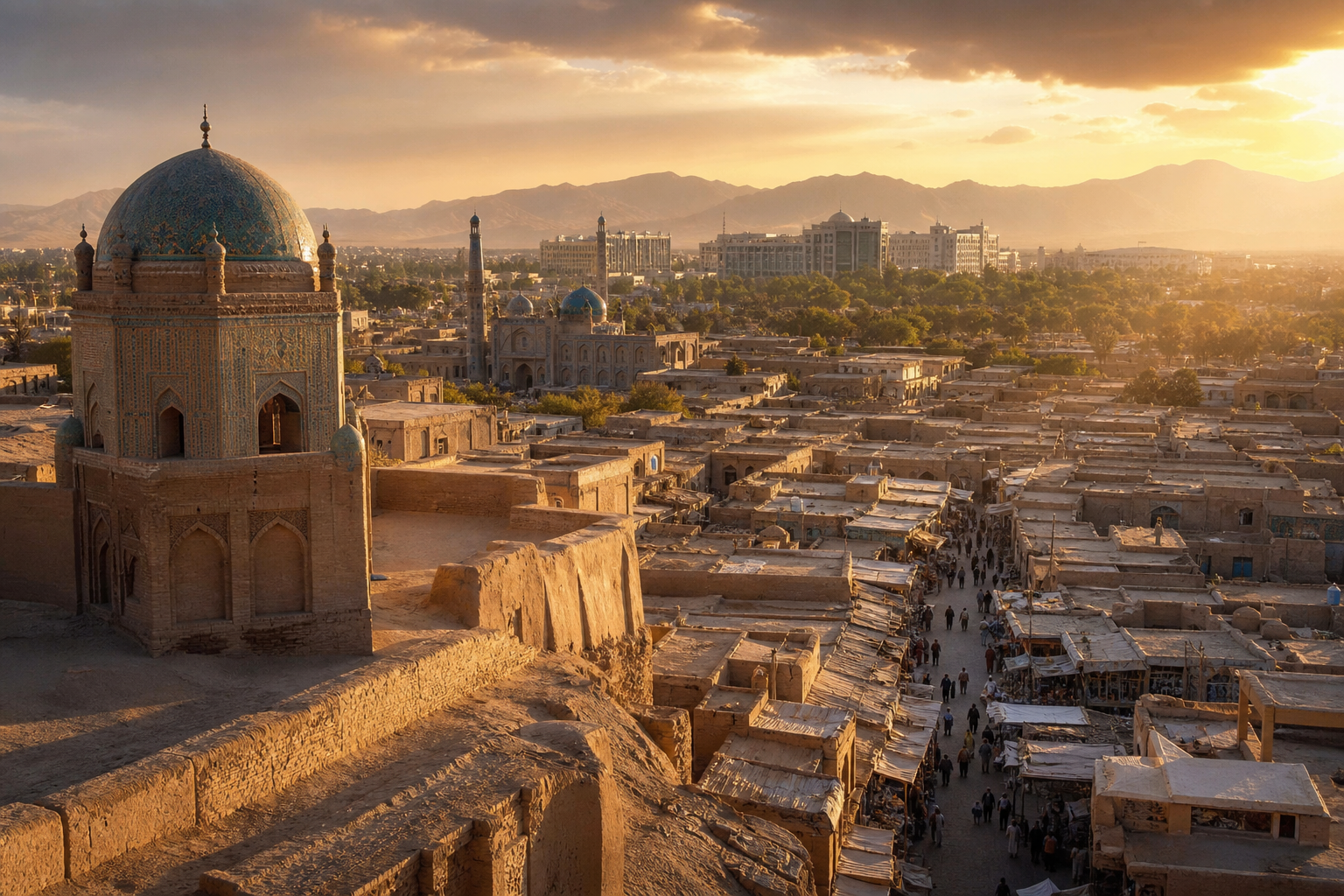
Kandahar: The City at the Heart of Afghanistan’s Political Power
Kandahar has played a central role in Afghanistan’s political history since Ahmad Shah Durrani established the Durrani Empire there in 1747. Although Kabul is the official capital, Kandahar remains influential because of its historical significance, cultural heritage and continuing importance in Afghan politics.
The city is now a major center of Taliban political and religious power, with Supreme Leader Hibatullah Akhundzada based there. Its historical landmarks, including Ahmad Shah Durrani’s mausoleum, reflect Kandahar’s enduring place in Afghanistan’s past and present.
Kandahar holds a unique place in Afghanistan’s history and political identity. For centuries, the city has been connected to the rise of Afghan rulers, major political movements and important turning points in the country’s history.

In 1747, Ahmad Shah Durrani established the Durrani Empire with Kandahar as its capital. The city became the political base of the empire and played a central role in the formation of the Afghan state.

Kandahar’s political importance continued long after the capital was moved to Kabul. Its location in southern Afghanistan, its historical connections and its role in Afghan politics have kept it among the country’s most influential cities.

Today, Kabul remains Afghanistan’s official capital, but Kandahar has become an important center of political and religious power under the Taliban. Supreme Leader Hibatullah Akhundzada is based in Kandahar, and many major decisions associated with the Taliban’s leadership are connected to the city.
The importance of Kandahar is therefore not limited to its history. The city remains closely connected to Afghanistan’s current political landscape and continues to attract attention from observers seeking to understand how power is organized in the country.
Kandahar is also home to important historical and cultural landmarks, including the mausoleum of Ahmad Shah Durrani. Its markets, traditional architecture and cultural heritage reflect centuries of Afghan history.
From the rise of the Durrani Empire in the 18th century to its present role as a major center of Taliban leadership, Kandahar remains one of the most important cities for understanding Afghanistan’s past, present and political future.