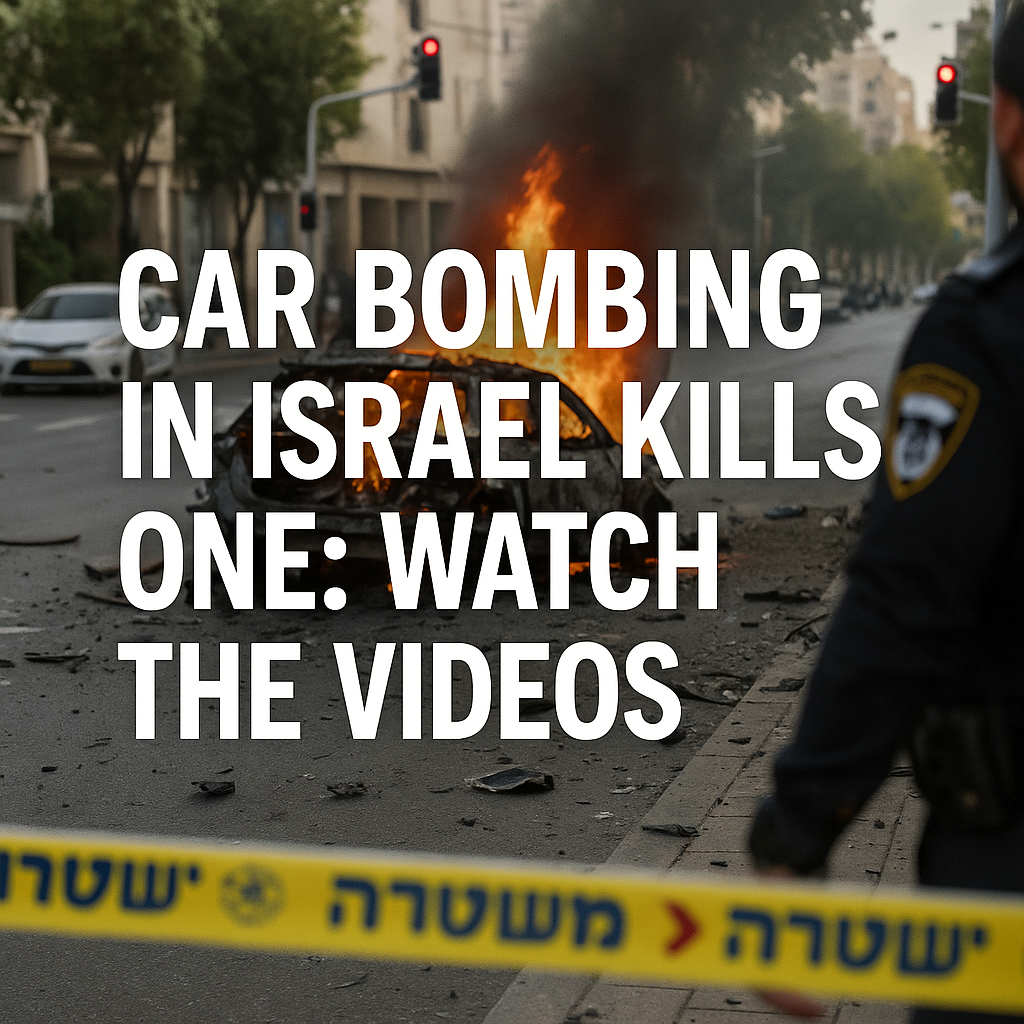
Car Bombing in Israel Kills One: Watch the Videos

Car Bombing in Israel Kills One: An Overview
In a tragic incident that has sent shockwaves through the region, a car bombing in Israel resulted in the death of one individual and left several others injured. This event highlights the persistent insecurity and ongoing conflict challenges that continue to affect the lives of many in the area. The car explosion, which reportedly occurred in a busy urban center, has ignited a mixture of grief, outrage, and calls for action from various sectors of society.

Context of the Attack
The bombing took place in a bustling part of the city, where civilians were likely to be present, demonstrating the indiscriminate nature of such violence. Reports suggest that the explosion was timed to maximize its impact, aligning with periods when the area was likely to be crowded. While the responsible parties have not been officially identified, speculation points to ongoing tensions between various groups, including extremist factions who have historically employed such tactics to further their agendas.


Multiple sources provide varied insights into the motivations behind this latest attack. Some analysts argue that the bombing could be a response to recent political developments or military actions that have aggravated local tensions. According to reports, militants may see such attacks as a way to assert their presence and influence amidst a fluctuating political landscape.


Reactions to the Bombing
Reactions to the bombing have varied widely among the population, government officials, and international observers. On one hand, local authorities have condemned the act of violence, labeling it as an assault on innocent civilians. Authorities are reportedly increasing security measures in response to this shocking event, including a heightened police presence in major urban centers.
Conversely, political analysts express concern that such acts may exacerbate an already volatile situation. Some argue that the Israeli government’s response should be measured, focusing on dialogue and conflict resolution, rather than escalating military action. A balanced approach may be essential in order to mitigate further violence and prevent similar tragedies from occurring in the future.
Meanwhile, the international community has also weighed in on the incident. Skepticism persists regarding whether such attacks will push relevant parties toward a resolution or deepen existing divides. Comments from global leaders emphasize a need for unity and peace, urging all involved to work towards a non-violent solution.
Civilian Impact and Ongoing Tensions
The most immediate impact of this bombing has been felt among the local civilian population. Community leaders are calling for solidarity in the face of such violence, emphasizing the need for healing and resilience. The emotional scars left by such incidents can last for generations, affecting not only the surviving victims but also their families and broader communities.
Understanding the extensive ramifications of this car bombing is crucial. It serves as a grim reminder of the ongoing conflict in the region and the challenges facing peace efforts. The tragic loss of life engenders frustration and grief, yet it can also galvanize support for extensive change. Residents are leery of retaliatory strikes and are anxious about being caught in the cycle of violence that has defined much of the region’s history.
Moving Forward
As investigations continue, the broader implications of this attack beg deeper examination. While immediate security concerns are paramount, long-term strategies must contemplate the root causes of such violence and work toward comprehensive solutions. This requires the cooperation of diverse stakeholders, including local communities, government officials, and international entities.
The recent car bombing in Israel underscores a narrative that is all too familiar within the context of ongoing regional conflicts: the interplay between violence, response, and deep-seated grievances. Efforts to bridge the divides and foster understanding are essential if the cycle of violence is to be interrupted.
As this situation unfolds, it is crucial for all parties involved to seek pathways to dialogue and reconciliation rather than resort to further violence, emphasizing the need for a collective movement towards peace that respects the humanity of every individual affected by such tragic events. The path forward may be fraught with challenges, but the opportunity for healing and unity must remain at the forefront of the conversation.