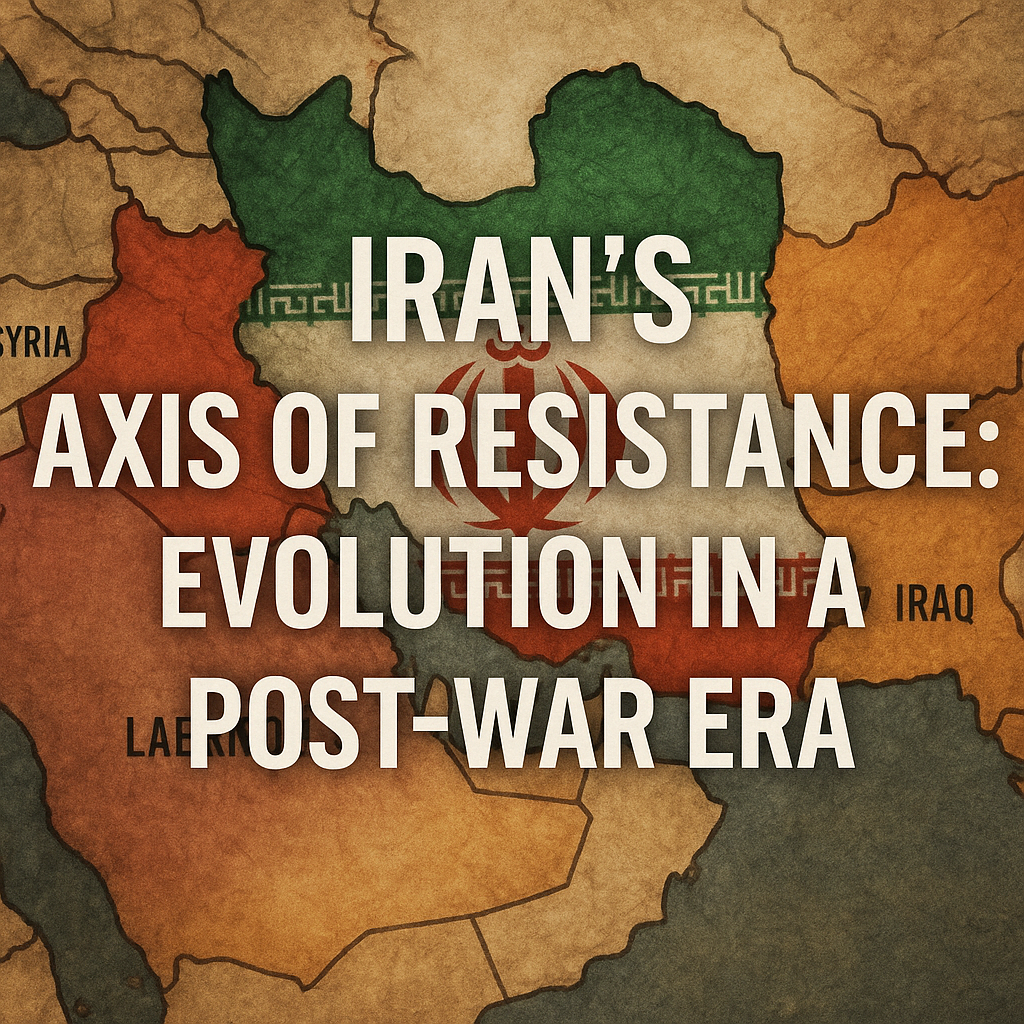
Iran’s Axis of Resistance: Evolution in a Post-War Era

Iran’s Axis of Resistance: Evolution in a Post-War Era
Iran’s Axis of Resistance has undergone significant transformations in the wake of regional conflicts, reshaping its strategies and alliances amid shifting political landscapes. This phrase refers to the coalition of countries and non-state actors, including Syria, Hezbollah in Lebanon, and various factions in Iraq and Yemen, that align with Iran’s geopolitical interests. As the dynamics of power evolve, so too does the narrative and operational capability of this coalition, presenting a complex interplay of alliances and rivalries that merit closer examination.

Shifting Geopolitical Landscapes
The aftermath of the Syrian Civil War has had far-reaching consequences for Iran’s influence in the region. Initially, Iran’s military involvement in Syria aimed to preserve the Assad regime and counterbalance Sunni extremism. Over time, this commitment has transformed Iran into a dominant force within Syria, enabling it to deploy military advisors, establish forward bases, and support local militias. This engagement has bolstered Tehran’s stature among its allies and has positioned it as a key player in shaping Syria’s future.


Reports indicate that Iran has strengthened its ties with Hezbollah, operationalizing new military strategies that enhance their collaborative effectiveness in countering perceived threats from Israel and Sunni extremist groups. This correlation between Iranian support and Hezbollah’s military capabilities complicates the security situation in Lebanon, where the two entities collaborate closely to enforce a shared agenda.


Despite these advancements, challenges remain. Regional adversaries, notably Saudi Arabia and the U.S., are increasingly responsive to Iran’s assertiveness, taking steps to counter its growing influence. The delineation of pragmatic concerns among these regional powers highlights a rising tension marked by actions such as the normalization of relations between Saudi Arabia and rivals of the Iranian axis.
Diverse Responses and Regional Repercussions
The reaction to Iran’s axis has not been one-dimensional; various nations and groups within the region have adopted diverse strategies. The Gulf states, traditionally adversarial towards Iran, have attempted to navigate this landscape through a mix of engagement and defense. The recent thawing of relations between Iran and several Arab states signals a nuanced shift wherein pragmatism may supersede entrenched hostilities.
Conversely, allied factions within Iraq and Yemen have embraced Iranian support, integrating it into their military strategies. In Iraq, groups like Asaib Ahl al-Haq and the Badr Organization have drawn on Iranian resources to bolster their fighting capabilities, positioning themselves as both a domestic and regional resistance against external influences. Similarly, the Houthis in Yemen have benefited from Iranian support, further complicating Saudi-led coalition efforts in the ongoing conflict.
These interactions point toward a paradoxical understanding amongst regional actors. While Iran’s axis may consolidate its hold in certain areas, it concurrently raises alarm among neighboring states, who feel compelled to fortify their own military and political positions in response.
The Future of the Axis
Looking ahead, the evolution of Iran’s Axis of Resistance in a post-war era unveils both opportunities and challenges. The strategic engagements suggest that while Iran may have solidified some of its relationships, ongoing conflicts might create rifts within the alliance. Operational coherence among its parts can be difficult to maintain if state and non-state actors pursue diverging goals.
Moreover, the global landscape, particularly due to geopolitical tensions exacerbated by the war in Ukraine and shifting alliances, presents a complex backdrop for Tehran’s strategy. Economic pressures stemming from sanctions may incentivize Iran to seek alternative partnerships while simultaneously fostering existing connections within its axis.
In conclusion, Iran’s Axis of Resistance epitomizes a multifaceted approach to regional geopolitics characterized by both cooperation and contention. As new conflicts emerge and existing ones evolve, the challenge will lie in navigating these dynamics to sustain influence while mitigating the risks posed by adversaries and internal discrepancies. The future of this coalition will undoubtedly hinge on its ability to adapt to an increasingly unpredictable regional order, balancing military ambitions with the pragmatism required to maintain influence in a volatile landscape.