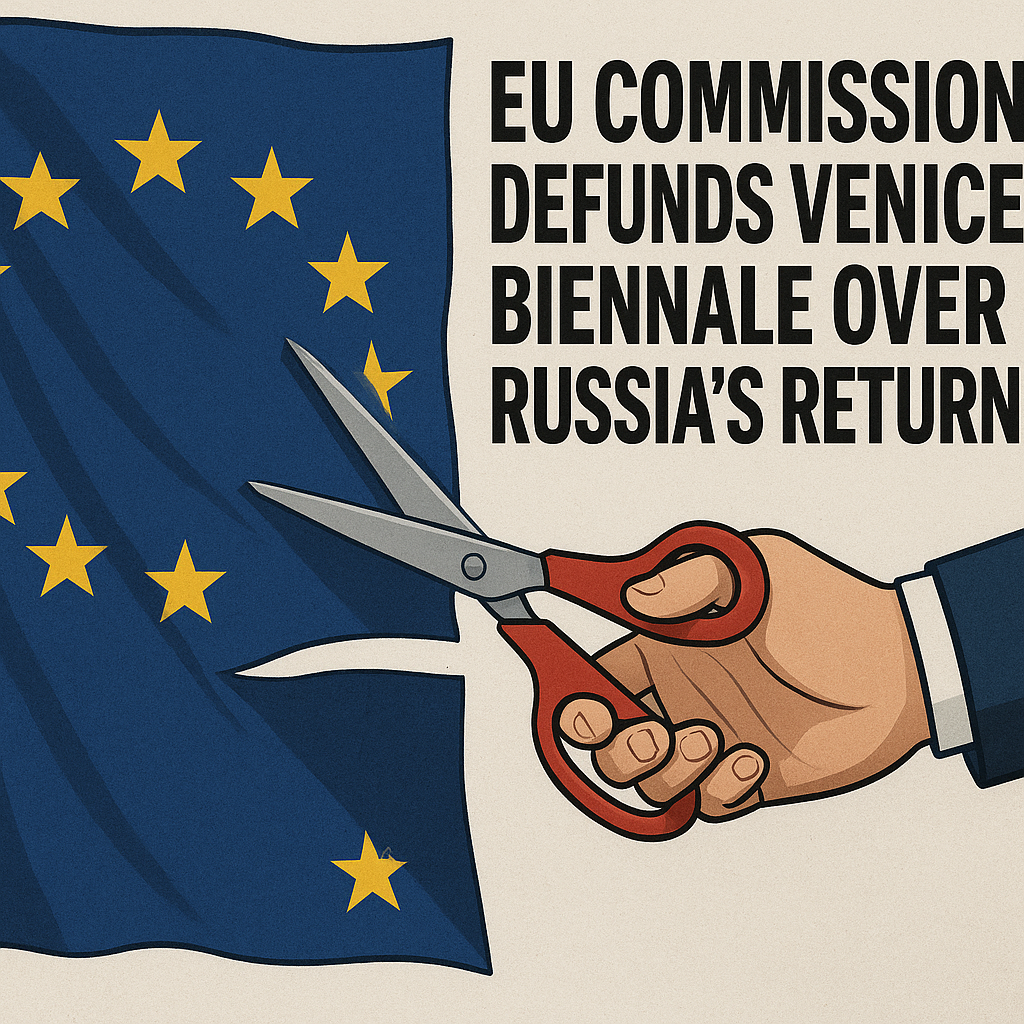
EU Commission Defunds Venice Biennale Over Russia’s Return

The recent decision by the European Commission to withdraw funding for the Venice Biennale has ignited debate across the cultural and political landscapes of Europe. The core of this decision appears to be intertwined with the ongoing controversy surrounding Russia’s participation in the event, specifically in light of the nation’s actions in Ukraine. This article delves into the multifaceted implications of this move, exploring various perspectives on the intersection of art, politics, and international relations.

The Context of Defunding
The Venice Biennale, one of the most prestigious art events globally, has often been seen as a platform for cultural diplomacy. With nations showcasing their artistic prowess, the Biennale serves as a meeting point for diverse voices. However, the backdrop of war in Ukraine has raised ethical questions about the role of Russian artists and their representation in global cultural forums.


Reports indicate that the EU’s decision to cut funding is primarily aimed at penalizing Russia’s renewed involvement in the Biennale. In a statement, a spokesperson for the European Commissioner for Innovation, Research, Culture, Education, and Youth emphasized that promoting cultural events amid ongoing aggression contradicts Europe’s values. This sentiment was echoed across various platforms, indicating strong support for the EU’s stance among critics of Russia’s actions.


Diverse Perspectives on the Issue
Opponents of Russia’s participation argue that engaging with Russian artists could normalize the Kremlin’s aggressive stance internationally. Citing the principles of solidarity and resistance to oppression, many believe distancing from Russian art is not merely a political stance but a moral imperative. A representative from a leading EU cultural institution mentioned, “We cannot support a platform that indirectly endorses the narrative of a state that is currently waging war.”
However, this viewpoint isn’t universally accepted. Some critics suggest that the defunding risks stifling artistic expression and dialogue. They argue that art transcends borders and should remain a space for open dialogue, even amidst political strife. As one art critic noted, “By shutting out Russian artists, we risk isolating them further and disallowing the possibility of nuanced conversations about culture, history, and power.”
This divergence highlights a significant tension in contemporary discourse regarding cultural exchanges. While critics of the defunding highlight the potential for art to foster understanding and dialogue, proponents argue that moral principles must guide cultural engagement in a politically fragmented world.
Cultural Implications and Future Outlook
The EU’s decision poses critical questions about the future of cultural diplomacy. If funding for prominent cultural events is contingent upon the political actions of participant nations, what message does that send about the role of art? Furthermore, how does this shape the future participation of artists from countries with contentious political practices?
The Venice Biennale attracts global attention and funding, making its direction a crucial topic for international cultural policies. The choice to defund, driven by political considerations, underscores a complex relationship between art and statecraft. It also opens avenues for investigation into how cultural venues navigate political landscapes while striving to uphold their foundational principles of inclusivity and dialogue.
As the Biennale approaches its next iteration, discussions will likely intensify regarding its role as a cultural ambassador. Questions surrounding the representation of artists from politically troubled nations will be irrefutably prevalent. Will the EU reconsider its approach if the geopolitical landscape shifts? It’s a query that many are compelled to ponder.
Conclusion: Balancing Morality and Artistic Freedom
The EU’s decision to withhold funding for the Venice Biennale in reaction to Russia’s involvement encapsulates the ongoing struggle between political imperatives and the ideals of cultural expression. While the reasons behind the defunding resonate with many, the broader implications reveal the complexities and sometimes contradictory nature of cultural diplomacy.
For now, the Venice Biennale stands at a crossroads, embodying the intersection of art and geopolitics. As stakeholders in the arts community navigate this complicated terrain, the evolving dialogue about the autonomy of artistic expression amidst political realities will remain critical. The challenge will be to find a path that honors both moral convictions and the transformative potential of art as a tool for dialogue and understanding.
In an era where conflicts often dominate headlines, the Venice Biennale faces an unprecedented moment to redefine its mission. The world will be watching closely as it adapts to these unprecedented challenges, balancing the ideals of freedom and expression with the weight of global responsibility.