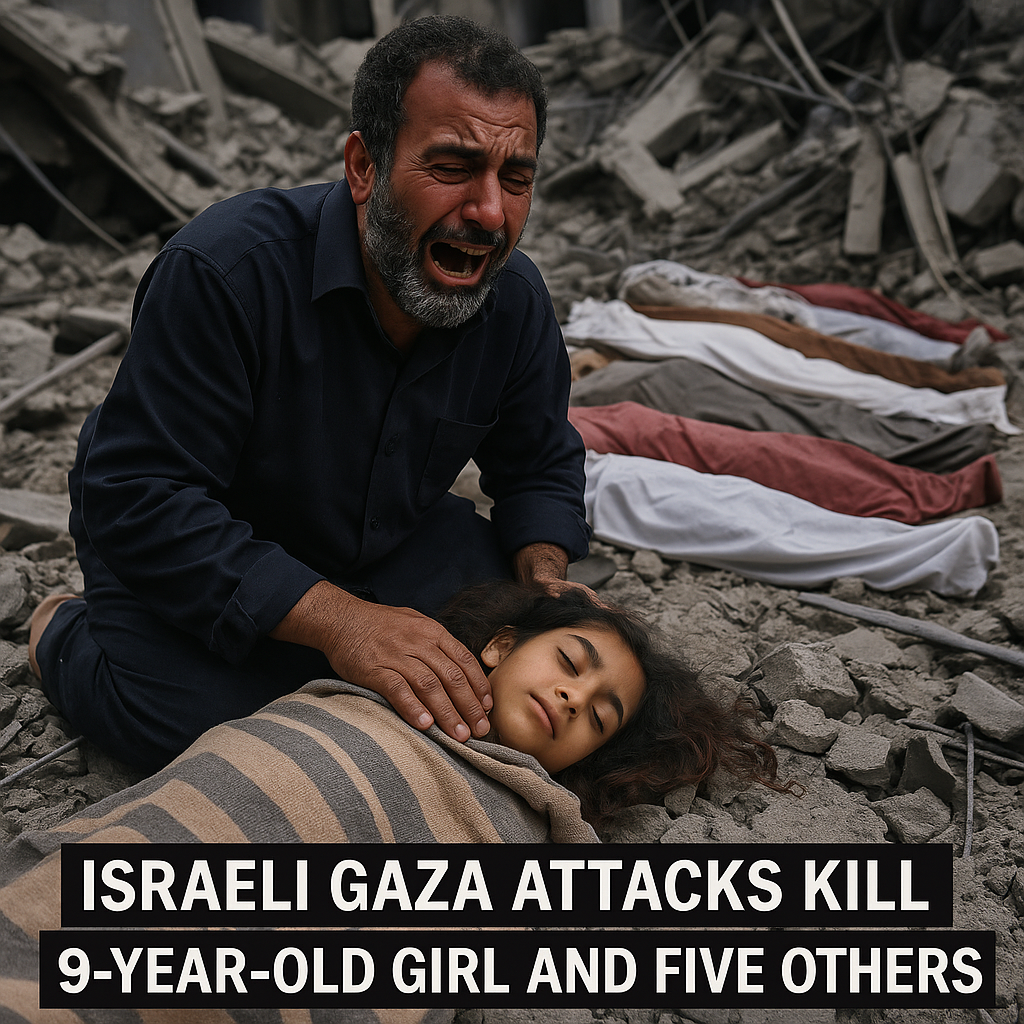
Israeli Gaza Attacks Kill 9-Year-Old Girl and Five Others

Escalation of Violence: The Human Cost in the Israeli-Palestinian Conflict
Recent attacks in Gaza have resulted in the tragic deaths of a nine-year-old girl and five others, bringing renewed focus to the ongoing and deeply complex Israeli-Palestinian conflict. This heartbreaking incident illustrates the ongoing toll that military actions exact on civilians and encapsulates the cycles of retaliation that have defined this region for decades.

The Immediate Impact of the Attacks
According to reports from Palestinian officials, the airstrikes targeted various sites within Gaza, with the civilian casualties highlighting the dire humanitarian situation. Sky News reported that among the fatalities, the young girl was particularly emblematic of the innocent lives lost amid the violence. The international community frequently expresses concern for civilian lives, yet these sentiments seem to often fail to translate into tangible change on the ground.


Multiple news outlets, including Al Jazeera and RT, have covered the incident, emphasizing different aspects of the unfolding events. Al Jazeera focused on the local response, citing outrage from Palestinian leaders who condemned the attacks as “indiscriminate.” Conversely, RT emphasized Israel’s justification for the military action, highlighting the government’s claim that these strikes were necessary to counter perceived threats.


A Cycle of Violence: Perspectives and Implications
The recent attacks bring to light the complexities of military engagement in densely populated areas. Proponents of the Israeli actions argue that the strikes are essential for national security, aimed at neutralizing threats from militant groups operating in Gaza. However, this rationale is met with sharp criticism from human rights organizations, which argue that such military operations often lead to disproportionate impacts on civilians. The loss of a young child draws particular ire, encapsulating the greater moral and ethical dilemmas surrounding warfare.
It’s important to note that perspectives on these incidents can be deeply polarized. Supporters of Israel often frame the narrative in terms of self-defense, stating that militant factions like Hamas pose an existential threat. In contrast, advocates for Palestinian rights highlight the humanitarian crisis resulting from blockades and military actions, arguing that such operations only serve to entrench animosity and perpetuate cycles of violence.
The Humanitarian Dimension
Reports from humanitarian organizations illustrate the dire conditions faced by civilians in Gaza, as a prolonged blockade has limited access to essential services and infrastructure. In light of the recent casualties, there have been renewed calls from various international entities for a ceasefire and a return to diplomatic dialogue. However, the discord over underlying issues such as land rights, security, and political sovereignty complicates the prospects of peace.
The deaths of innocent children not only act as a catalyst for public outrage but also serve as a poignant reminder of the tangible human suffering resulting from geopolitical conflicts. As the situation develops, it remains critical that both sides recognize the broader implications of continued violence—not just on each other, but on the future of ongoing peace efforts.
Looking Ahead: The Need for Dialogue
As Israel and Palestinian factions navigate this steep terrain of conflict, one must underscore the necessity for renewed dialogue. The path forward will require a commitment from both sides to address the root causes of violence and seek avenues for coexistence. International mediators and regional players could play a pivotal role in facilitating discussions aimed at achieving a sustainable peace.
The tragic loss of young lives should serve as a profound and urgent call to action—compelling activists, leaders, and citizens alike to push for accountability and humanitarian solutions rather than continued cycles of retaliation. The complex interplay of perspectives and experiences in this conflict means there are no easy solutions, but as the world watches, the hope for a lasting resolution remains.
In summary, while recent attacks in Gaza have again highlighted the grievous human costs of war, they also present an opportunity for renewed focus on peace—something desperately needed in a region entrenched in violence. As conversations continue, it is critical to channel outrage into constructive action, advocating for policies that prioritize lives above politics.