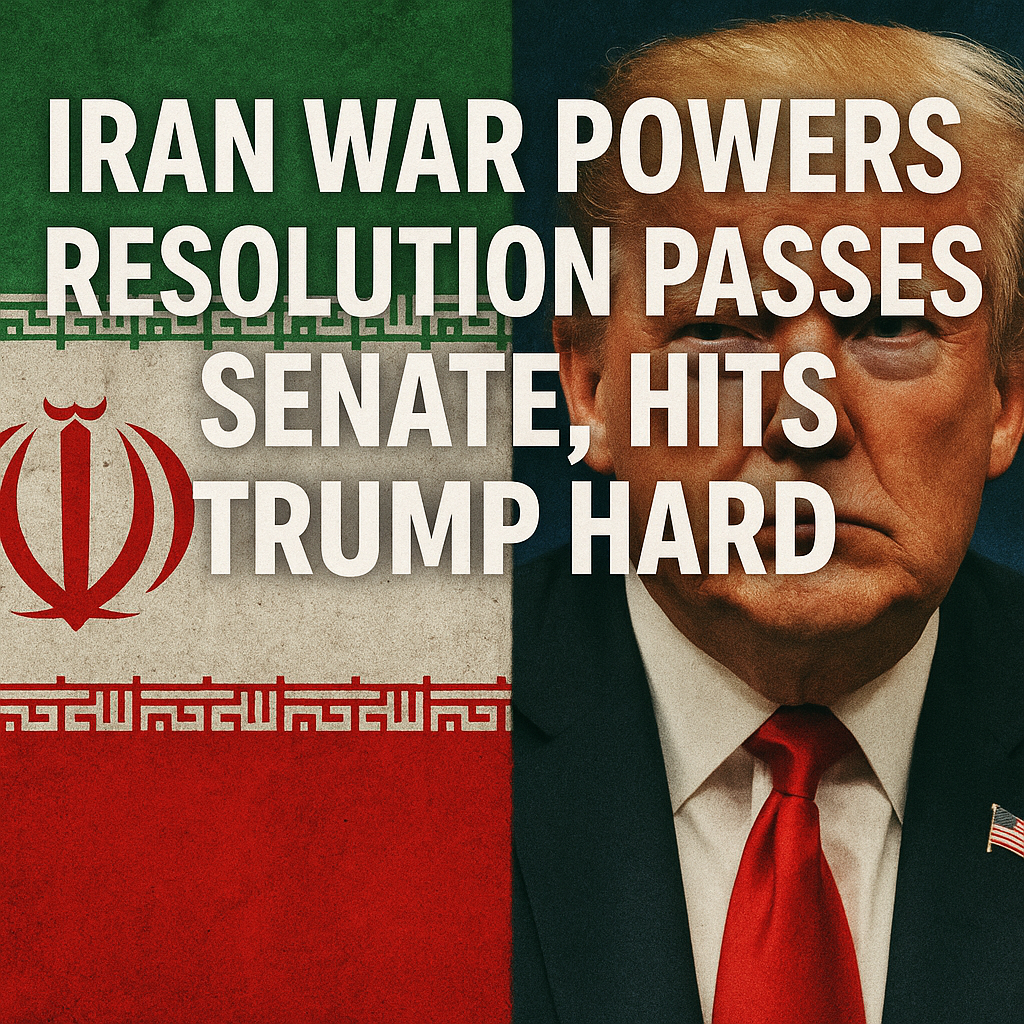
Iran War Powers Resolution Passes Senate, Hits Trump Hard

The recent passage of the Iran War Powers Resolution in the Senate not only marks a pivotal moment in U.S. foreign policy but also serves as a significant rebuke to the former administration led by Donald Trump. This legislative action underscores the growing apprehension among lawmakers regarding executive powers in military matters, especially concerning Iran.

Understanding the Iran War Powers Resolution
The Iran War Powers Resolution aims to restrict the president’s ability to engage in military actions against Iran without congressional approval, primarily leaving significant military decisions in the hands of the legislature. The Senate voted in favor of the resolution with a margin reflecting a burgeoning consensus that prioritizes congressional oversight over unilateral executive military authority.


Supporters of the resolution argue that it is essential for maintaining the principles of checks and balances established in the U.S. Constitution. They assert that the complexities surrounding the Iranian geopolitical situation necessitate a collaborative approach to military engagement. Senator Tim Kaine, a leading advocate for this measure, emphasized its importance by stating, “Congress should be the voice of the American people on matters of war.”


Conversely, critics of the resolution fear that it may hinder the executive branch’s capacity to respond swiftly to threats. They warn that curtailing military options could embolden adversaries, potentially destabilizing a region fraught with tension. Former National Security Advisor John Bolton criticized the resolution, asserting that “a reduced military presence in the region could lead to increased aggression from Iran and other adversaries.”
Legislative Dynamics and Bipartisan Support
The bipartisan nature of the Senate’s support for this resolution signifies a growing recognition of the need for more direct congressional involvement in military decisions. Figures from both sides of the political aisle, including prominent Republicans disenchanted with Trump’s approach to military operations, lent their voices to the resolution. This development highlights an emerging trend where lawmakers are reevaluating the longstanding precedent set by past administrations regarding military engagement.
Reports indicate that the resolution was partly a response to the fraught relationship between the U.S. and Iran, characterized by escalating tensions that have seen multiple confrontations in recent years. Critics and supporters alike appear to agree that the U.S. must tread carefully in its approach, balancing deterrence with diplomacy.
One of the pivotal moments leading to the resolution was Trump’s unilateral order to kill Iranian General Qassem Soleimani in early 2020. This act led to widespread concern within Congress about the extent of executive power and the potential for an unrestrained military conflict. According to a survey by the Pew Research Center, public opinion reflects rising concerns over the executive’s military powers, with many Americans favoring a more involved legislative approach.
A Complex Foreign Policy Landscape
As the U.S. navigates its foreign policy towards Iran, the passage of the War Powers Resolution highlights the complex interplay of domestic and international pressures shaping lawmakers’ decisions. While some argue that the measure could serve to isolate Iran further, others believe it opens a pathway for diplomatic channels to alleviate tensions.
Furthermore, the resolution could serve as a litmus test for future foreign engagements, prompting lawmakers to adopt a more cautious stance on military interventions abroad. It raises critical questions about the balance of power between branches of government and whether Congress will take a more active role in shaping the nation’s military strategy.
Uncertainties and Future Implications
While the resolution has passed, significant uncertainties linger regarding its long-term implications. Will the new legislative framework effectively rein in executive military actions, or will it be circumvented in times of crisis? Furthermore, how will this shift in policy affect U.S.-Iran relations, particularly considering ongoing tensions around Iran’s nuclear program?
In summary, the passing of the Iran War Powers Resolution not only signals a noteworthy legislative shift but also raises broader questions about U.S. military engagement and presidential authority. As lawmakers reflect the public’s desire for accountability in foreign policy, the discourse surrounding military interventions continues to evolve, suggesting that future actions will be closely scrutinized through the lens of legislative intent. The balance of power remains a critical theme as the U.S. seeks to navigate its intricate and often contentious relationship with Iran.