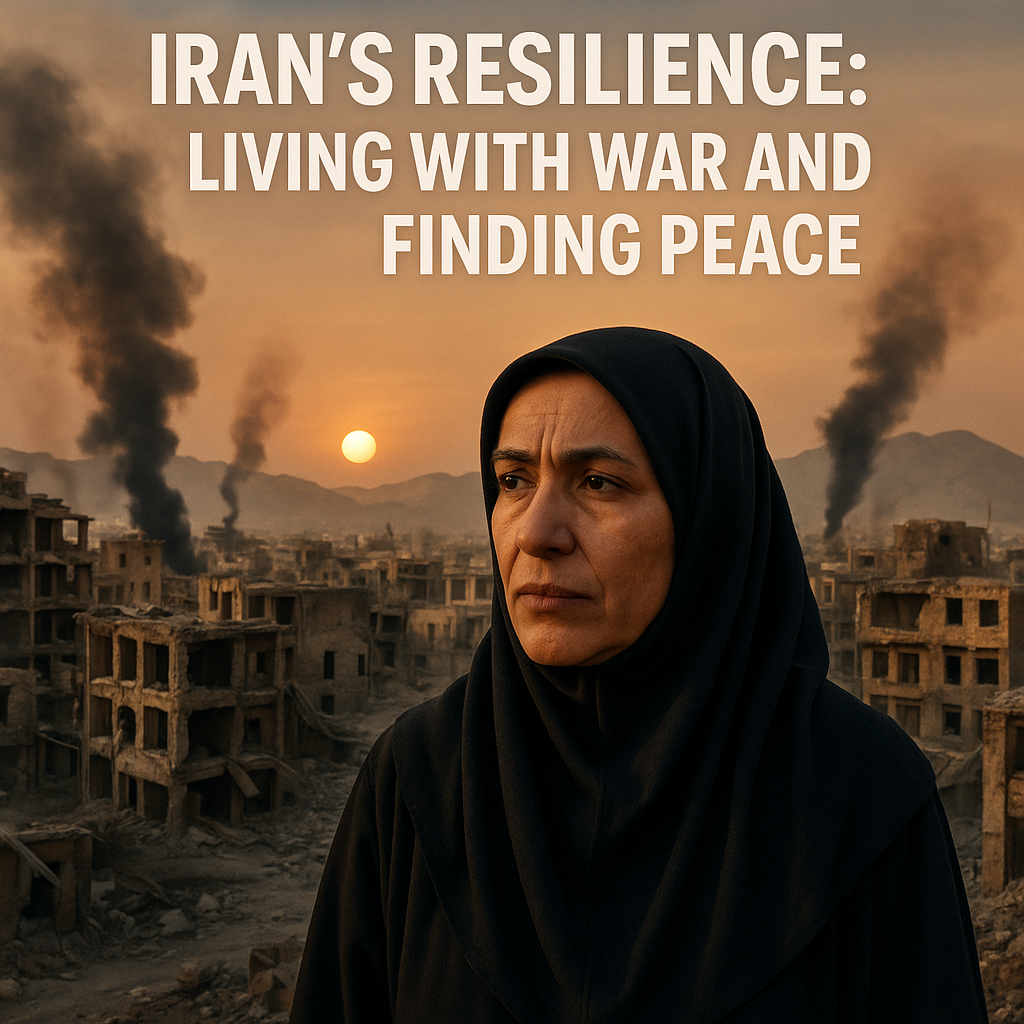
Iran’s Resilience: Living with War and Finding Peace

Iran’s Resilience: Living with War and Finding Peace
Iran’s resilience amidst ongoing conflicts and geopolitical tensions has shaped a unique societal narrative. The historical and cultural fabric of Iran reflects a country that has not only endured numerous hardships but has also evolved strategies to coexist with the specter of war and strive for peace.

Historical Context: A Land Marked by Conflict
Since the 20th century, Iran has faced a series of military confrontations, embargoes, and political isolation that have challenged its national integrity. Most recently, the tensions surrounding its nuclear program have drawn sanctions and criticisms from Western nations. However, despite these adversities, many Iranians exhibit a remarkable stoicism. Reports from sources like Al Jazeera highlight that a significant portion of the Iranian population has reframed their understanding of these challenges as a “new normal.”


This evolving perception isn’t merely about acceptance; it reflects an adaptive strength. The government’s narrative often emphasizes self-reliance, encouraging citizens to utilize domestic resources and technology. For instance, Iran has made significant strides in various sectors, including defense, agriculture, and technology, in part as a response to external pressures.


Coping Mechanisms: Cultural and Social Adaptations
The Iranian people have crafted coping mechanisms that allow them to navigate through these tumultuous waters. Traditional arts, literature, and sports have thrived as outlets for expression and unity. During uncertain times, these cultural elements help maintain a sense of community and identity.
Peace Initiatives: A Balancing Act
Efforts to find peace often clash with the ongoing military readiness advocated by the Iranian government. Recent negotiations over the nuclear deal, highlighted by varied sources including RT, suggest that while there are moves towards diplomacy, a heavy military presence persists. This dilemma creates a dichotomy: on one hand, there’s a desire for stability and international integration; on the other, there is a prevailing fear that such compromises could undermine national security.
Some analysts point to the role of regional partnerships that Iran has fostered as a method of enhancing its leverage in negotiations. By engaging with neighboring countries through trade and cultural exchanges, Iran seeks to create a buffer against potential adversities. Hence, the country oscillates between asserting military might and seeking cooperative engagement.
Diverse Perspectives: Offering Insights into Iran’s Future
The challenge remains: how can a nation that has consistently been on the defensive position itself for a more peaceful future? Opinions diverge on the best path forward. Some proponents argue that Iran should adopt a more conciliatory foreign policy to improve relations with the West. They theorize that normalization would facilitate economic recovery and contribute to a more stable region.
Conversely, skeptics argue that reducing military posturing may leave Iran vulnerable to external threats. They urge a cautious approach, emphasizing that any sign of weakness could be interpreted as an opportunity for adversaries to exploit.
This duality of viewpoints signifies the complexity of Iranian society and politics. The nation’s citizens are not monolithic in their views, which reflects the broader societal debate over the philosophy of resistance versus engagement.
Conclusion: The Way Forward for Iran
As Iran continues to navigate the intricate landscape of its historical challenges while adapting to modern realities, the resilience showcased by its citizens may prove to be its greatest asset. The path toward peace will undoubtedly require addressing internal divisions and external pressures with a delicate balance of assertiveness and diplomacy.
Living with the weight of war will always influence Iran’s identity; however, the potential for peace remains palpable. By fostering cooperation domestically and regionally, the nation could uncover new avenues toward sustainable harmony, ensuring that resilience becomes not just a response to conflict, but a foundation for a hopeful future.