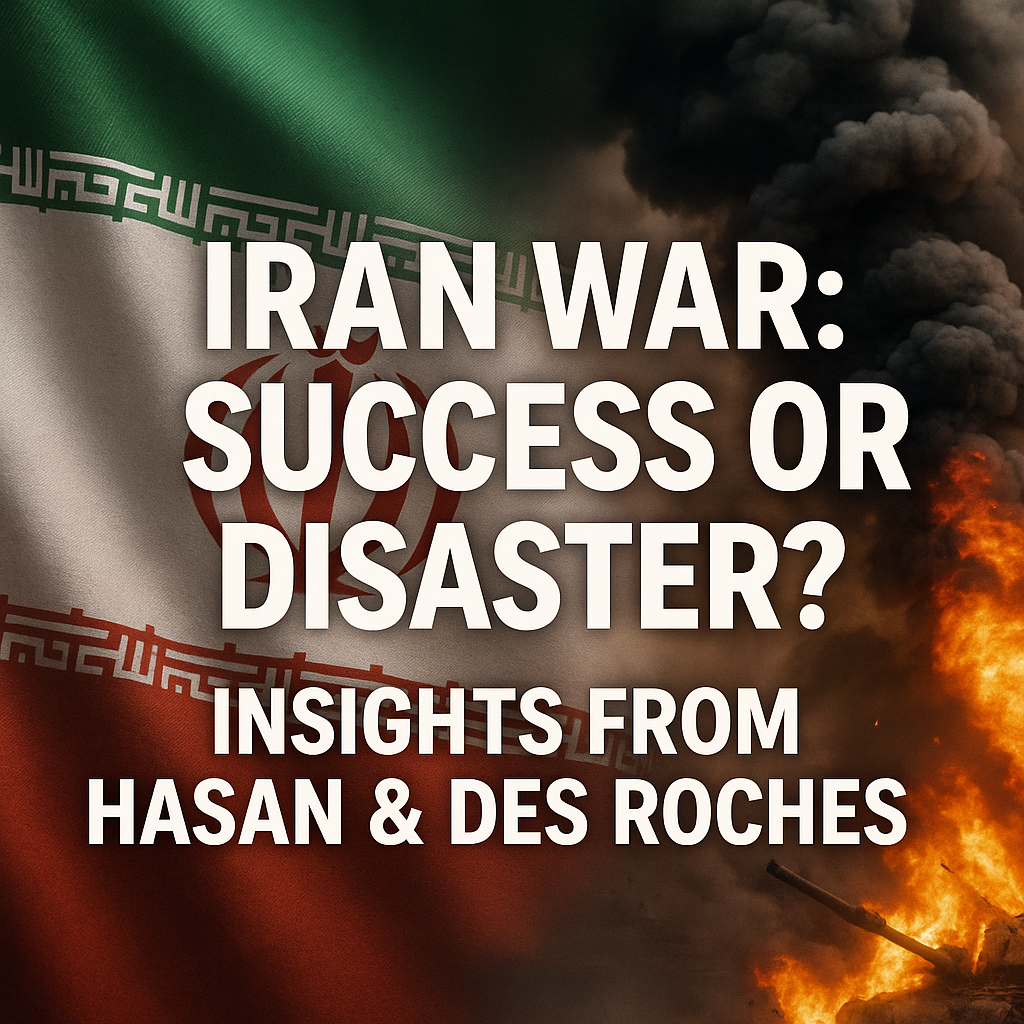
Iran War: Success or Disaster? Insights from Hasan & Des Roches

Iran War: Success or Disaster? Insights from Hasan & Des Roches
The ongoing discourse surrounding the Iran war elicits a spectrum of opinions, with notable contributions from figures such as Mehdi Hasan and David Des Roches. Their contrasting views encapsulate the complexities of the situation, prompting an essential analysis of whether the intervention has been a triumph or a calamity.

The Debate on Success
Hasan emphasizes the narrative that the war in Iran might be painted as a success on certain fronts. He argues that the strategic outcomes have allowed for increased geopolitical leverage for the United States and its allies in the region. The notion of ‘success’ in this context points to destabilizing adversaries like ISIS and reducing Iranian influence over its neighbors, particularly in Iraq and Syria.


– Key Points of Success:
– Enhanced military presence and operational flexibility for U.S. forces.
– Improved relationships with regional partners, potentially recalibrating the balance of power in the Middle East.
– The narrative surrounding human rights improvements and empowering local factions fighting against oppressive regimes.


However, these arguments can seem overly optimistic when juxtaposed with the realities on the ground. Critics highlight that despite military tactics achieving objectives, the overarching goal of establishing a stable and democratic Iran remains unfulfilled.
The Assessment of Disaster
Conversely, Des Roches presents a stark counterpoint, focusing on the enduring negative consequences of the war. He makes a compelling case that the pursuit of military objectives has aggravated sectarian tensions and led to widespread humanitarian crises.
– Key Points of Disaster:
– The loss of civilian life and displacement of millions amid conflict, exacerbating an already fragile situation.
– Elevated anti-U.S. sentiment, which arguably strengthens Iran’s resolve and rallying ability against foreign intervention.
– The long-term destabilization of Iraq and Syria, leading to a power vacuum that extremist groups might exploit.
Des Roches also critiques the war’s financial ramifications, arguing that the expenditure has drained resources that could be better allocated to domestic issues within the U.S., such as healthcare and infrastructure.
A Balanced Perspective
The contrasting viewpoints shared by Hasan and Des Roches elucidate the multifaceted nature of the Iran war debate. On one hand, proponents of the intervention claim it successfully thwarted significant threats. On the other, detractors contend that these successes are overshadowed by humanitarian disasters and long-term geopolitical instability.
While both arguments present interesting points, the truth may lie somewhere in the middle. It is plausible to assert that certain tactical objectives have been achieved, yet these do not dictate the war’s ethical or humanitarian legitimacy.
The Role of Regional Dynamics
Further complicating the narrative is the interplay of regional actors, each with their agendas. The ongoing rivalry between Iran and Saudi Arabia contributes to a volatile environment, where any U.S. intervention could provoke retaliatory measures from Tehran.
The challenges presented by proxy wars must also be acknowledged. These conflicts have turned much of the Middle East into a battleground where local factions vie for power and influence, often at the expense of civilian life. Des Roches notes that this environment breeds resentment and has the potential to create new extremists, negating the supposed victories heralded by Hasan.
Conclusion
In analyzing the insightful discourse from Hasan and Des Roches, it becomes clear that the issue is inherently complex. While elements of success do exist, the overarching consequences veer towards uncertainty and disaster, specifically in terms of humanitarian impacts and regional stability.
This proposed dichotomy between success and disaster underscores a crucial point: the long-term ramifications of the Iran war could redefine the Middle Eastern geopolitical landscape for years to come, prompting further scholarly and public inquiry into the ethics and effectiveness of military interventions. As the debate continues, one thing remains certain—understanding the nuances of such conflicts is essential for informed discourse and future policy-making.