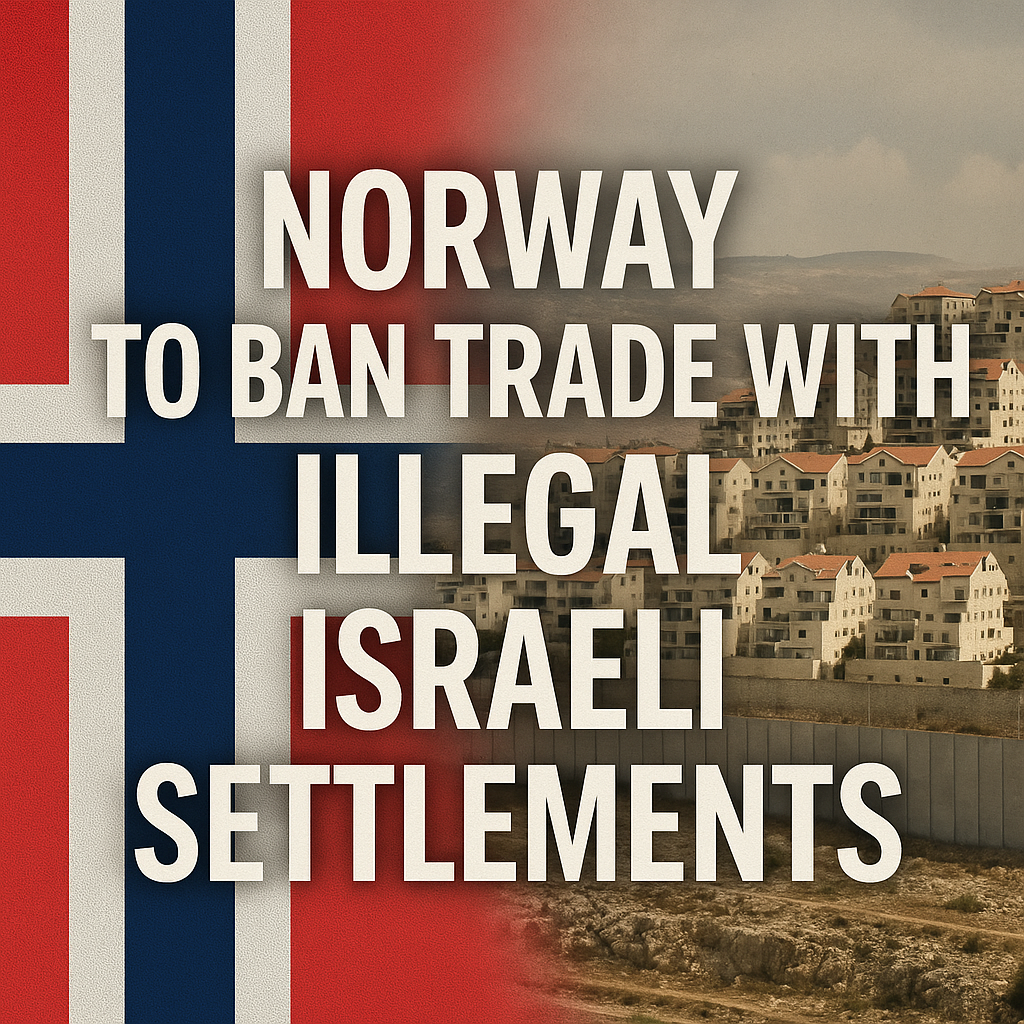
Norway to Ban Trade with Illegal Israeli Settlements

Norway’s recent initiative to ban trade with illegal Israeli settlements has ignited discussions about international law, human rights, and the complex geopolitical landscape of the Middle East. This move reflects a growing sentiment among various nations advocating for Palestinian rights and highlights the ongoing tensions surrounding Israeli settlement policies.

Norway’s Legislative Proposal: Background and Motivations
The proposal, spearheaded by Norway’s Foreign Ministry, aims to restrict imports from settlements deemed illegal under international law. This initiative is part of a broader European trend, with several countries reiterating their commitment to recognizing Palestinian sovereignty and opposing actions perceived as exacerbating the conflict. Norway’s history of mediating peace efforts between Israel and Palestine positions it uniquely in this debate, suggesting a commitment grounded in a desire for a just resolution to the long-standing conflict.


Key motivations behind Norway’s decision include:


– Support for International Law: Norway emphasizes its adherence to international law, which generally considers Israeli settlements in occupied territories to be illegal. The country aims to hold businesses accountable for their trading practices in these areas.
– Political Pressure and Public Sentiment: Rising public awareness and activism surrounding Palestinian rights have influenced the Norwegian government. Citizens and organizations advocating for Palestinian issues are increasingly vocal, encouraging policymakers to take actions that align with people’s values.
The Diverse Reactions: Support and Opposition
Responses to Norway’s proposed ban have been varied, reflecting a spectrum of opinions on both the efficacy and implications of this legislation.
Supportive Voices
Advocates for the ban argue that it aligns with Norway’s values as a progressive nation. They see it as a necessary step towards holding Israel accountable for its actions in occupied territories. Proponents assert that trade restrictions could pressure the Israeli government to change its policies and engage in more meaningful negotiations with the Palestinian leadership. Additionally, they believe that such measures could bolster international efforts at achieving a two-state solution, emphasizing the importance of legal precedents and global consensus on human rights.
Critical Perspectives
Conversely, opponents of the initiative argue that banning trade with Israeli settlements could be counterproductive. Critics from various political and academic circles assert that this approach may drive a wedge between the two parties, solidifying divisions rather than encouraging dialogue. Some argue that economic pressures could generate further anti-Israel sentiment and potentially lead to retaliation against Norwegian interests in the region. This viewpoint stresses the importance of dialogue and cooperation over punitive measures.
Moreover, Israeli officials have condemned the proposed ban, characterizing it as a biased exclusion that undermines Israel’s legitimacy. They contend that such actions diminish the possibility of achieving peace through negotiation and could exacerbate tensions in an already volatile situation.
Weighing the Evidence and Sentiments
The dynamic responses to Norway’s proposed trade ban illuminate the complexity of international relations in the context of the Israeli-Palestinian conflict. This scenario highlights a significant challenge: balancing support for human rights and international law with the practicalities of geopolitical stability.
Public sentiment around the issue appears to be shifting, particularly in Northern Europe, where progressive movements are gaining traction. Various surveys indicate a growing inclination among Europeans to support measures that recognize and protect Palestinian rights. This societal shift may be influencing national policies in ways not seen in previous decades.
However, the path to implementing such restrictions remains fraught with challenges. The potential for retaliatory actions from Israel, along with implications for Norwegian businesses operating in the region, creates a complex web of considerations that policymakers must navigate carefully.
Conclusion: A Step in a Larger Global Context
Norway’s move to ban trade with illegal Israeli settlements represents not just a national policy decision but a reflection of a broader global dialogue on human rights, sovereignty, and international law. As nations grapple with how best to position themselves amid a complicated and evolving conflict, Norway’s initiative could serve as a bellwether for future international policies concerning Israel and Palestine.
While the intention to uphold international law and support human rights is commendable, the execution of such policies needs to be approached with caution, ensuring that they foster dialogue rather than conflict. As Norway proceeds, the global community remains watchful, recognizing that each step taken could significantly influence the fragile landscape of Middle Eastern politics and peace efforts.